It’s safe to say that Leighton House Museum in Kensington is home to the most beautiful room in London. This historic house, once owned by the celebrity artist of the day, Lord Frederic Leighton, has one of London’s showstopper interiors, hiding an Arab Hall which looks like a Fabergé egg just had babies with Ali Baba’s cave. After an £8 million refurbishment, the Victorian house is restored to its glittering and resplendent glory, and it now has a gorgeous café too.
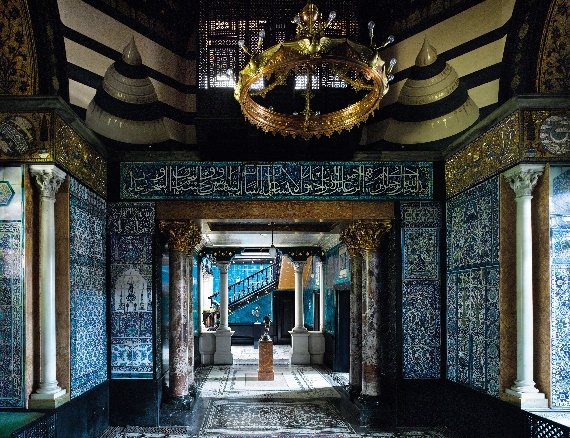
Photo: Will Pryce, courtesy of Leighton House, RBKC
Who was Frederic Leighton?
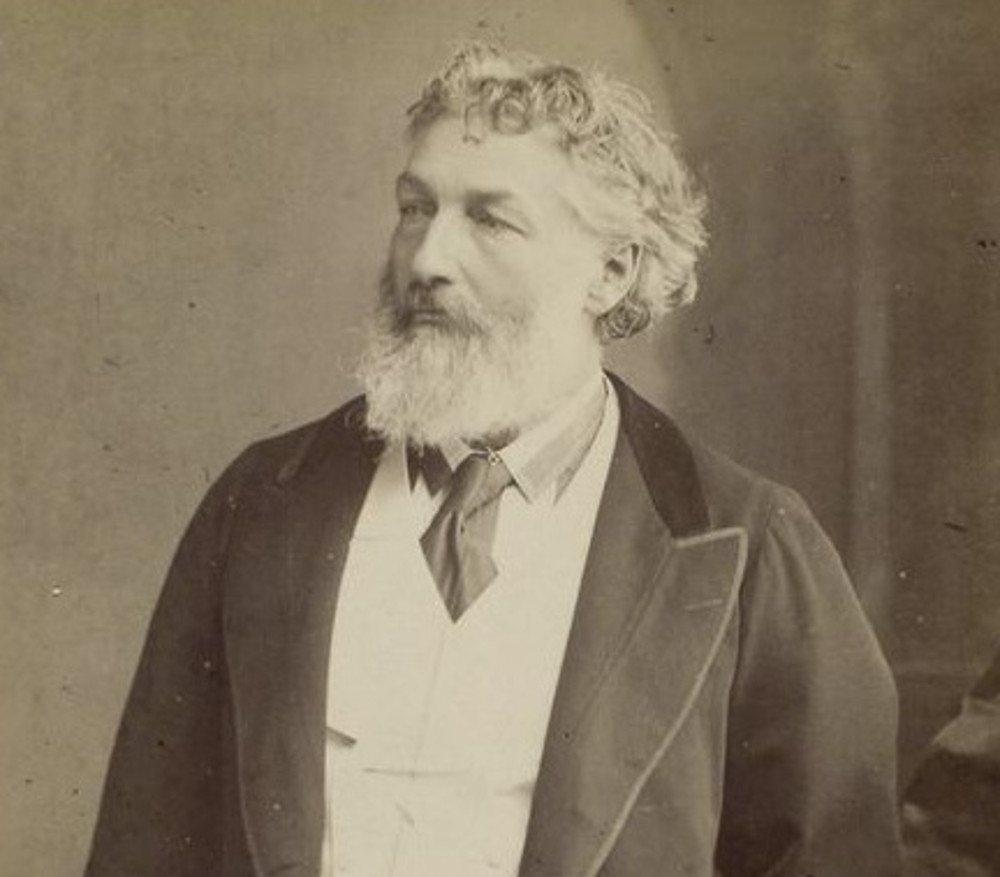
Frederic Leighton by Alexander Bassano (public domain)
Leighton was President of the Royal Academy and one of the most famous Victorian artists of his day. Queen Victoria bought one of his early paintings, and he designed the tomb of the celebrated poet Elizabeth Barrett Browning in Florence. In 1896 he was made a peer, the only British painter ever to be given the honour, but he died the very next day, making his the shortest-lived peerage in history.
Leighton was part of the Holland Park Circle, a community of artists who built studio houses around Holland Park. His neighbours and friends included G.F. Watts and John Everett Millais, and he commissioned the ceramicist William De Morgan to put the finishing touches to the sensational Arab Hall.
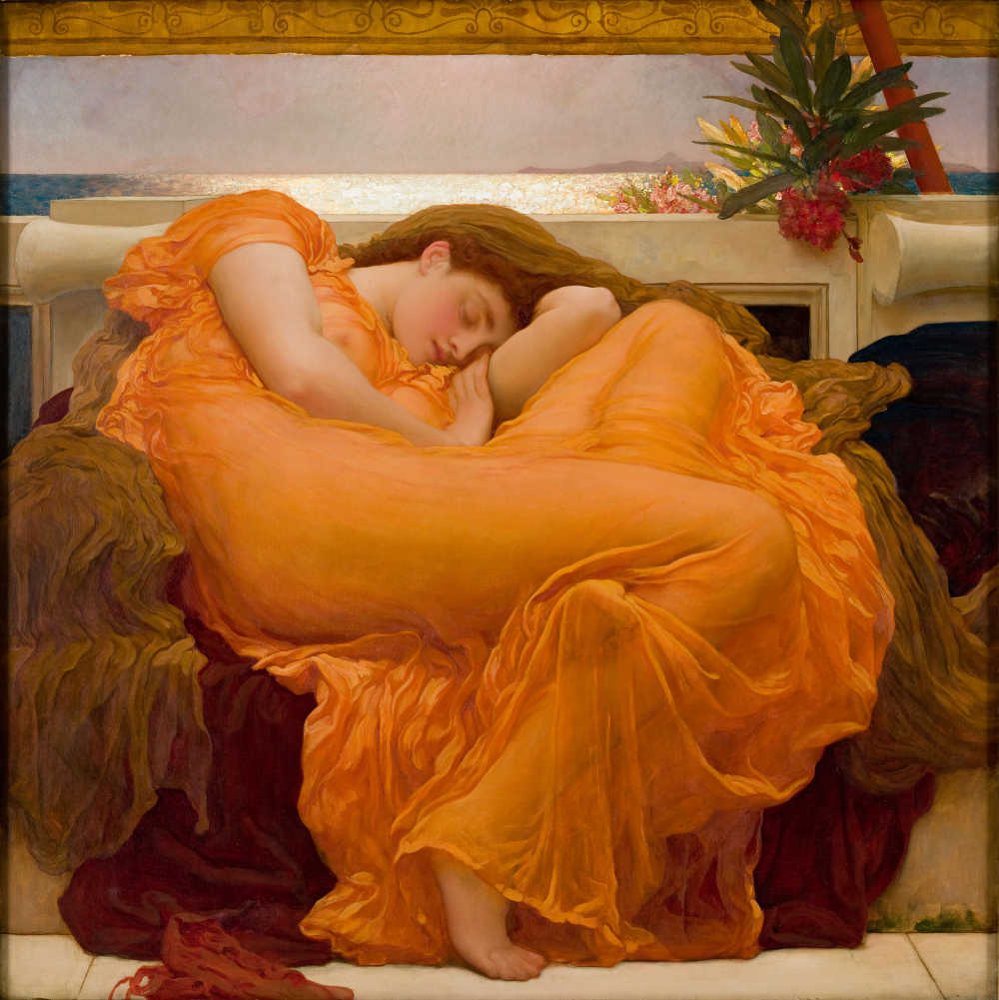
Flaming June (public domain)
Leighton fell out of fashion in the twentieth century, so much so that his best-known painting, Flaming June, disappeared off the radar and was famously rediscovered in the 1960s. A young Andrew Lloyd Webber is said to have spotted it in a King’s Road shop, only for the £50 asking price to be considered too much for what was then dismissed as Victorian junk.
A studio house like no other
Leighton employed the architect George Aitchison to build a house that would be both his home and his studio. The plain red-brick exterior acts as a foil for the extraordinarily eccentric and eclectic interiors inside. With its Victorian, Orientalist and Islamic flourishes, the house became the artist’s pride and joy, and he filled it with paintings and sculpture.
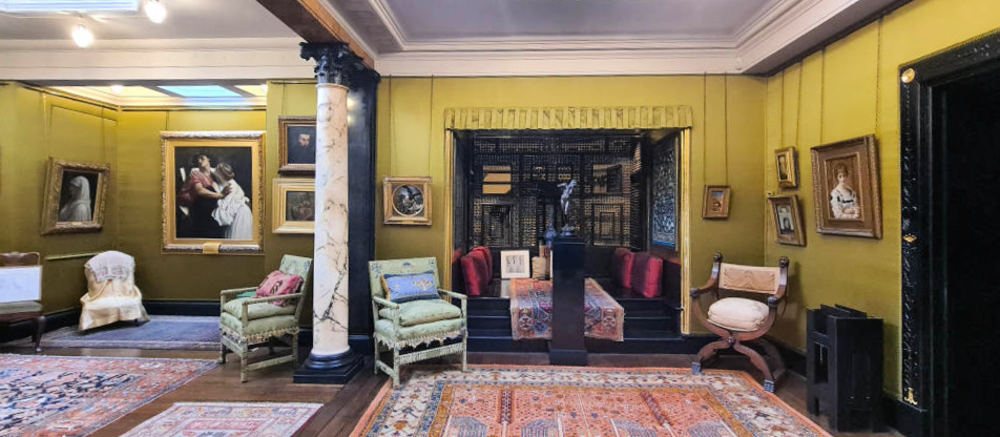
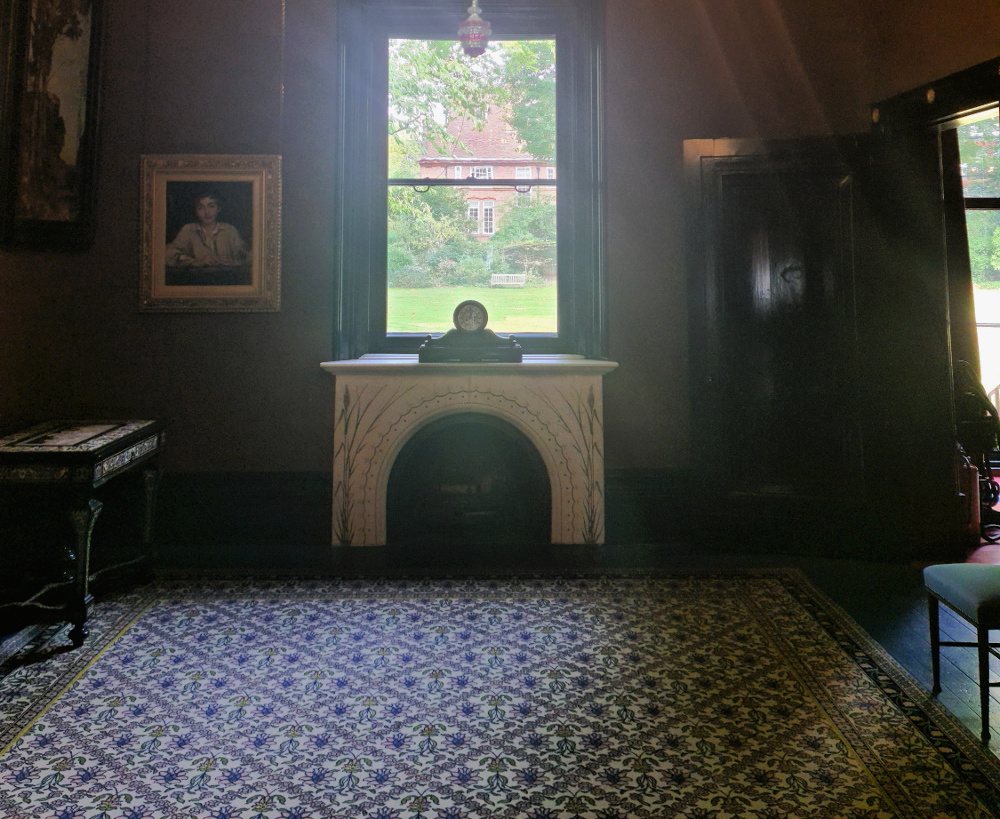
Look out for the fireplace with a window above it, which is something I have never seen before or since. The Winter Studio has a secret trap door through which Leighton could store his oversized works.
The Arab Hall at Leighton House Museum
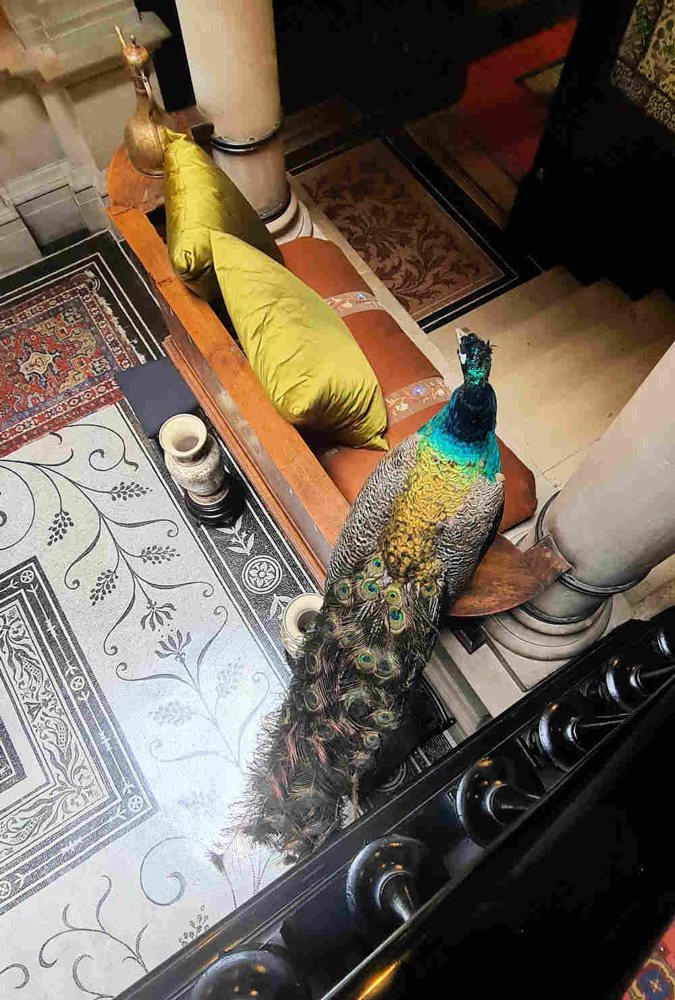
This resplendent double-height space was inspired by La Zisa palace in Palermo. Leighton was fascinated with the Islamic world and travelled extensively through North Africa and the Middle East, bringing back a hoard of tiles. The artist Walter Crane was commissioned to design the golden frieze for the Arab Hall, and William De Morgan made repairs to many of the damaged tiles and designed the turquoise tiles in the Narcissus Hall and on the staircase.
The new wing and Oneness
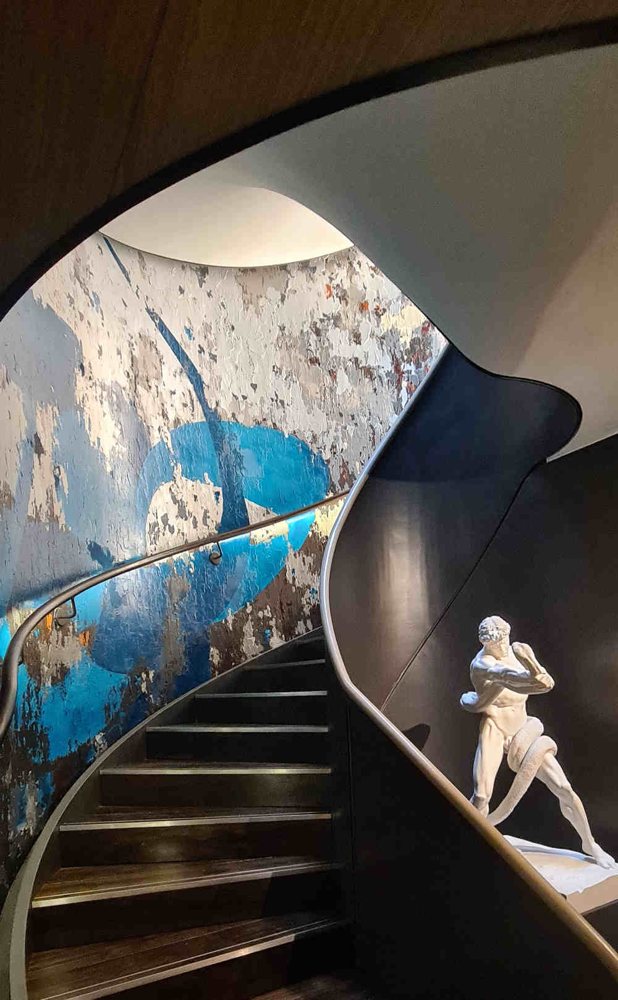
Part of the redevelopment is a new wing with a purpose-built drawings gallery, the Tavolozza Drawings Gallery, which is free to visit. The Iranian artist Shahrzad Ghaffari designed Oneness, a spiralling staircase with an 11-metre-high hand-painted mural. Inspired by the colour of the tiles in the Arab Hall, it is the first contemporary work of art in the house. Waiting below is Leighton’s famous bronze, An Athlete Wrestling with a Python.
The De Morgan Café at Leighton House Museum
The highlight of the redevelopment, for me, is the De Morgan Café. It sits in a recovered space beneath Leighton’s Winter Studio, with floor-to-ceiling windows overlooking the garden, exposed original brickwork, cast iron columns and a vaulted ceiling. William De Morgan ceramics are on display, along with two restored wall paintings by G.F. Watts, and the café counter was made by master artisans from Syria through the charity Turquoise Mountain.
The menu is seasonal, with soups, sandwiches, bakes and hot and cold drinks, so it’s the perfect stop for coffee and cake after your Leighton House Museum tour. And the café is free to visit, so you can pop in even if you’re not buying a ticket for the house.
The garden
The garden at Leighton House Museum is free year-round and is a quiet green space, home to Thomas Brock’s sculpture A Moment of Peril. It’s a lovely place to linger after the tour and look across to the neighbouring artists’ studio houses.
What’s free at Leighton House Museum
Leighton House Museum is generous with its free areas. You don’t need a ticket for the house to enjoy the café, the shop, the garden, the Tavolozza Drawings Gallery and Oneness. A ticket is only needed for the historic house itself.
Visiting Leighton House Museum
Address: 12 Holland Park Road, Kensington, London W14 8LZ. Nearest stations: High Street Kensington and Kensington Olympia.
The museum is open Wednesday to Monday, 10am to 5.30pm, and closed on Tuesdays, with last entry at 4.30pm. Adult tickets cost around £14, with discounts for concessions, children and National Art Pass holders. There are free volunteer-led tours on some afternoons, and on the first Monday morning of each month you can pay what you want. Handheld photography is allowed without flash, and the house has step-free access to all floors. Check the museum’s website for the latest times and prices before you go.
You can also buy a joint ticket with Sambourne House, which I cover in my guide to alternative museums in London. For more of the same, see my guide to London’s best house museums and my 14 fun facts about Kensington Palace.
Feature image: the Arab Hall at Leighton House, courtesy of Leighton House, RBKC.