Kensington Palace has more secrets than a Georgian court. Here are 15 fun facts about Kensington Palace, from its ghosts and a Georgian loo problem to an Oscar-worthy squabble and one of the most famous gowns in the world.
It was once a villa in the burbs
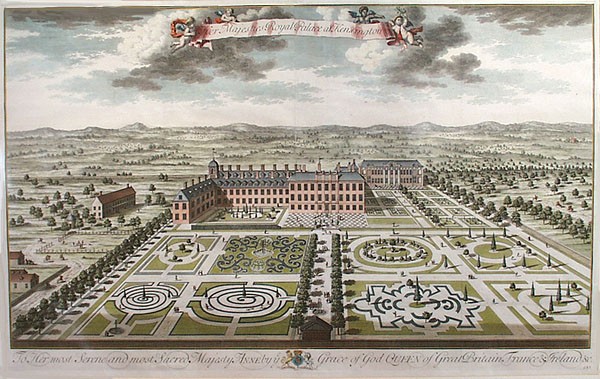
Kensington Palace in 1724. The baroque parterres were replaced by Queen Caroline with the pond and avenues you see today.
Kensington Palace was born in 1605 as a Jacobean suburban villa by the name of Nottingham House. Royal power couple William III and Mary II made this their chosen royal pad with all the trimmings, but not before asking Christopher Wren to expand the house and shape the gardens. When Queen Anne moved in, Wren completed the extensions which would include the Queen’s Apartments (used by Anne’s husband) and the Queen’s Entrance (more on that below). The Orangery and the 30-acre baroque parterre would complete the palace.
It was home to a famous Oscar-worthy squabble
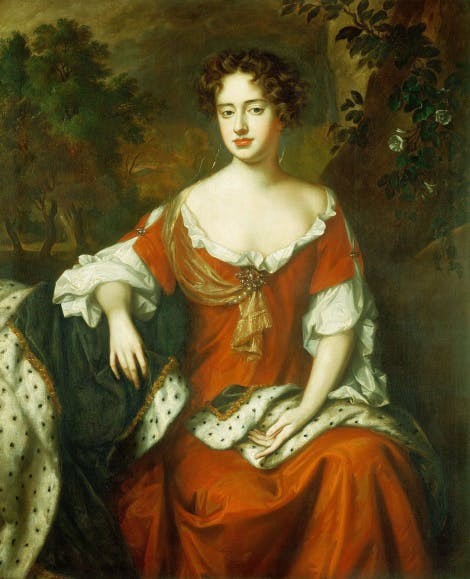
If you’ve seen the film, The Favourite, you will recall Queen Anne’s final royal to-do with Sarah Churchill, Duchess of Marlborough. It took place in the Queen’s Closet, and they were never to speak again.
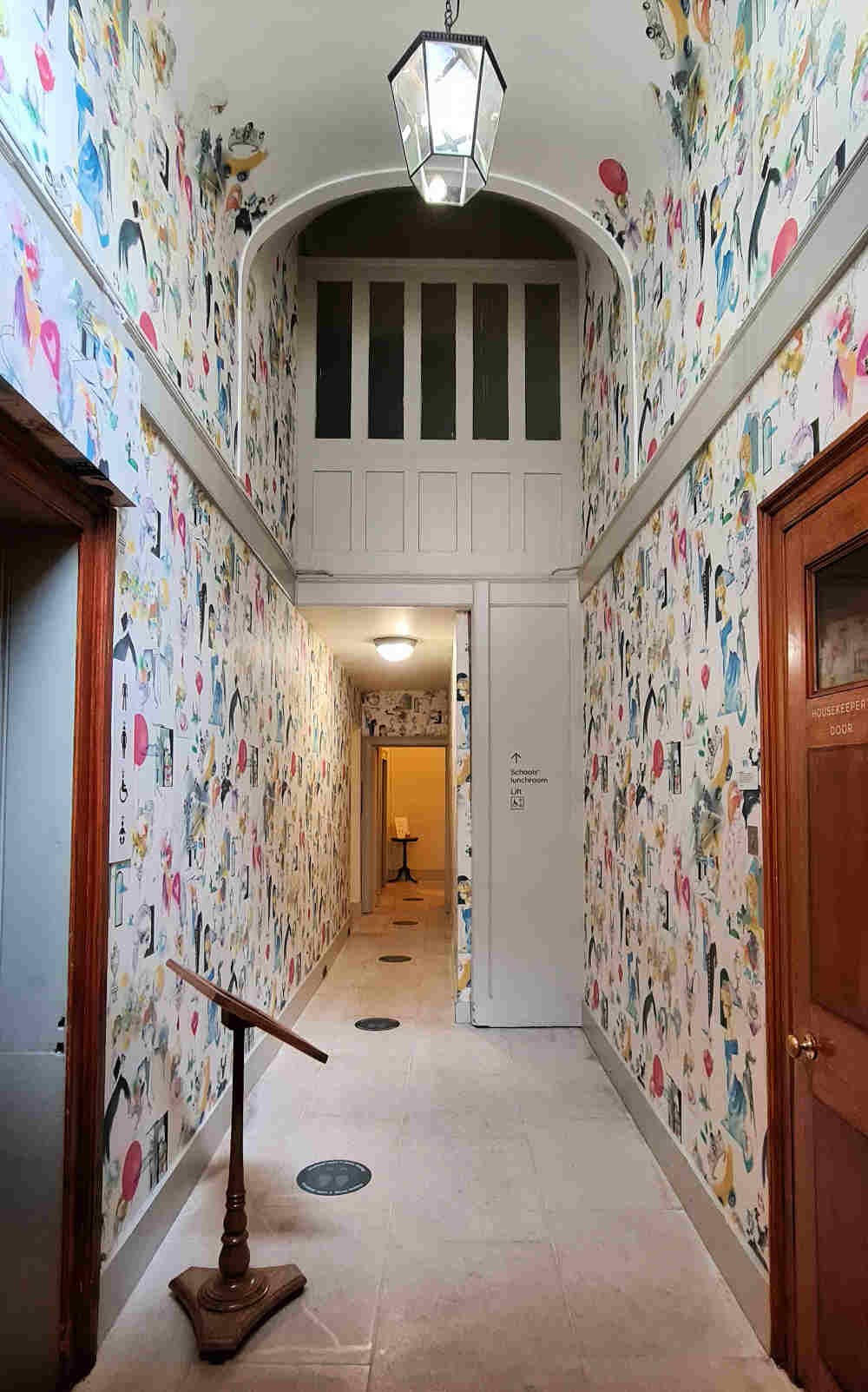
The archway next to the toilets at Kensington Palace marks the spot where the Chapel once stood. This is where Sarah Churchill’s nemesis Abigail Hill married Baron Masham.
Before discos, there was the Cupola Room
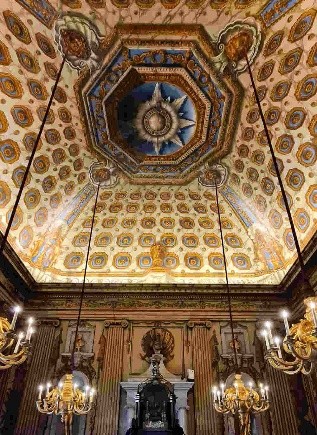
Enter King George I and the then unknown William Kent who was commissioned to decorate the state rooms. He started with the glorious Cupola Room, designed in the style of a Roman four-sided dome. The room is a study in illusion, dripping in trompe l’oeil art from floor to ceiling. Lapis lazuli, imported from Kabul in Afghanistan, adorns the ceiling. Taking centre stage in the room is a musical clock, The Temple of the Four Great Monarchies of the World which once housed the palace “jukebox.” The Cupola Room was where royals and courtiers would boogie the night away to flickering candelight and to the sounds of Handel and Corelli.
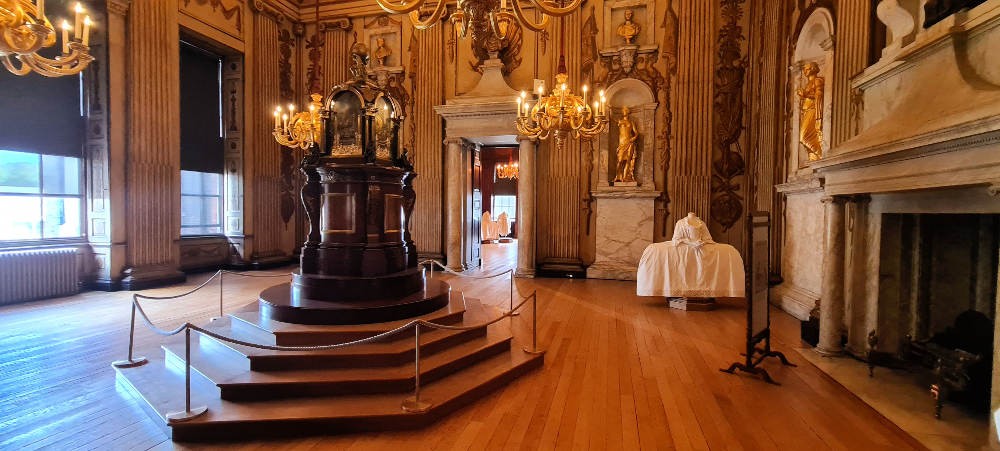
Note the four bronze statuettes on the corners of the clock and the Hercules and Atlas at its peak, all sculpted by French sculptor Louis-François Roubiliac. He also sculpted Handel’s monument in Westminster Abbey.
The Cupola Room is where Queen Victoria would be baptised.
It has a staircase that appears to laugh and whisper
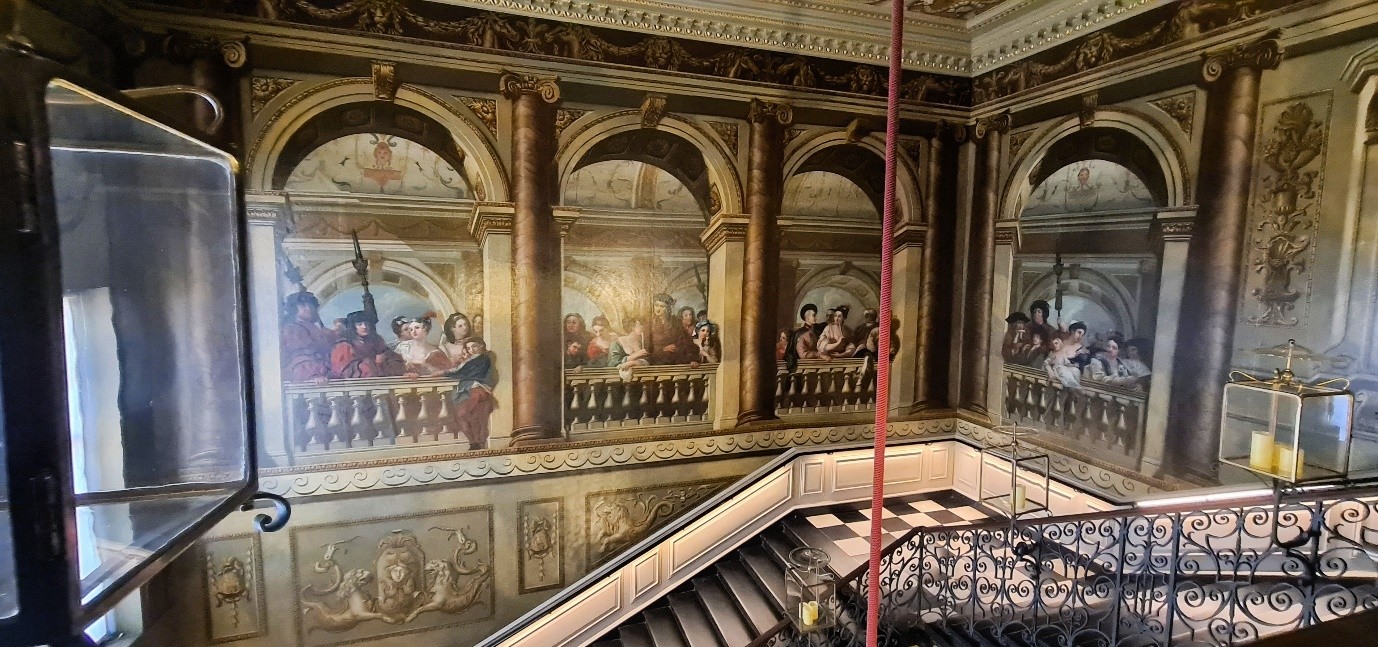
William Kent’s crowning glory at Kensington Palace would be the magnificent King’s Staircase, designed for maximum impact as one ascended towards the second-floor state apartments. 45 courtiers are clamouring for your attention: fans at the ready, they are showing off and whispering to each other. Keep your eyes peeled for Peter the Wild Boy, the Turkish servants Mahomet and Mustapha and the artist himself.
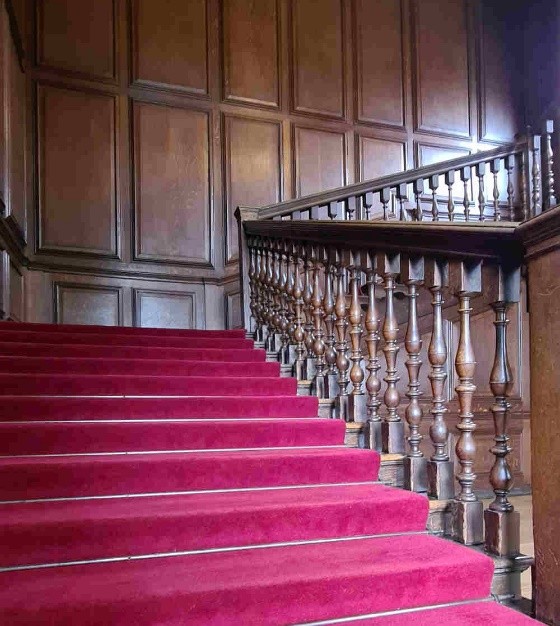
Other staircases in Kensington Palace are more modest, but if only treads could talk. The modest Wren-designed Queen’s Staircase includes a shallow step which would have allowed Queen Anne to descend in style. The Stone Staircase is where Victoria met her Albert in 1836. This greatest of royal love stories would sire 9 children and 39 grandchildren.
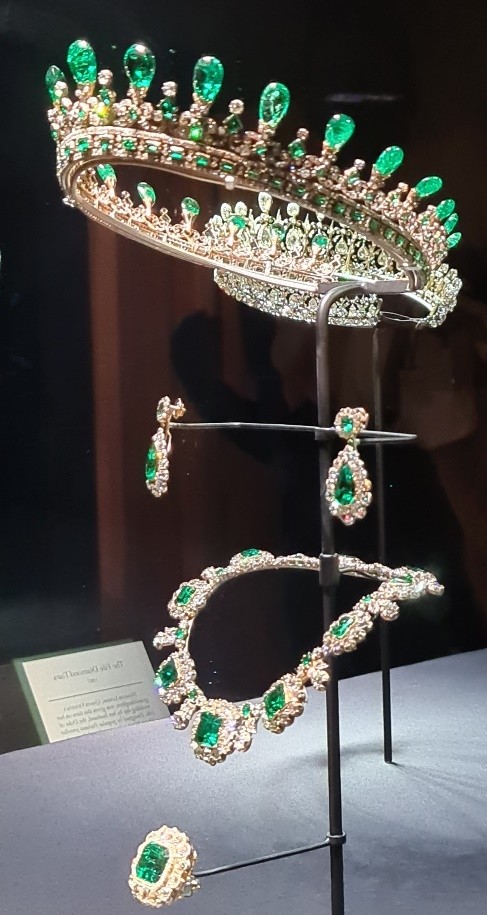
Queen Victoria’s emerald necklace, earrings and tiara, designed by Prince Albert, are on display in the jaw-dropping Jewel Room.
Georgian party frocks: the wider the better
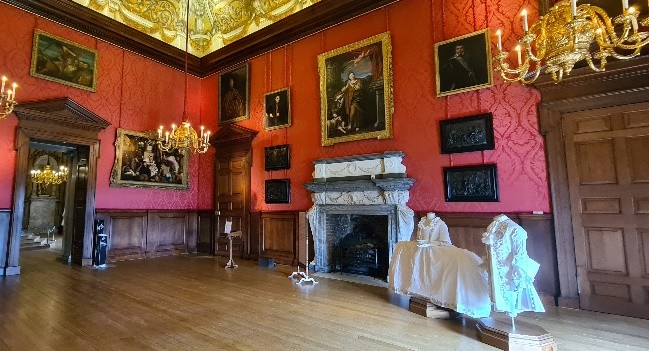
The voluminous and unwieldy Mantua dress wasn’t just a fashion statement. With its gold and silver thread and delicate lace and gems – all put together by French Huguenot artisans in Spitalfields – this court dress was also a screaming advertisement for how wealthy a courtier was. These days, the two-metre dress would be perfect for a spot of social distancing.
The men wore as much makeup as the ladies
It wasn’t just the ladies who were showing off. Men would wear white powdered periwigs, lead-based face paint and rouge lipstick. Eyebrows would be shaved in favour of mouse hair attachments. Intricately embroidered suits, silk stockings and shiny pumps would complete the understated outfits.
When in doubt, one would simply pee on the floor
Imagine this: you’re in the presence of the king; you’re wearing your best frock; you’re hanging out with tout London. Suddenly, you need to go to the loo. You can’t possibly get through the door in your Robe de Cour (which requires sideways navigation) without the king noticing. There isn’t a ‘bourdaloue’ (portable bedpan) in sight and the pageboy who would normally part the back of your dress and install one under your good bottom is otherwise engaged. So, what do you do? Pee on the floor of course. Le husband, on the other hand, only needs to park himself in a corner of the room, or even better in the fireplace, if he needs to have a go.
Death came calling and left some ghosts behind
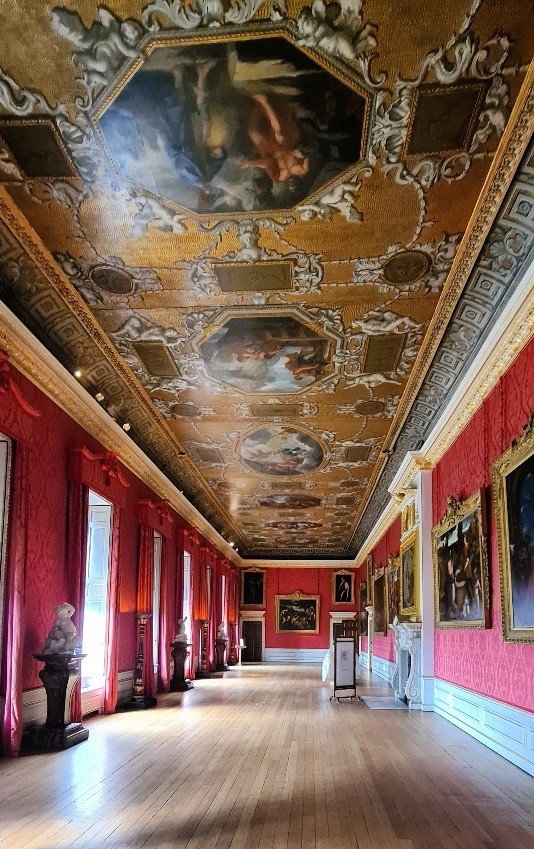
The King’s Gallery at Kensington Palace where William III caught the chill that would kill him
Several monarchs died in Kensington Palace. Queen Mary died of smallpox here in 1694 and William followed suit when he caught a chill in the King’s Gallery, consequently dying from pneumonia in 1702. Queen Caroline died of a strangulated burst bowel in 1737, and George II passed away 23 years later on his close stool (toilet).
These days, it is rumoured that one can hear George II moaning from the King’s Gallery with his last words “why won’t they come?” Mary II can also be heard weeping in the Queen’s Gallery.
It took 14 men to carry Queen Anne’s coffin
By the time Anne died of a stroke, she was so obese and swollen that it took 14 men to carry her square-shaped coffin.
Queen Victoria lived here until she became queen
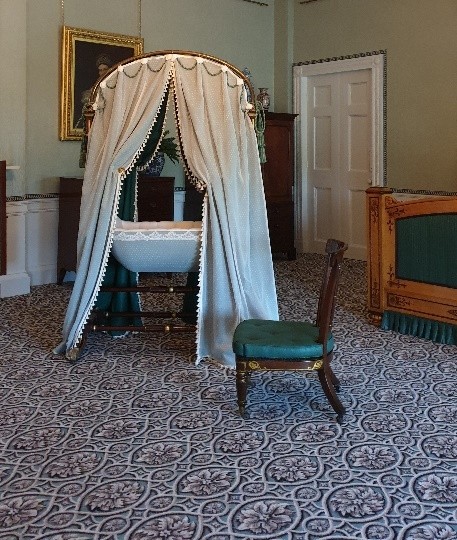
Queen Vic was born and grew up in the palace, living under the strict ‘Kensington System.’ On 20 June 1837 at 6am she received the news that her uncle, William IV had died. The following day, she moved into Buckingham Palace. You can learn more about Victoria and how she grew up at Kensington Palace in the exhibition Victoria A Royal Childhood.
More recently, the occupants of Kensington Palace have included Princess Margaret and Diana, Princess of Wales, and it remains a working royal residence.
Kensington Palace was nearly demolished
The palace fell into serious disrepair in the 1890s and was nearly demolished. Thank goodness Queen Vic intervened and insisted that her childhood home be saved, declaring “while she lived, the palace in which she was born should not be destroyed”. She persuaded Parliament to approve its two-year renovation in 1897, and the State Rooms were opened to the public on her eightieth birthday.
The Queen Victoria Statue was sculpted by the queen’s daughter
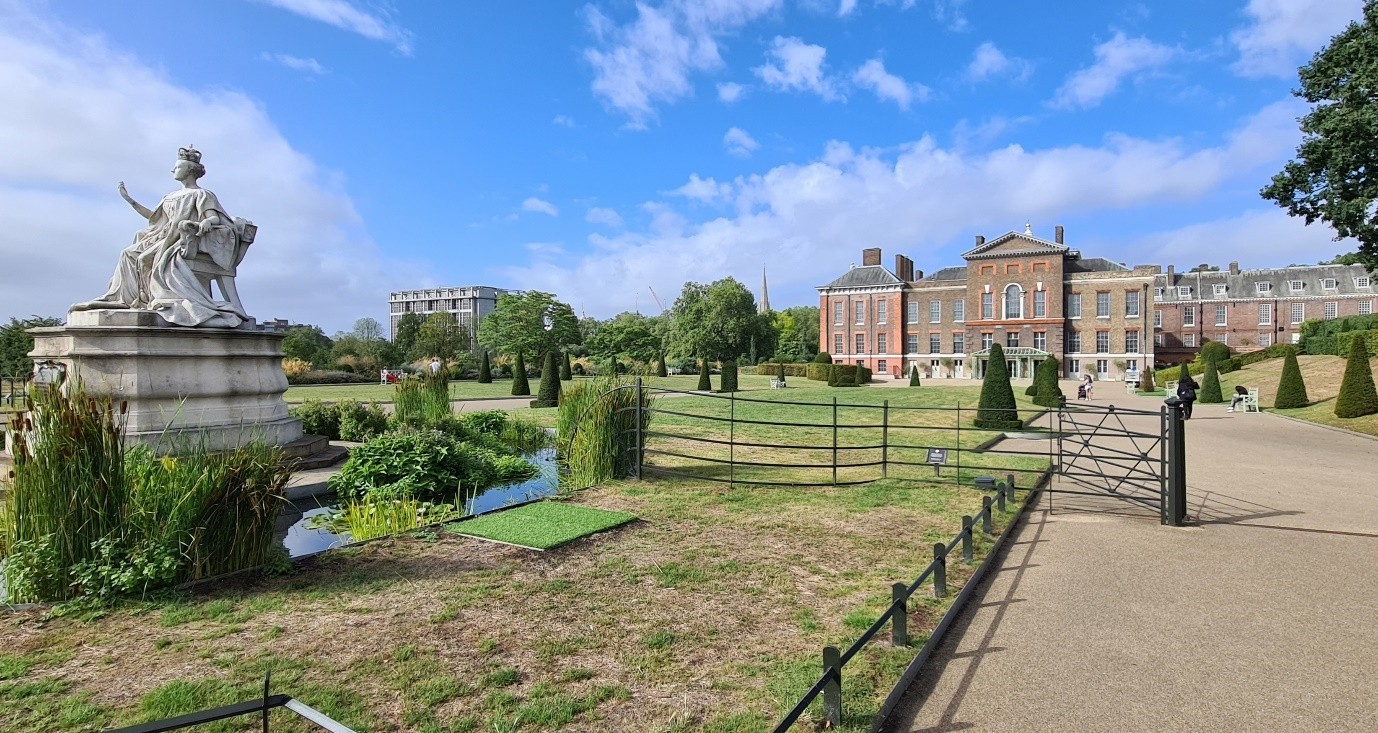
The Grade II listed statue you see in front of the palace was made by Victoria’s daughter, Louise. Erected in 1893, it is made of Portland stone and depicts an 18-year-old Victoria in her coronation robes. It suffered some damage during World War II when shrapnel removed its nose. Queen Elizabeth II had it replaced in 1952.
It was once home to the Museum of London
From 1911 to 1914, the palace’s state rooms housed the Museum of London before it moved to its current location in Barbican.
You can host your own private soirée here
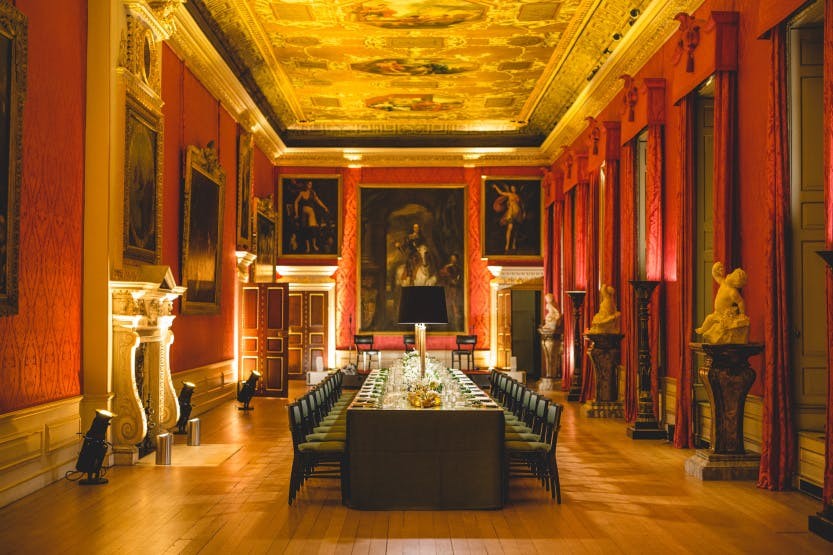
Next time you’re planning a wedding or a cocktail party, look no further. Choose from the King’s Gallery, the King’s Drawing Room, the Cupola, the Privy Chamber and the Queen’s Gallery. What’s good enough for the Bafta dinner party is good enough for me.
You can gaze at one of the most famous gowns in the world
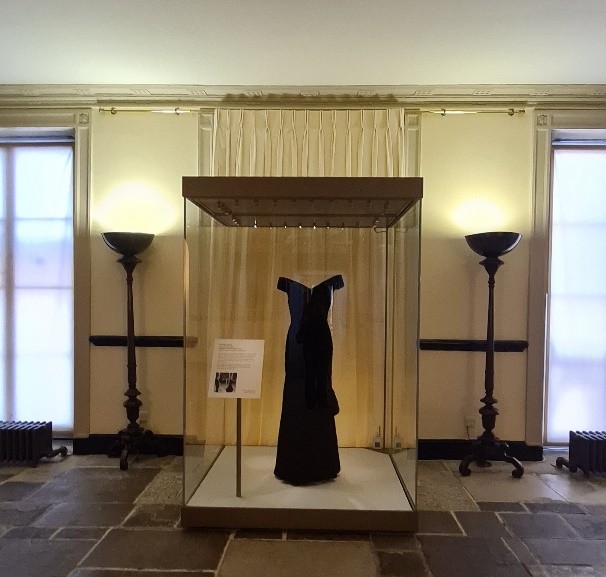
Among the palace’s most famous treasures is the (John) Travolta dress worn by the late Diana, Princess of Wales. The gown, designed by Victor Edelstein, became its own star when Diana wore it to a White House Gala in 1985. Travolta and Diana took to the dance floor and made headlines across the world.
Visiting Kensington Palace
Kensington Palace is run by Historic Royal Palaces. Check opening times and book your tickets on the official Kensington Palace website.
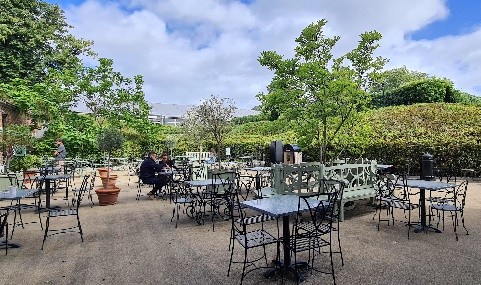
The Palace Café is a lovely place to stop for a drink and a snack, and you can sit outside on the café terrace.
First written in 2020. Opening times, prices and exhibitions change, so please check the official website before you visit.