You may have never heard of Pitzhanger Manor, but you will now. Following a three-year, £12 million renovation and restoration project, this London gem is striking a Regency pose, ready to make your acquaintance. Designed in 1800 by the neo-classical starchitect John Soane, the manor is reborn like a peacock rising from its ashes.
Soane the builder at Pitzhanger Manor
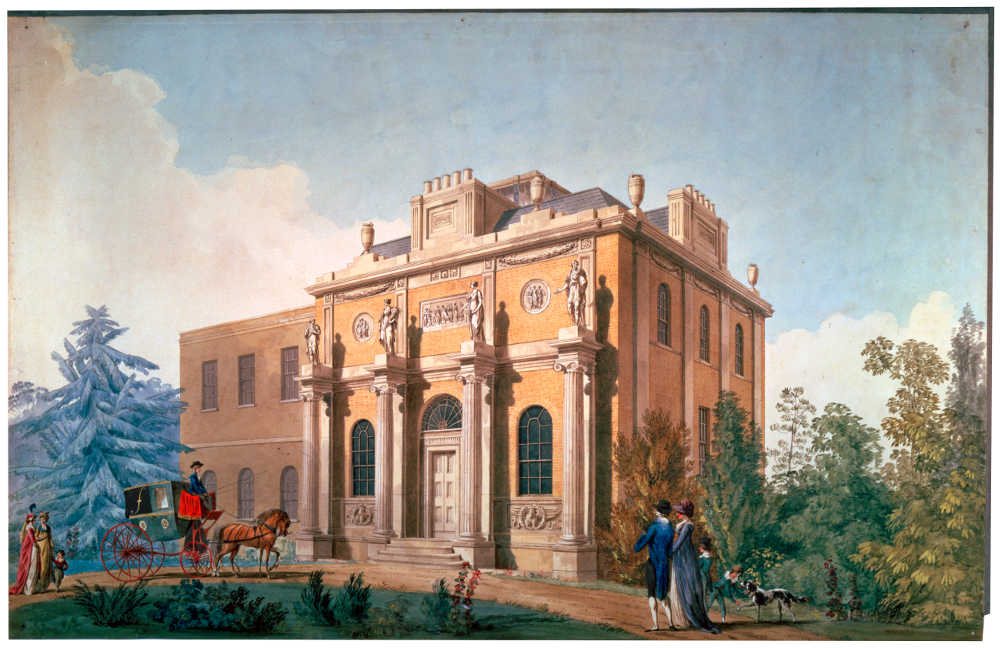
Pitzhanger Manor, Joseph Gandy, 1800 (Sir John Soane’s Museum, London).
Born in 1753, Soane was the son of a Berkshire bricklayer. Aged 15 he became apprenticed to the leading neo-classical architect George Dance the Younger, and later he worked for Henry Holland. He went on to study at the Royal Academy of Arts and, armed with a scholarship, took a two-year Grand Tour, the bulk of it in Italy.
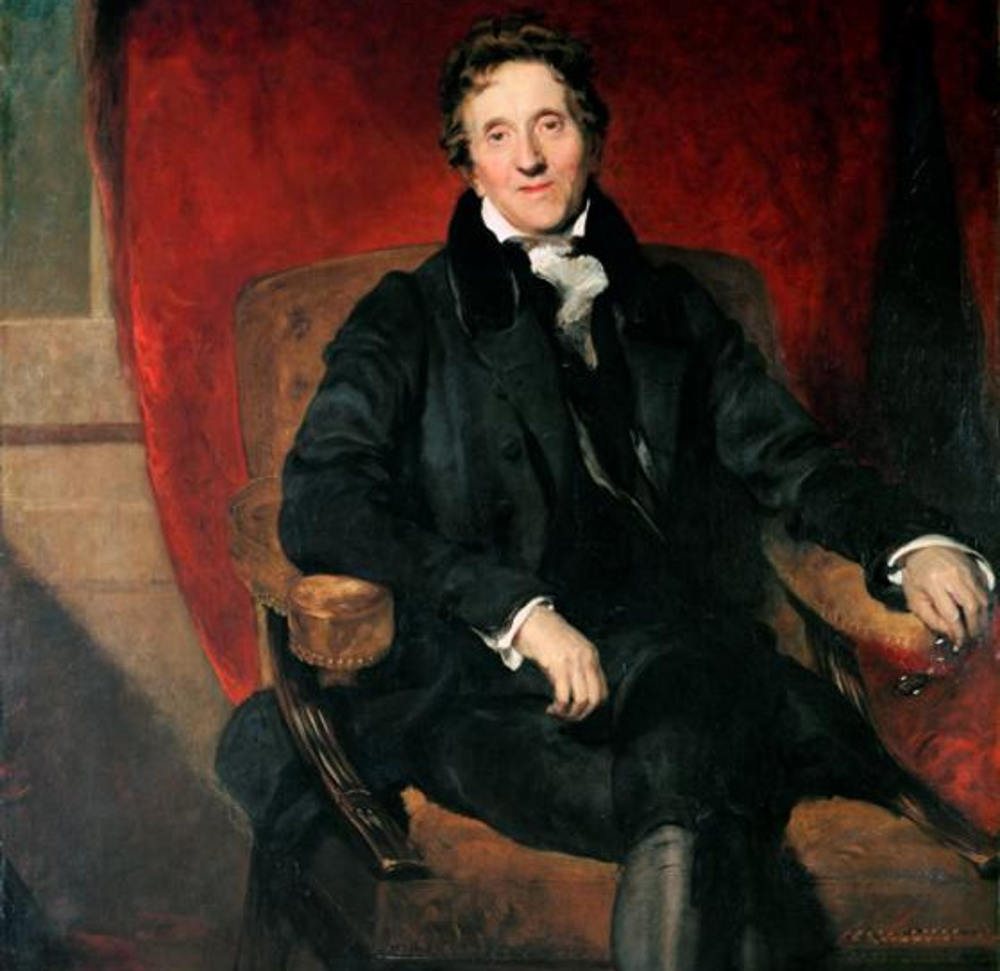
Sir John Soane, by Thomas Lawrence (Sir John Soane’s Museum).
By the time the 47-year-old Soane bought Pitzhanger Manor in 1800 he was one of Britain’s leading architects. He had already bought one of the three buildings in Lincoln’s Inn Fields that were destined to become the Sir John Soane’s Museum. But in 1800 he was dreaming of owning an Italian-style country estate, and he paid £4,500 for the manor and its 28 acres of grounds (now Walpole Park).
Soane had worked as an apprentice on the original house under his mentor Dance. He kept the west wing of the Dance house, which now holds the Upper Drawing Room and Eating Room, but demolished the rest. The result was a flashy showcase of his architectural prowess, a swanky show home where he could tour his London clients and entertain friends. Like Horace Walpole over in Twickenham’s Strawberry Hill House, Soane turned Pitzhanger into a residential jewellery box, and like Walpole, if he couldn’t buy real Greek and Roman artefacts and ruins, he had reproductions made instead.
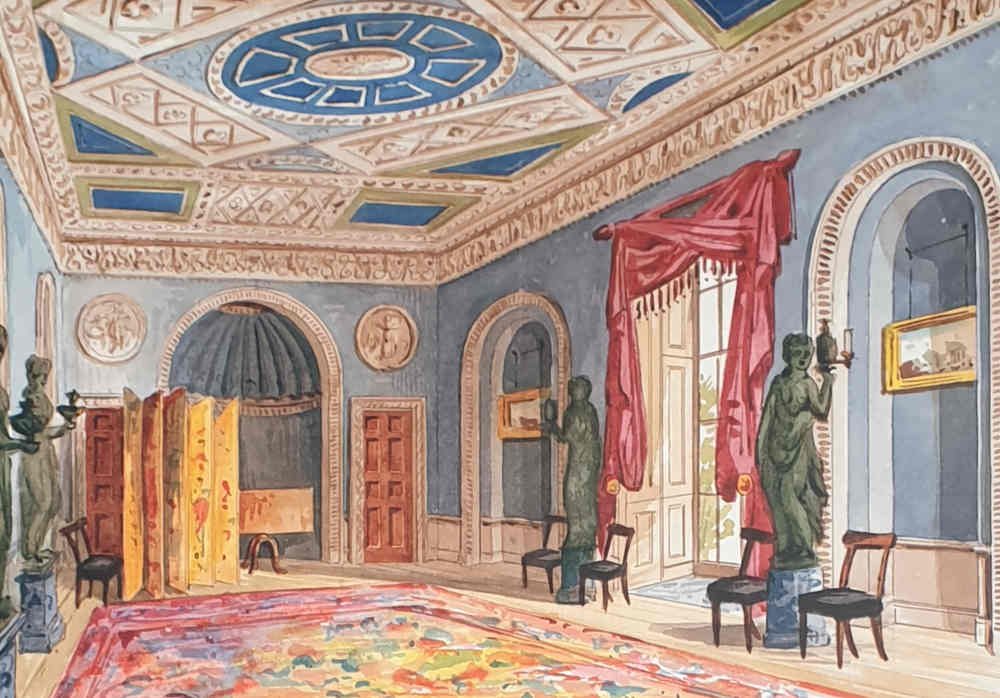
The original Eating Room at Pitzhanger Manor.
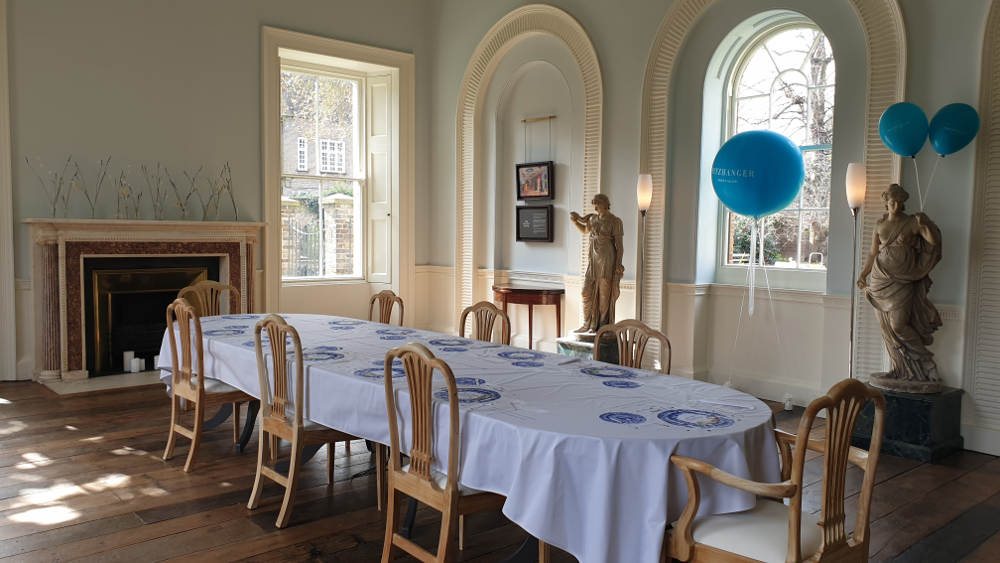
As you head over to Ealing on the Central line, spare a thought for its gout-ridden architect, who would sometimes walk eight miles from his home in Lincoln’s Inn Fields to his country bolthole. J.M.W. Turner, one of his good friends, is said to have joined him to fish in the lake for supper (see my guide to Turner in London). Soane’s wife Eliza and their sons John and George were part of the picture too, and Pitzhanger was supposed to be the picture of domestic bliss.
Soane had high hopes that his eldest son John would follow in his architectural footsteps, but John was having none of it. In 1810 Soane sold Pitzhanger and moved his groaning art collection to Lincoln’s Inn Fields, eventually expanding into three adjacent properties. Father and son had a major bust-up, and in 1815 Soane blamed his son for Eliza’s premature death. His final act in 1833 was to leave the house in Lincoln’s Inn Fields to the nation by Act of Parliament, making sure it would never end up in his son’s hands.
Entertaining Mr Soane
If there was a Beau Brummell of property design, John Soane would be it. He was the ultimate show-off, and he knew how to put on a good party. In 1825 he held three lamplit evening parties at Lincoln’s Inn Fields to introduce the cream of London society to his Seti Sarcophagus, bought in 1824 from the explorer Giovanni Belzoni.
Earlier, at Pitzhanger, he invited chichi guests to his “intellectual banquets”. Imagine arriving for dinner with the Soanes by landau at night, the house glittering with its beckoning lights (or if you were Turner, you might have walked over for some pre-dinner fishing). You would drive through the gateposts which Giles Gilbert Scott would later steal for his iconic red phone box designs.
You might be dining with Soane’s notable friends, all of whom referred to each other by surname and some of whom might have been on the Grand Tour with the host. Guests might have included Soane’s BFF Turner; Edward Foxhall, interior designer, who worked on Pitzhanger with Soane; John Flaxman, a fellow Royal Academician; Nancy Storace, opera singer from the Grand Tour, and her long-term companion, the singer John Braham (“a beast of an actor but an angel of a singer”); Samuel Thornton, a cousin of the anti-slavery campaigner William Wilberforce; and Joseph Gandy, an architect who illustrated Soane’s designs. These meals would be hosted by the capable Eliza Soane, who was actively involved in the menu. Her notebooks show that preferred ingredients included beefsteak and lamb chops, hams, lobsters, tongue, prawns, oranges, lemons, cakes and wines.
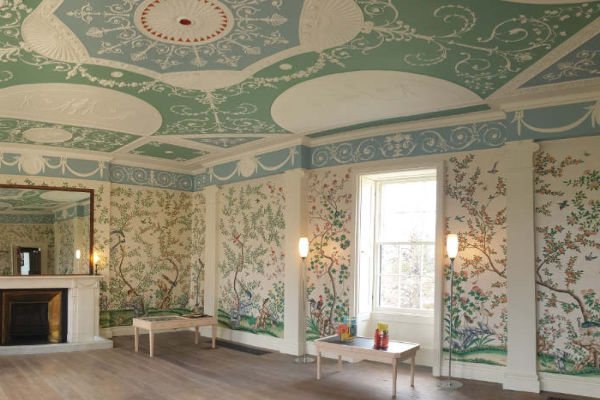
The Upper Drawing Room is thought to have been designed by Eliza Soane, although the original ornate plasterwork ceiling is by Dance. Londoner Alasdair Peebles painstakingly recreated the historical wallpaper over six months, ensuring it was as close as possible to the paper that originally hung in the room.
The Pitzhanger Manor restoration
Soane had been all but erased from the manor’s interior by the time the restoration project started. The house had been whitewashed, the crowning vestibule skylight had been boarded up and windows had been blocked. The conservatory had been demolished, and Soane’s kitchen area had been replaced with a 1930s library by Ealing Council.
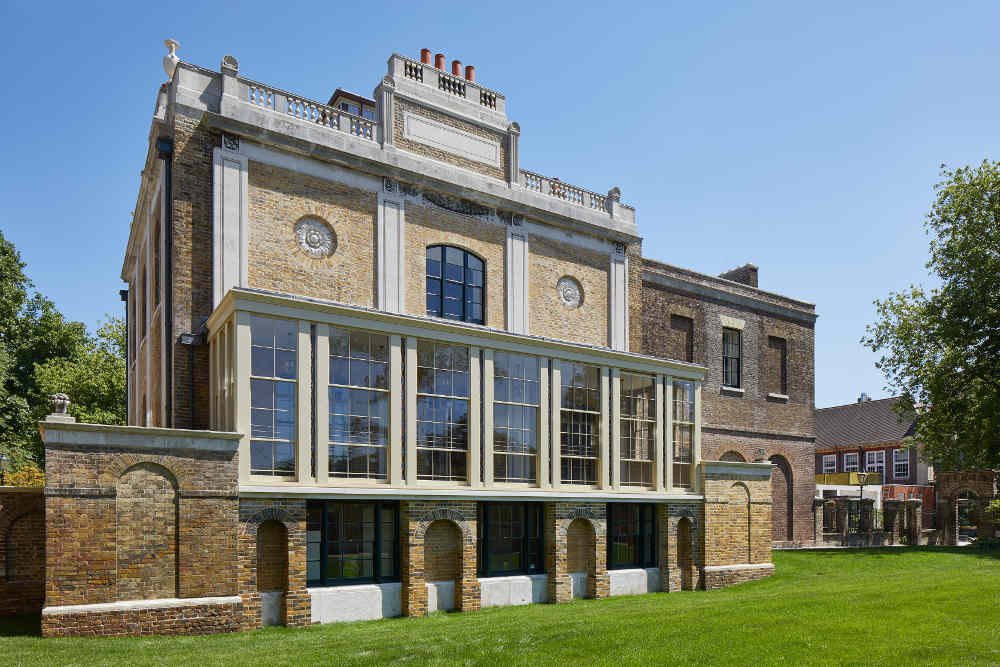
Photo: Andy Stagg.
This facelift took serious detective work. Heritage experts Julian Harrap and architects Jestico and Whiles were brought in to lead the renovation, and Hare and Humphreys provided the historic paint analysis which enabled the team to recreate the Soanesque palette. The master of the house came back from the dead in all his colourful glory, teasing and surprising in every nook and cranny. Soane’s theatrical trademark designs, with ornate ceilings, coloured glasswork, Italianate paintwork in ochres and blood reds and grey marble-effect walls, were all home to roost.
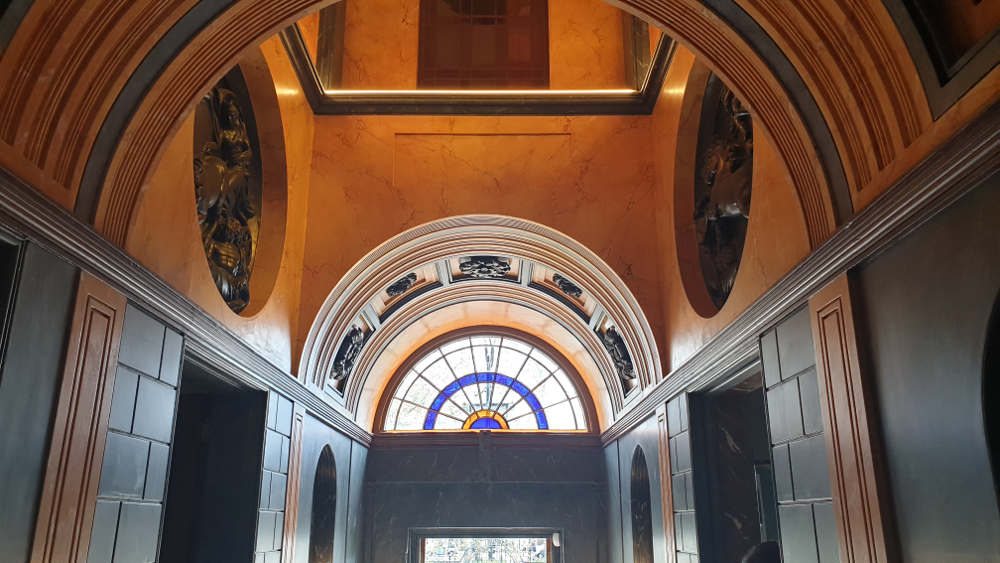
The vestibule is one of the highlights of the house. Make sure you look up when you pass through.
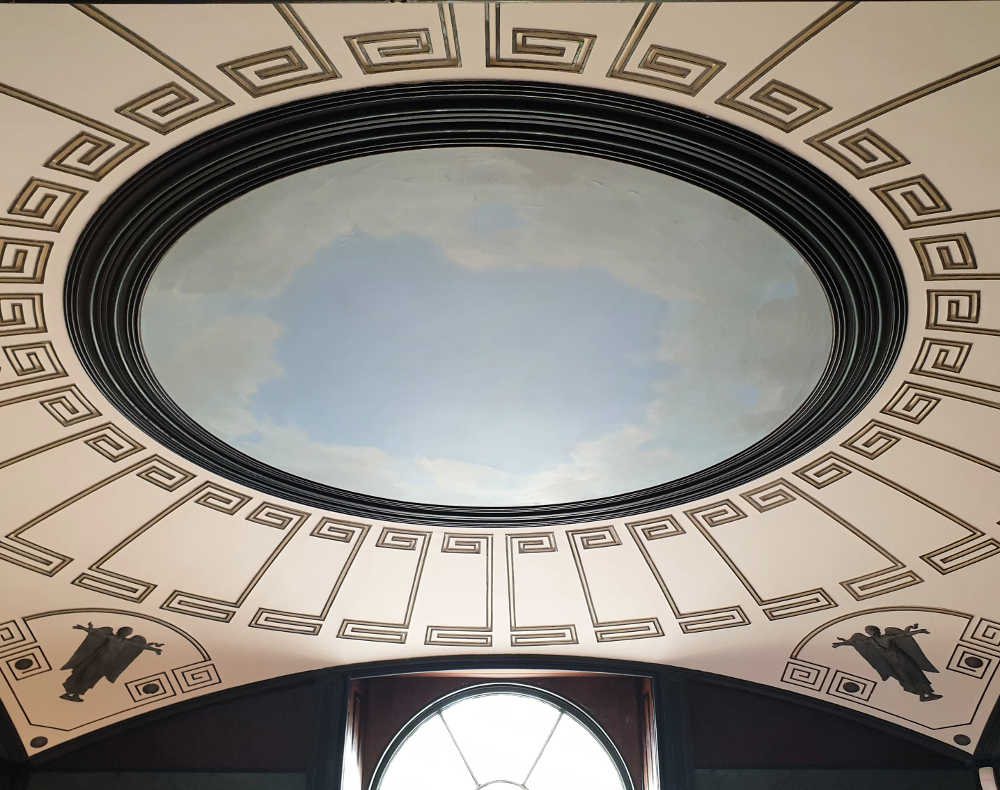
The ceiling in the Breakfast Room inspired Giles Gilbert Scott’s design for the red phone box.
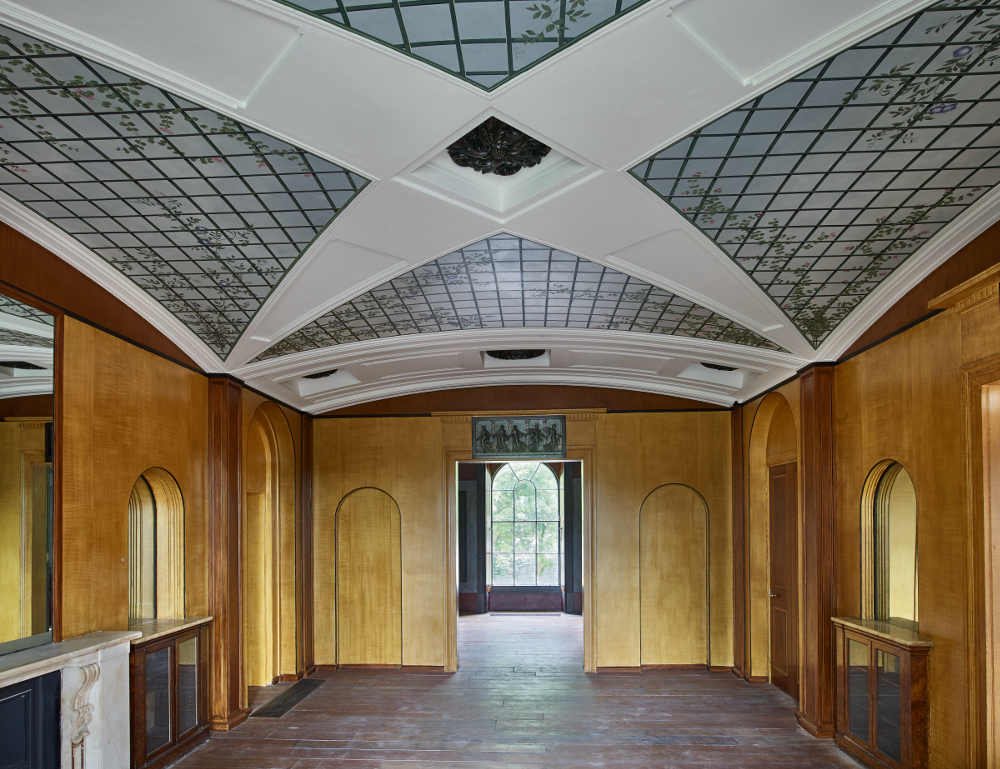
Photo: Angelo Hornak. Soane’s starfish ceiling in the Library would also make an appearance in Lincoln’s Inn Fields and in the dining room at No 10 Downing Street.
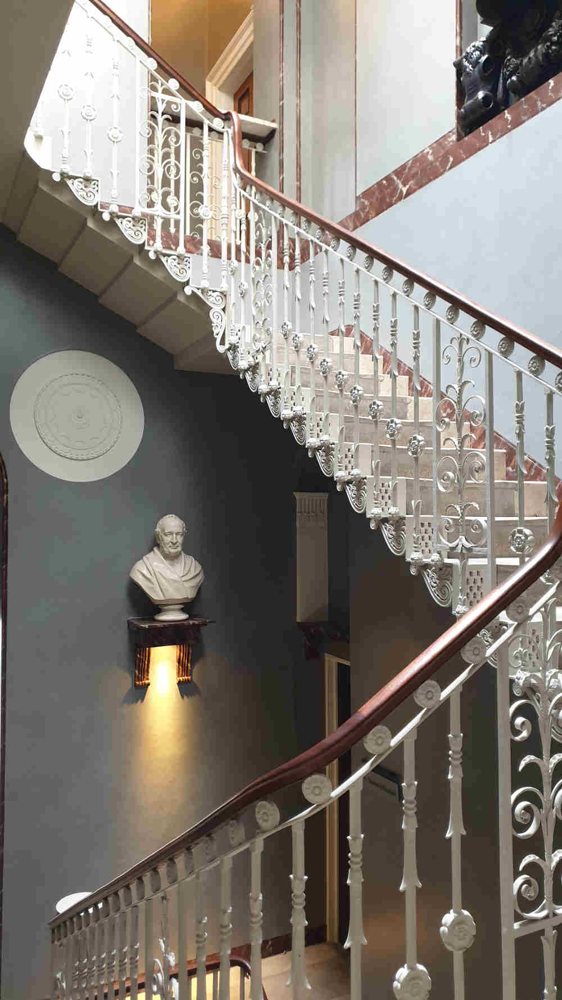
Today Soane’s ludic home sits in contrast to a difficult personal life, marred by ill-health, family strife and manic depression. Imagine, for a moment, what Soane might have created if he had actually been cursed with the happy spell. So come on down to Pitzhanger. You could even try it on foot like Soane. It’s an encounter I promise you won’t forget. You can catch more of Soane’s genius at the Soane Museum and at the Dulwich Picture Gallery.
Visit Pitzhanger Manor: practical information
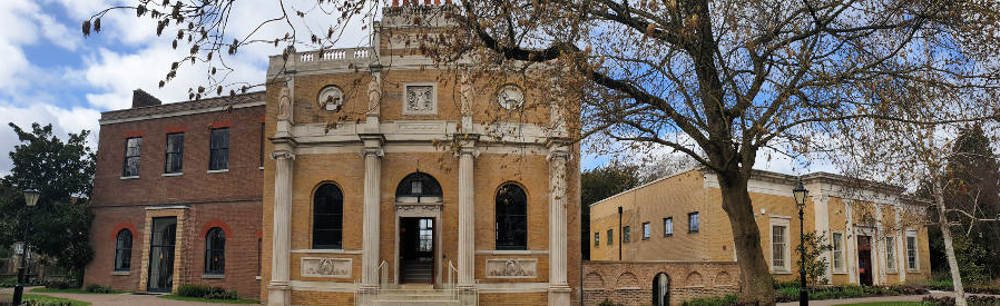
Next door to the manor, and linked by a colonnade walkway, is the Pitzhanger Gallery, a 1930s addition which hosts a programme of exhibitions through the year.
Where: Pitzhanger Manor & Gallery, Mattock Lane, Ealing, London W5 5EQ, in Walpole Park. The nearest station is Ealing Broadway on the Central line.
Tickets and opening times: these change through the year, so check the official website before you go. For more of the architects and houses I love, see my guides to Chiswick House and Gardens and London’s best house museums.