It’s officially called the BAPS Shri Swaminarayan Mandir. I know, you won’t be able to pronounce the name, so just call it the Neasden Temple. Yes, you read that right. Neasden. This divine white temple, which you would expect to see in Agra, actually sits in north-west London. It’s a masterpiece of Indian craftsmanship and shimmers in that Taj-Mahalesque way. Here’s what you need to know about this architectural curiosity, which anyone is free to visit.
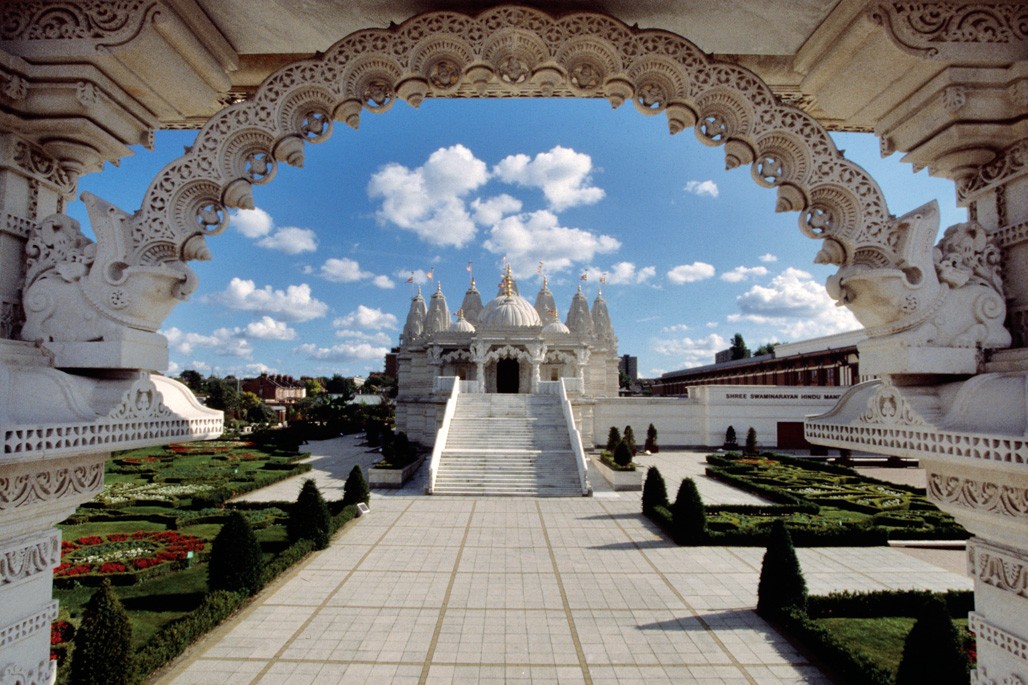
The Neasden Temple is a labour of love, art and design
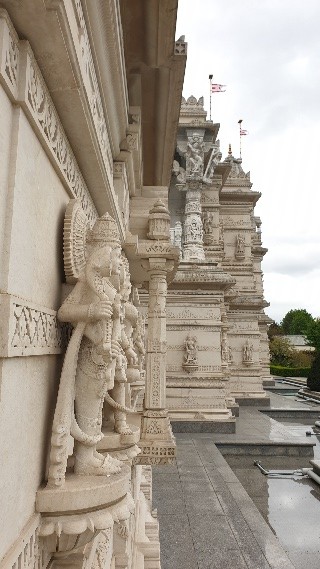
This was Europe’s first traditional Hindu stone temple, opened in 1995 and built with the support of the Hindu community. It is dedicated to Bhagwan Swaminarayan and was the brainchild of Pramukh Swami Maharaj, the spiritual leader of BAPS (the organisation behind the temple). It was constructed using traditional Hindu architectural methods, which means no structural steel whatsoever. Gulp.
It was made in India
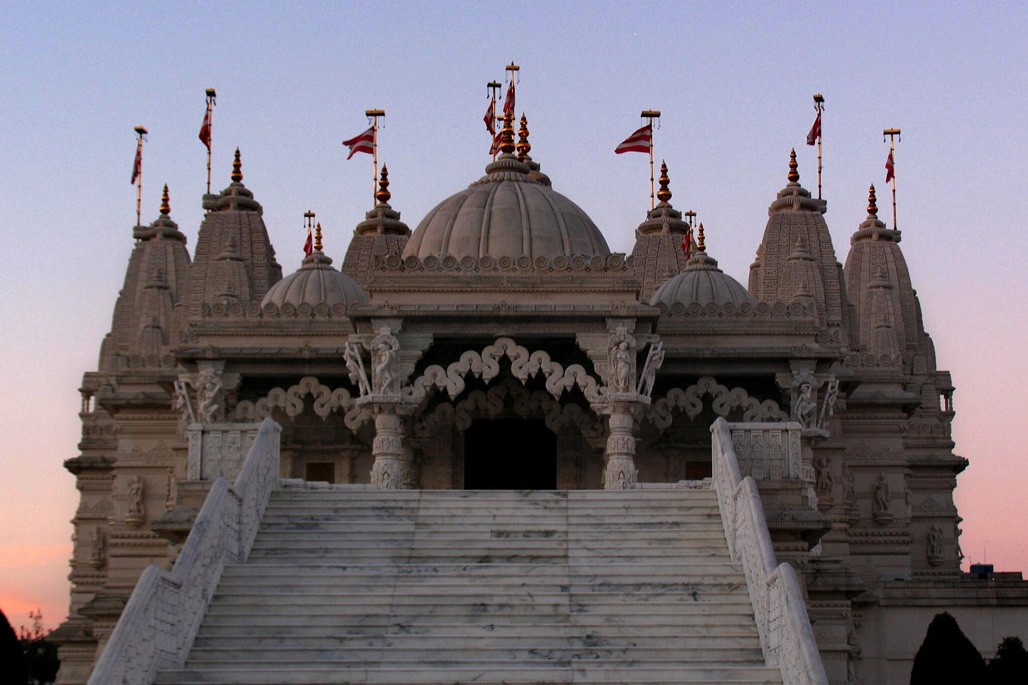
The temple is an act of faith on another level. Over 5,000 tons of Bulgarian limestone and Italian Carrara marble were shipped to India, where around 1,500 artisans hand-carved thousands of individually numbered stone pieces. This is where all those years of Lego-building come in handy: the pieces were shipped to London and the intricate three-dimensional jigsaw was re-assembled on site by volunteers.
You don’t need to be a Hindu to visit
Anyone is welcome to visit the Neasden Temple. Just remember this is a place of worship, so you need to play by the house rules. You will need to remove your shoes (there are lockers for storage) and dress appropriately. The temple’s official website has all the visitor guidelines.
If you need some brushing up on your Hindu history, there’s a permanent exhibition spread over 3,000 square feet that gives an overview of Hinduism using 3D displays and craftwork.
The sum of two divine parts
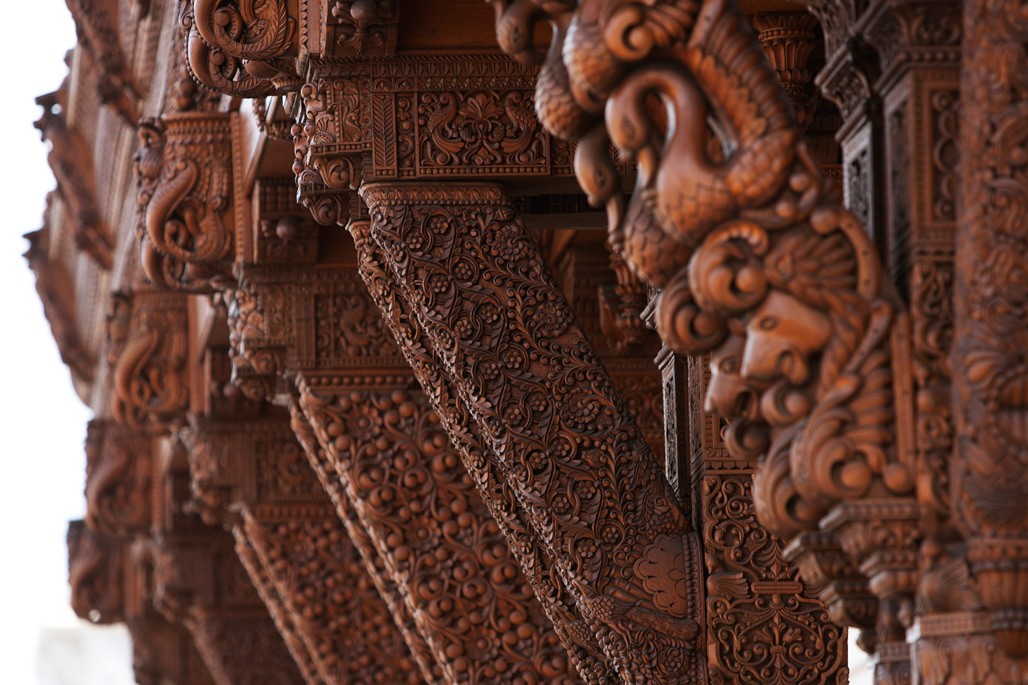
The temple consists of the Mandir (the stone temple) and the Haveli (the wooden cultural centre). Visitors enter via the ornate wooden Haveli, built in traditional Gujarati style. Check at the Information Desk if a personal guide is available, and there’s a souvenir shop where you can take away some incense or a Hindu deity for your home (I have a good 15 of these beauties dotted around my home). The Haveli leads into the Mandir, which is the space used for worship.
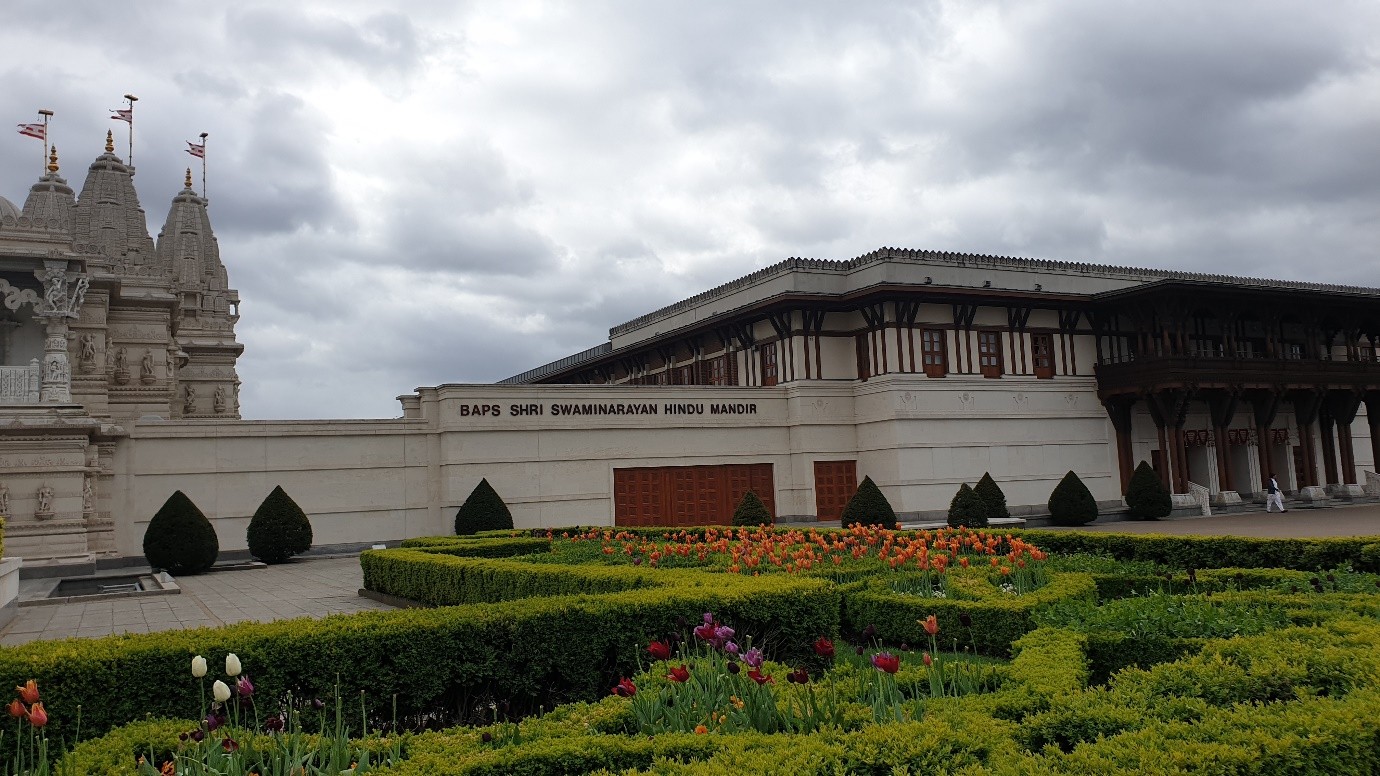
You are welcome to participate
At the beating heart of the Mandir is the Maha-Mandap (the Great Hall) on the upper floor. Look up at the eye-popping cantilever dome, but also take time to look at the deities around you and the exquisite carvings. When we visited, the shrines were open for prayer and we witnessed the ancient Hindu Arti ceremony, which takes place daily at 11.45am. You can wander around the hall or just sit in quiet contemplation.
Head downstairs to take part in the Abhishek ritual, an ancient Hindu practice of pouring water over a sacred deity. The whole ceremony takes approximately 15 minutes.
Visit the Neasden Temple at any time of year
Come rain, snow or sun, there’s never a bad time to visit the Neasden Temple, although the gardens may close if the weather is particularly bad.
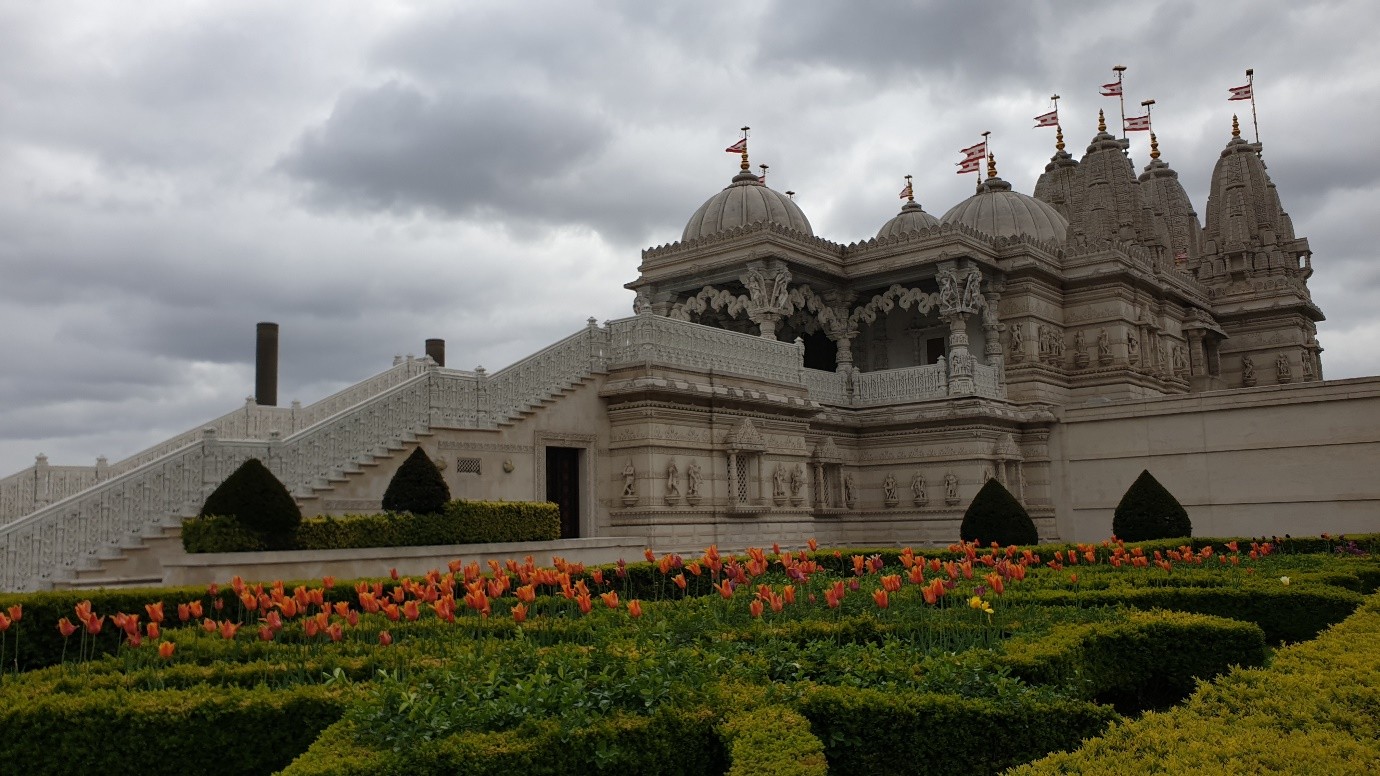
Take some time out to wander around the ornamental gardens, a marriage of Hindu-influenced lotus-shaped beds and ponds with classical British horticulture: tulips, roses and boxed hedges.
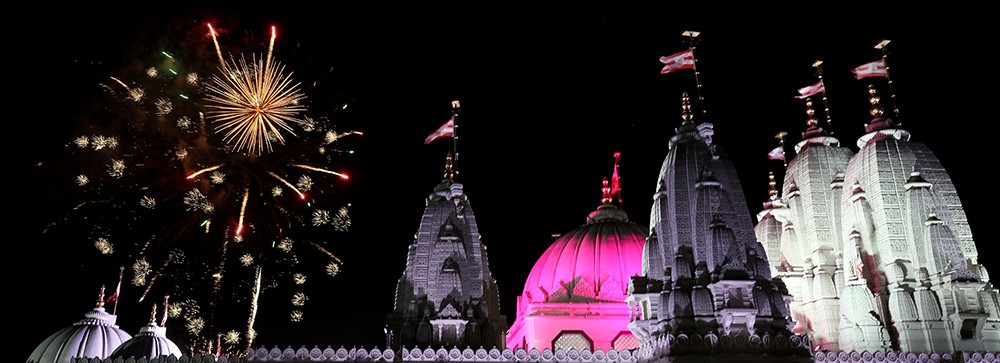
During Diwali, the temple puts on a flaming good show with a fireworks display to mark the Hindu New Year. No, that’s not Disneyland. It’s the Neasden Temple during Diwali.
Neasden Temple: what you need to know
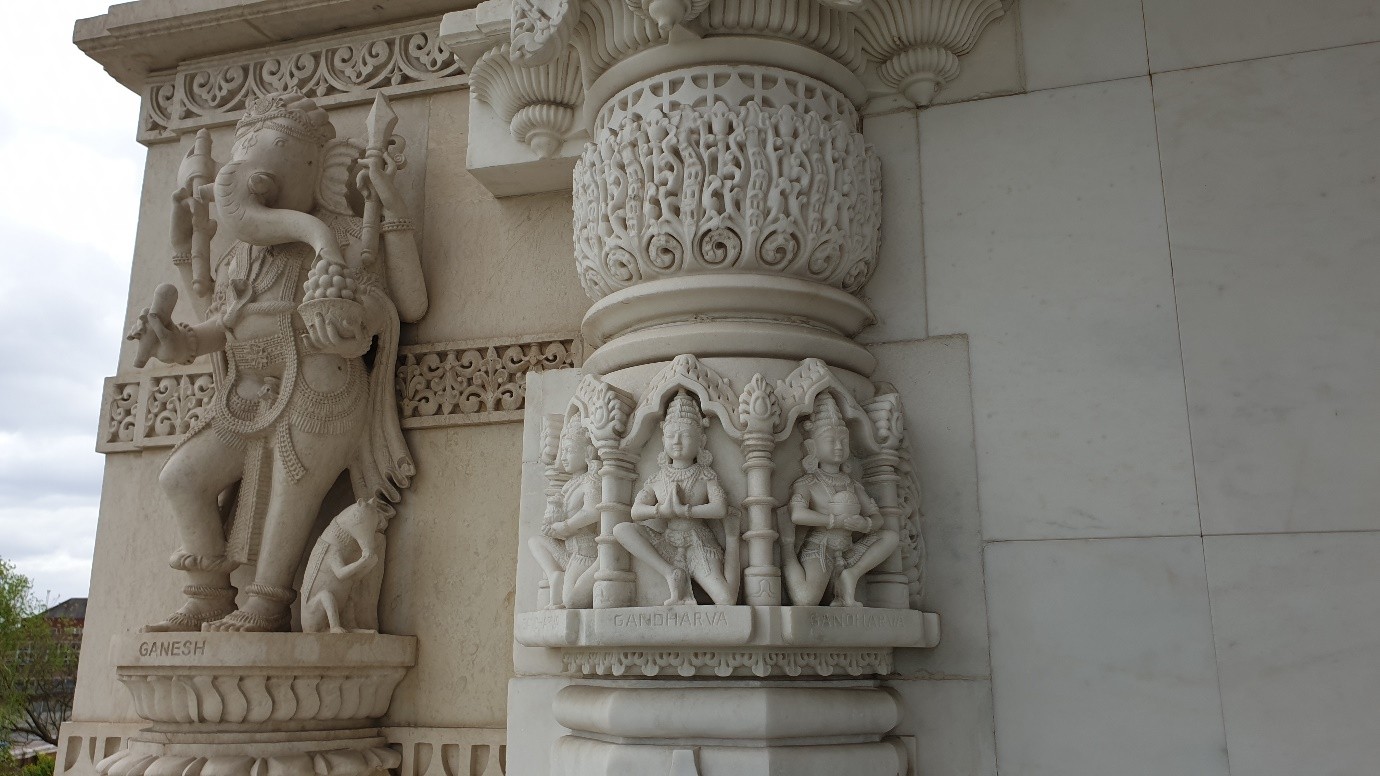
Please note that photography and filming are strictly prohibited inside the buildings, but you are free to take photos outside. Entrance is free, but check the website for opening hours, tour availability and the latest charges. The Shayona restaurant serves vegetarian cuisine if you want to spice up your day.
The temple is at 105-119 Brentfield Road, Neasden, London NW10 8LD. Opening times and details change, so check the official website before you go.
First written in 2019. Opening times, charges and ceremony times change, so please check the official website before you visit. Some images courtesy of BAPS.