Imagine a hotsy-totsy sleepover with both Henry VIII and Hercule Poirot. You have a coupe de champagne in one hand, and the ivories tinker away in the background. A lemur called Mah-Jongg and Caesar the Great Dane are chasing each other around a panelled Art Deco entrance hall fit for a Queen. Oh, did I mention the Duchess of York is one of the guests, as is Queen Mary? Naughty Henry is there too, before he met his unlucky wives, and when he was still a charming rascal. There’s the throng of 800 merry Tudors feasting in the Great Hall after a sweaty day of hunting and jousting. Welcome to Eltham Palace.
“My goodness, what a good feed we had! And good champagne!” said Queen Elizabeth, the Queen Mother, when she was still Duchess of York in 1936.
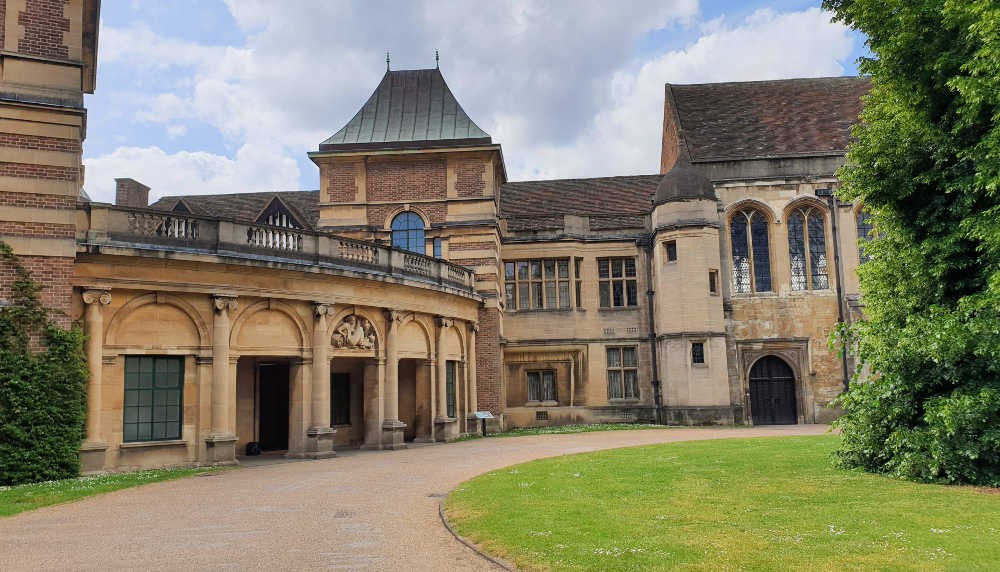
By 1933, the eccentric duo Virginia and Stephen Courtauld would move in. Armed with a killer architectural and interior design team, they would sprinkle Art Deco magic around the place, retaining as much of the medieval quarters as they could and renovating the bits that had fallen into disrepair. The result would be a jazzy Art Deco party pad (with all the Roman and Greek flourishes you would expect) sitting cheek by jowl with a medieval mini Hampton Court. Eltham Palace is bonkers and it’s brilliant.
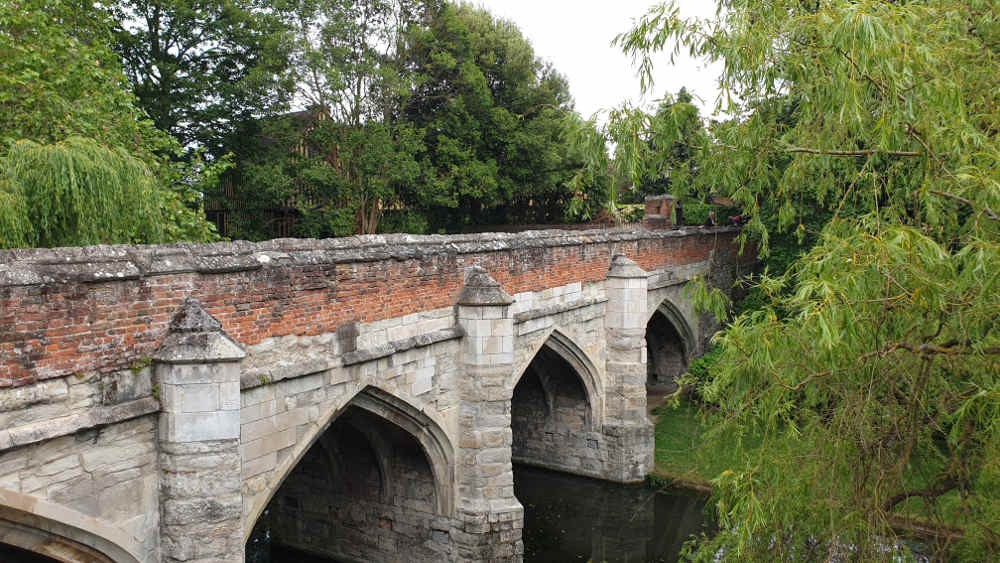
The medieval bridge over the moat was built in 1396, and is thought to be one of the oldest working bridges in London.
The royal residence of Eltham Palace
First recorded in the Domesday Book in 1086, Eltham belonged to William the Conqueror’s half-brother, the Bishop of Bayeux. In 1305, Eltham was gifted to Edward II, who was a regular guest and whose second son was born here in 1316. It would go on to become one of the most frequented palaces in the country.
Edward IV, who installed the Great Hall, hosted 2,000 people for Christmas in 1482 at Eltham. Henry VIII spent much of his childhood here, and on Christmas Eve 1515, Cardinal Wolsey took his oath of office as Lord Chancellor at Eltham. It was one of only a handful of residences which could feed the 800-strong Tudor court.
Henry eventually decamped to his new royal digs in Greenwich Palace, but he would return to take refuge from the plague at Eltham at Christmas 1525. After the Civil War, the palace fell into ruin.
The Art Deco mansion
In stepped the golden feet belonging to Virginia and Stephen Courtauld. Stephen was the youngest of six children. He was from a rayon manufacturing dynasty and inherited a fortune from his father. His brother Samuel founded our very own Courtauld Institute of Art on the Strand.
The Courtaulds were looking for a country bolthole, and Eltham, in all its dilapidated glamour, was just the ticket. They hired architects Seely and Paget, who designed the new architectural elements in the ‘Wrenaissance’ style. The couple introduced technological innovations such as gas heating and electric fireplaces in the bedrooms, an internal phone and built-in audio systems, a flower room used for arranging cut flowers from the garden, ten en-suite bathrooms (a novelty in those days), a coin-operated pay-phone in the entrance hall (a tad stingy given the other extravagances of the place) and my favourite – a centralised vacuum cleaner system.
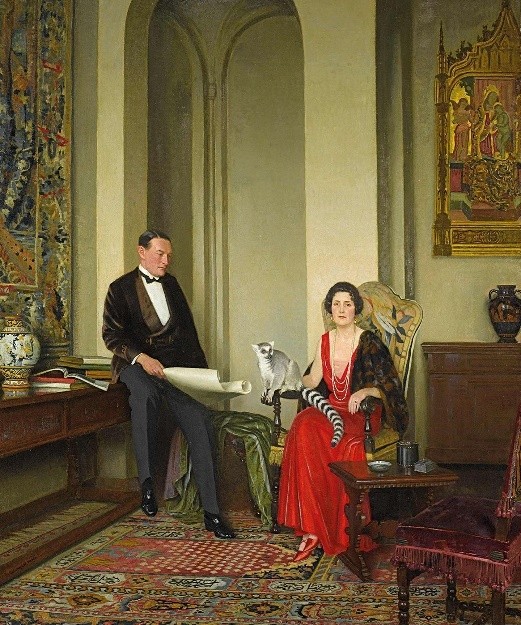
Mah-Jongg strikes a furry pose with his humans, Stephen and Virginia Courtauld. It is thought the plans in Stephen’s hands are those of Eltham Palace.
The Courtaulds partied for ten years in Eltham, together with royalty, politicians, artists, actors and film producers.
In 1940, the Great Hall roof was badly damaged by German bombs. A gas-proof, Blitz-proof bunker in the basement with its own bar wasn’t enough to keep the Courtaulds feeling safe and sound. They moved out in 1944, passing the remaining Eltham lease over to the army.
English Heritage took over the entire property in 1995.
A tour of Eltham Palace
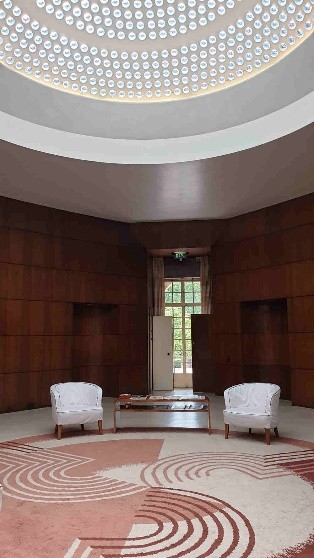
Cocktail hour would take place in the Entrance Hall with its domed 7-metre concrete and glass ceiling and bespoke Art Deco rug by Marion Dorn (the original rug is in the Victoria and Albert Museum).
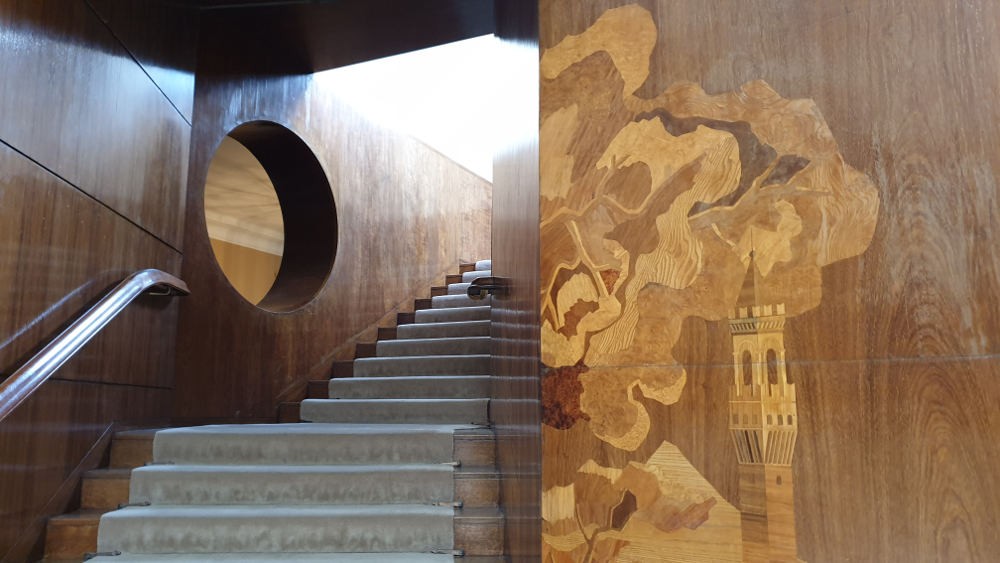
Portholes and Australian blackbean marquetry panels by Swedish architect Jerk Werkmäster are reminiscent of the great Art Deco luxury cruise liners. You’ll expect Gatsby to waltz down the stairs, martini at the ready.
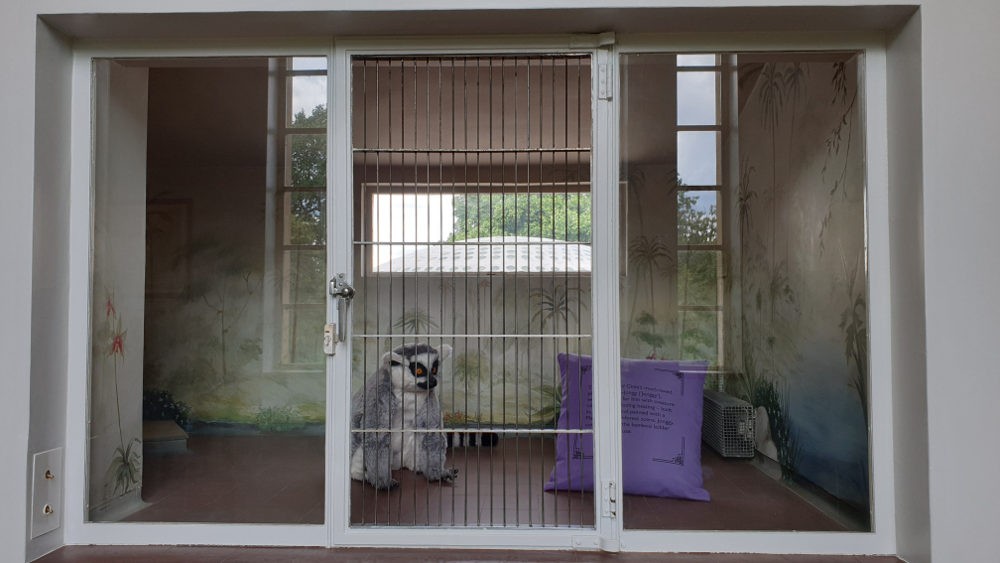
Mah-Jongg, lemur extraordinaire, had his own digs in Eltham. A bamboo ladder in the flower room led to his quarters next to mummy and daddy upstairs, so that he could come up and down at leisure. He was purchased in Harrods in 1923 and lived with the Courtaulds for 15 years, travelling the world with them. You’ll be relieved to know that Mah-Jongg has his own Wikipedia page.
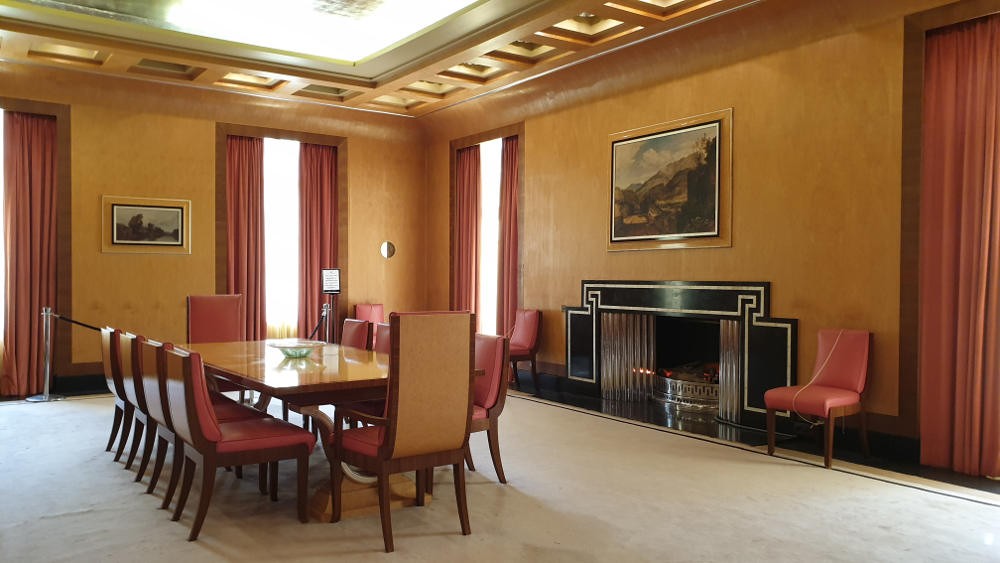
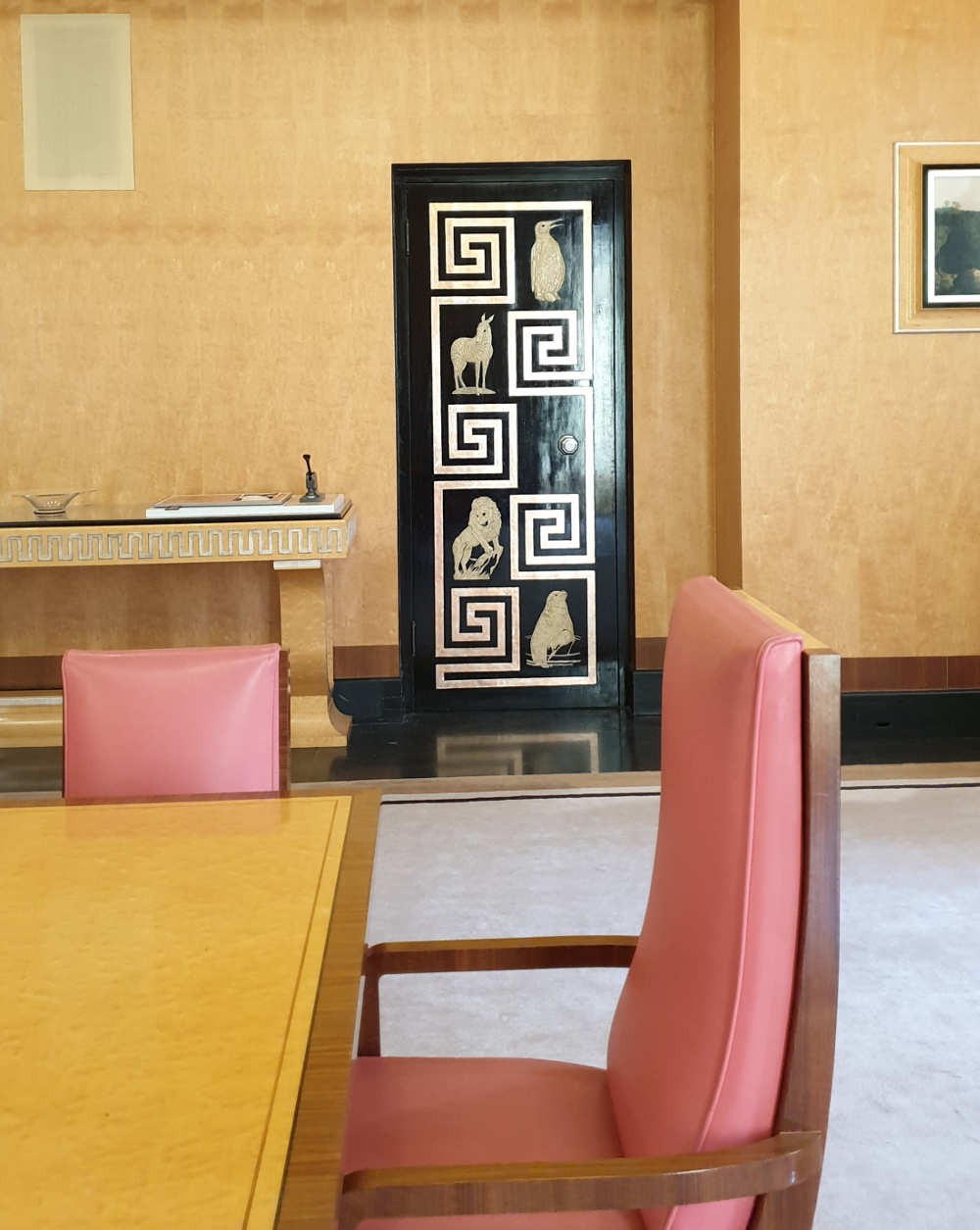
The “Moderne” dining room designed by Peter Malacrida with its Greek and Roman details is a study in Art Deco style. The walls, ceiling cove and picture frames are lined in maple, and the Narini door (below) features animals from London Zoo. Rose pink was the upholstery colour of choice, designed to show off the ladies’ frocks.
Malacrida would also be responsible for the design of the Courtauld yacht’s interior. Stephen’s brother-in-law, Captain Wilfred Dowman, who had restored the Cutty Sark, helped Stephen design the new superyacht, Virginia.
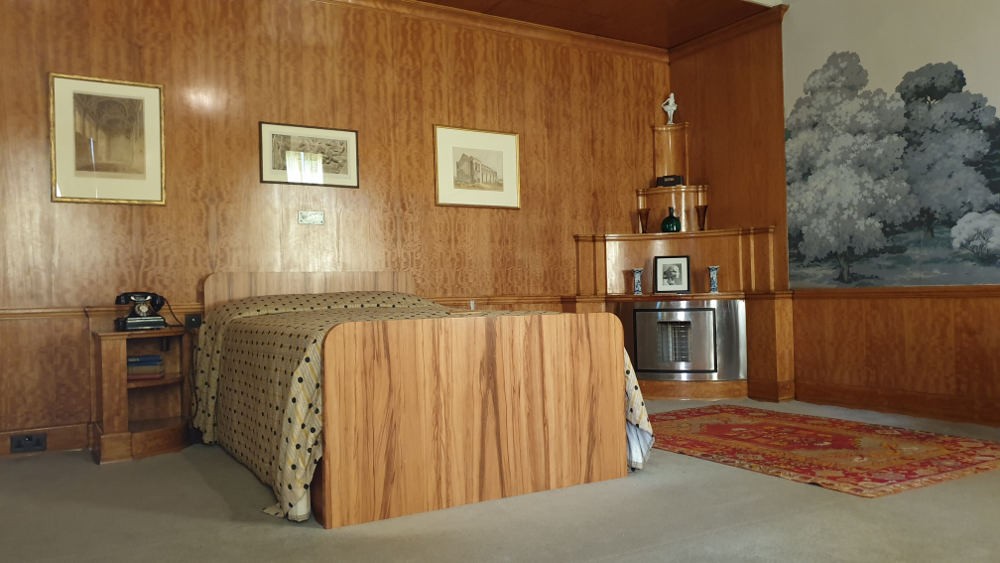
Stephen’s luxurious suite at Eltham was designed by the architect Seely. The walls were lined in aspen and Sanderson wallpaper depicting Kew Gardens.
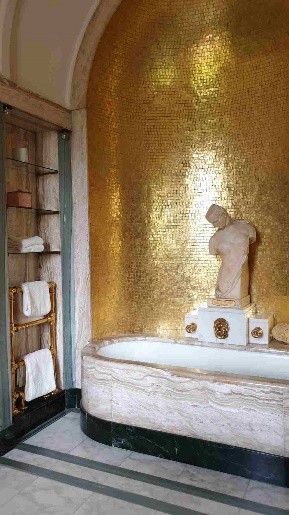
Even by modern standards, Virginia’s Malacrida-designed onyx bathroom is jaw-dropping. It’s bling at its best with gold-plated taps, a gold heated towel rail and, to finish, a statue of Psyche, the lover of Cupid. Virginia, or Ginie as she was known, was a difficult woman to work for. She worked her way through 14 maids in 2 years and was known to throw objects at them. She was also quite the shopaholic – she once ran up such a huge bill with her favourite dress designer that Stephen put a notice in the newspaper where he publicly washed his hands of her debts.
The gardens at Eltham Palace
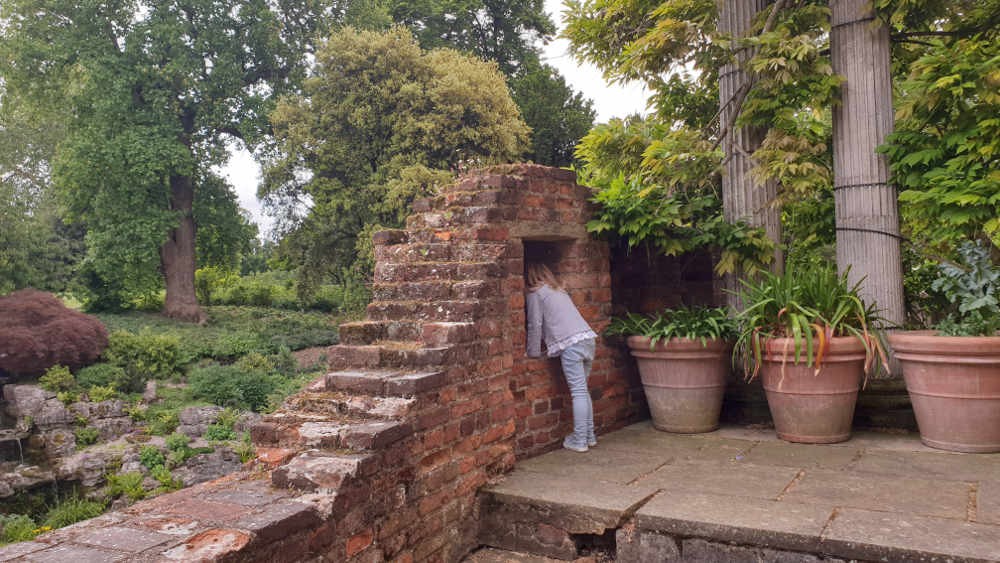
The 18th-century Ionic columns to the right were salvaged from the Bank of England in the 1930s.
The 19 acres at Eltham include a 100-metre herbaceous border designed by Isabelle van Groeningen, with 18 different species of oriental poppy, 21 peonies and 20 clematis. The garden displays include historic roses in a Sunken Rose Garden, a wildflower meadow and a striking lavender hedge.
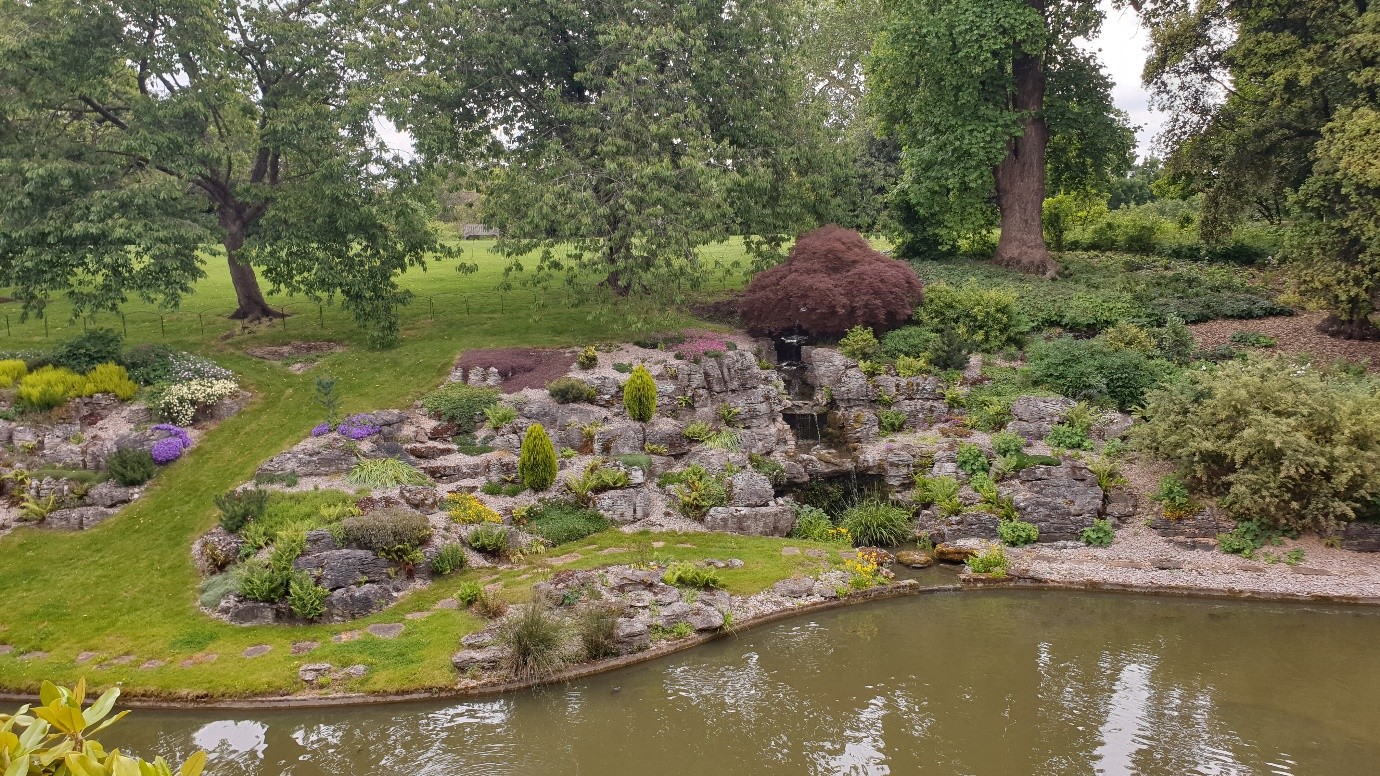
Virginia bred black-necked Patagonian swans for the series of pools leading off from the newly installed rock gardens. The Japanese maple, a pine and a juniper still remain from her original planting.
Eltham with the kids
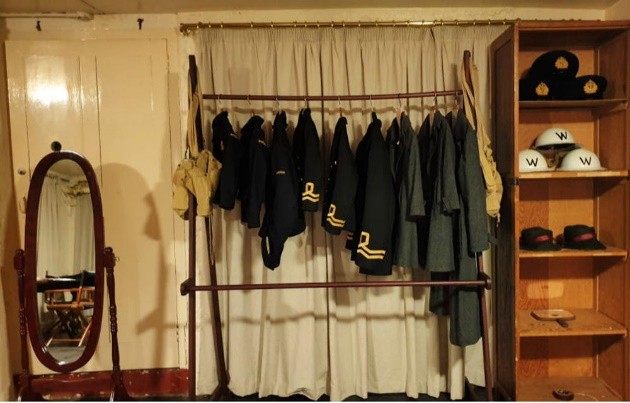
Grown-ups can sit in the Greenhouse Café and watch the kids jump and climb around the playground, inspired by the Courtaulds’ exotic travels. You never know, mischievous Mah-Jongg might be lurking in a corner! There are 19 acres of gardens with a moat, a medieval bridge and a picnic area with tables and benches. There’s a children’s audio tour packed with quizzes and games, a free stamping activity pack and medieval, World War II and 1930s dressing-up gear.
Visiting Eltham Palace
Eltham Palace is an English Heritage property at Court Yard, Eltham, London SE9 5QE. Opening times and prices change, so check the official website and book your tickets before you go.
First written in 2019. Opening times, prices and menus change, so please check the official website before you visit.