If you’ve watched Queen Charlotte: A Bridgerton Story, you will see that one of the main locations is Kew and the royal retreat known as Kew Palace, a small and charming historic house set within the grounds of London’s Kew Gardens.
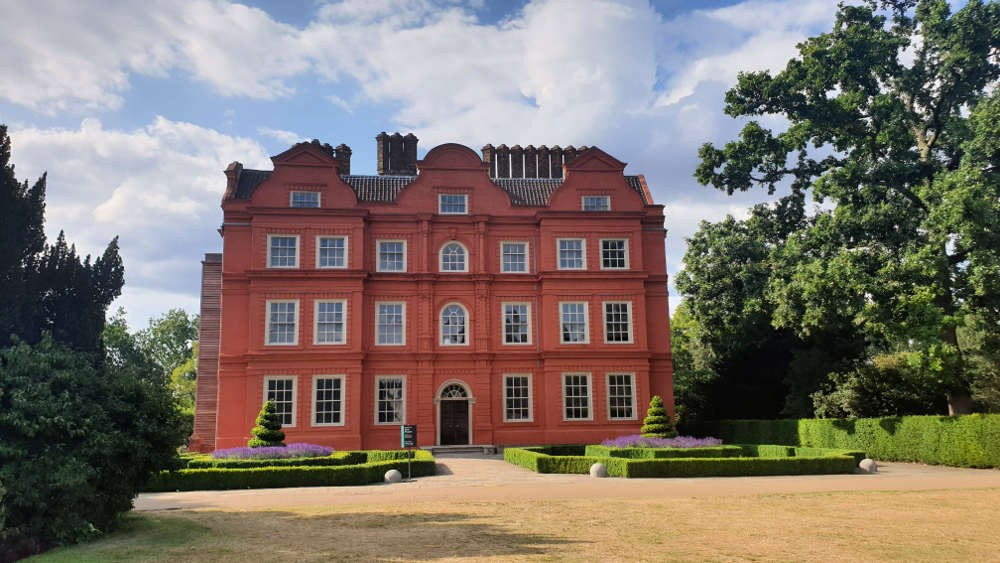
King George III, Queen Charlotte and their many children spent many happy – as well as unhappy – times at Kew Palace. Here is the real story behind the royal retreat that inspired the Bridgerton prequel, and how to visit it.
Note that Bridgerton’s Queen Charlotte Kew Palace scenes were filmed at Belton House in Lincolnshire, so you won’t see the series’ locations here, but you will see where the real royals lived.
Kew Palace: Queen Charlotte and King George III’s royal retreat
History of Kew Gardens
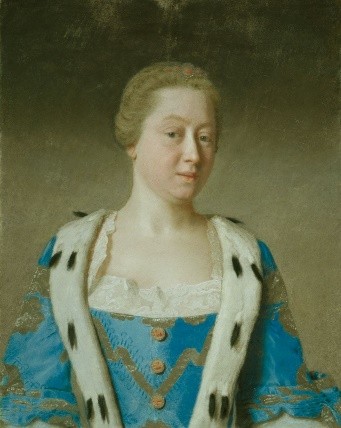
We have Princess Augusta, mother of King George III, to thank for the embryonic Kew Gardens, then known as Kew Park. She established a nine-acre garden for exotic plants in 1759.
Augusta employed the architect William Chambers to build architectural features within the botanic gardens, some of which are no longer in existence. These included a mosque, a Confucian temple and a Moorish Alhambra building. Thankfully, the Great Pagoda is still standing proud.
Kew Gardens came into being when the Richmond and Kew royal estates merged in 1772 under the reign of George III.
In 1773, Capability Brown created the Hollow Walk, now known as Rhododendron Dell, and one of the most popular corners of Kew Gardens.
Queen Charlotte and Kew Palace
The Dutch House, as Kew Palace was once known, was built for a wealthy silk trader named Samuel Fortrey in 1631. The ceiling in the Boudoir is one of the few remaining features of the original seventeenth-century house which he designed.
George III became king in 1760, aged just 22. As depicted in Queen Charlotte, he married Charlotte of Mecklenburg-Strelitz a mere six hours after meeting her, on 8 September 1761.
The couple would have a whopping 15 children over 21 years. Unlike his grandfather and sons, he never took a mistress, and the couple were happily married until his mental illness took hold of him in 1788.
Charlotte’s hairstyle in her later years was not quite as high as Golda Rosheuvel’s bouffant updos in Bridgerton, but she did wear an enamel portrait of George III, and it is thought she wore it every day of her life.
On 11 July 1818, Edward, Duke of Kent, married Princess Victoria of Saxe-Coburg in the Queen’s Drawing Room. They would sire the future Queen Victoria.
Queen Charlotte and King George III also spent their summer as newlyweds at Richmond Lodge. George III would buy Buckingham House (now the site of Buckingham Palace) in 1762 as another family retreat.
“Mad” King George at Kew
In 1801 and 1804, King George III came to Kew Palace for treatment accompanied by Queen Charlotte and his daughters. As portrayed in Bridgerton, the treatment by Dr Francis Willis was mentally and physically humiliating.
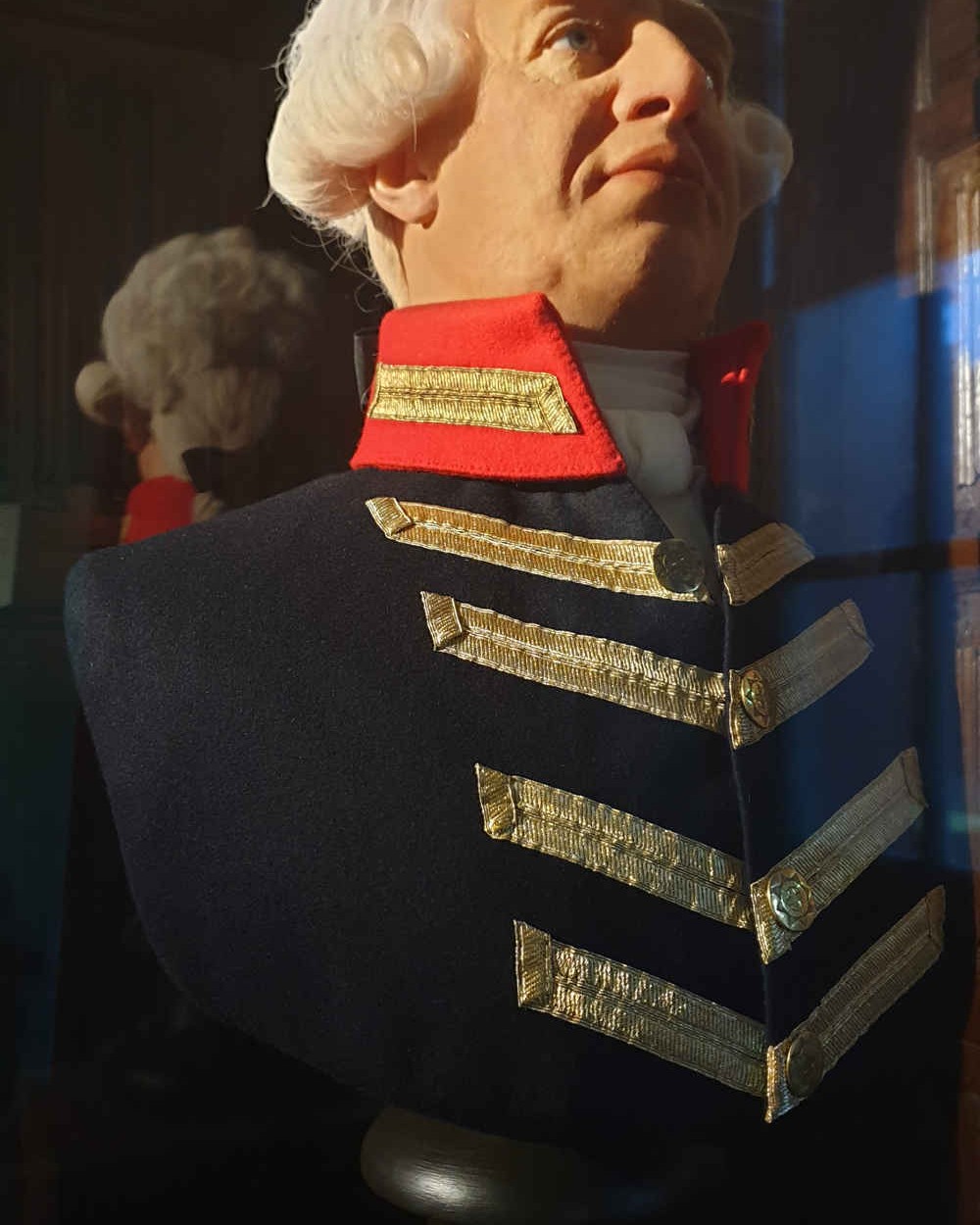
Kew Palace, originally known as The Dutch House, was an annexe to the grander White House which was demolished in 1802. “Mad” King George III spent time here during his first bout of madness. Charlotte and her daughters lived upstairs whilst the King convalesced in the company of his doctors on the ground floor.
The dining room is where George III once tried to escape and was subsequently detained. Queen Charlotte also lay in state here in 1818. In happier, more recent times, it is also where the late Queen Elizabeth II hosted her eightieth birthday party. The dinner included Hebridean smoked salmon, juniper roast loin of Sandringham estate venison and chocolate birthday cake with Highgrove fruit filling.
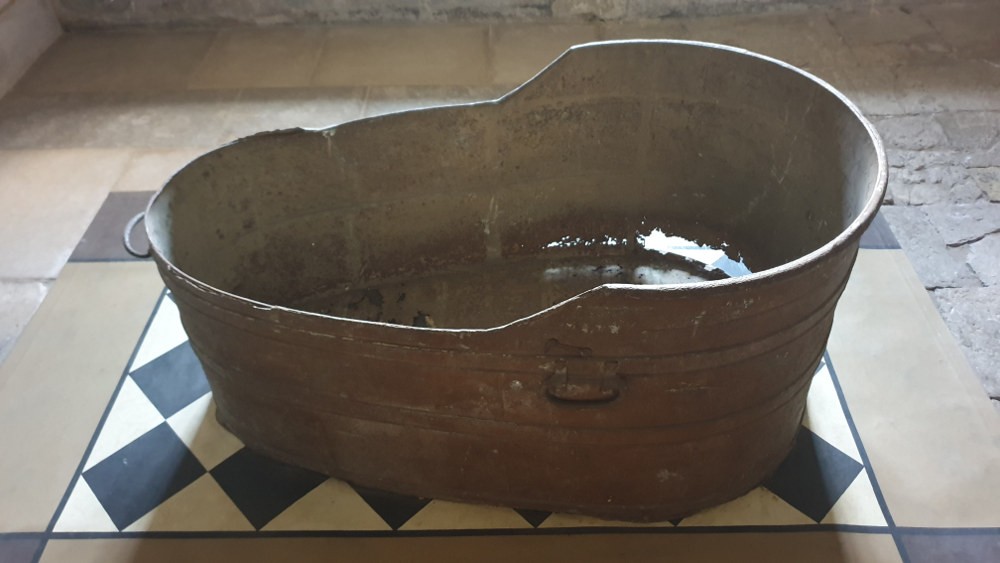
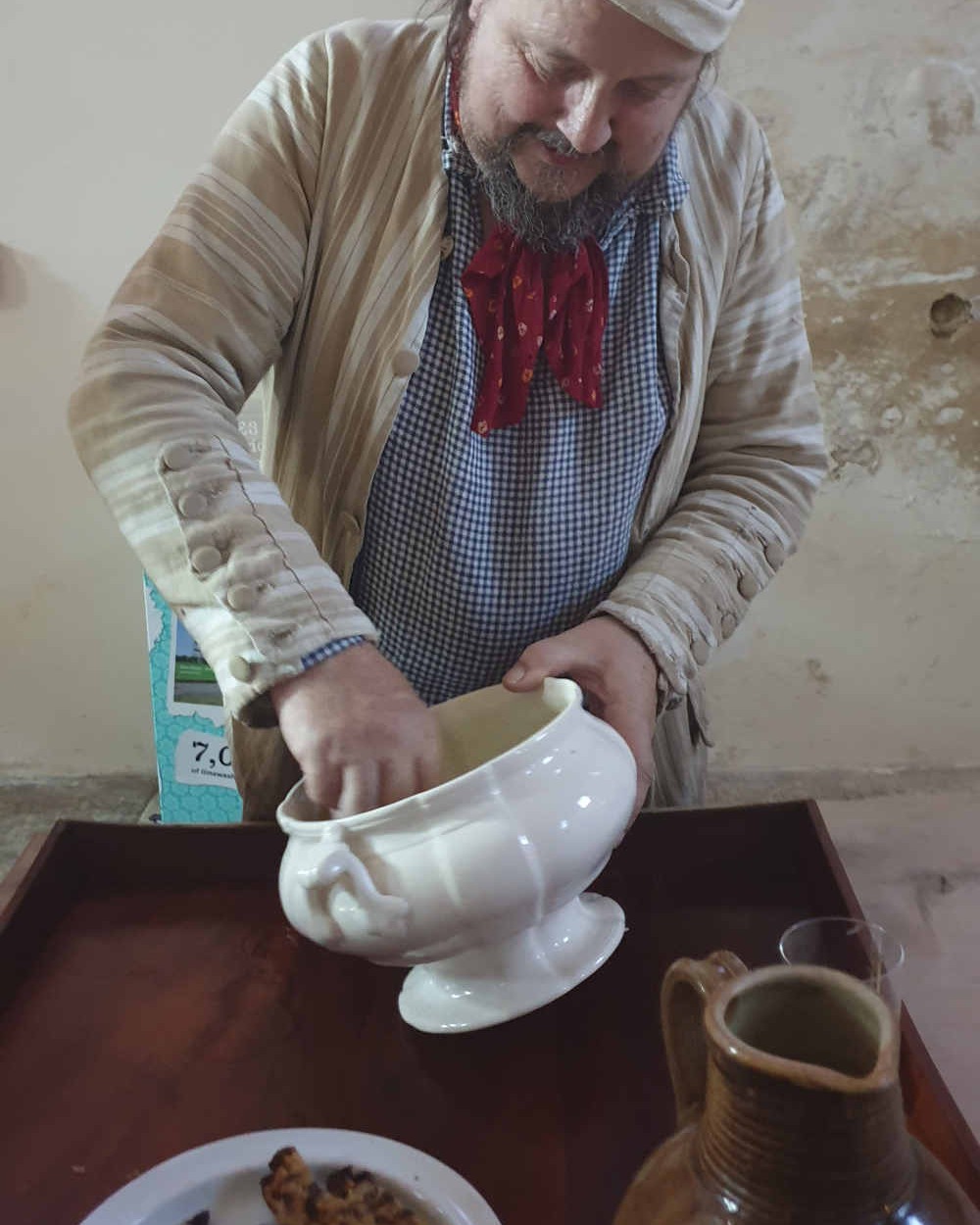
It was discovered in a chimney opening during a renovation of the palace in 2012. In order to save the staff from bringing water over to Kew Palace (which had no water facilities), the king would bathe in the Royal Kitchens. These were built as a separate annexe in order to ensure the main house would not burn down in the event of a kitchen fire.
Where is Queen Charlotte buried?
In 1818, Queen Charlotte was taken ill. She stopped at Kew Palace to convalesce for what she thought would be a few days, but never recovered. She died at Kew on 17 November 1818, in her bedroom, in a black horsehair chair.
A hatchment made for Queen Charlotte upon her death hung outside Kew Palace when she died. You can see it on the top floor of the palace.
Queen Charlotte is buried in St George’s Chapel in Windsor Castle, together with her husband, King George III. This royal chapel is also where the late Queen Elizabeth II, Princess Margaret and Henry VIII are buried, to name a few.
Queen Charlotte’s funeral cortege travelled from Kew to Windsor. On arrival at Windsor, the cobbled streets were laid with straw in order to hide the sounds of the funeral cortege from poor King George.
Queen Charlotte’s Cottage
In 1771, Charlotte had a cottage built for her in the grounds of Kew Gardens called Queen Charlotte’s Cottage. Like Marie Antoinette’s Petit Trianon at Versailles, the cottage was used as a bucolic retreat. George III and Queen Charlotte also installed a menagerie of animals including the country’s first kangaroos in the early 1790s.
The Great Pagoda
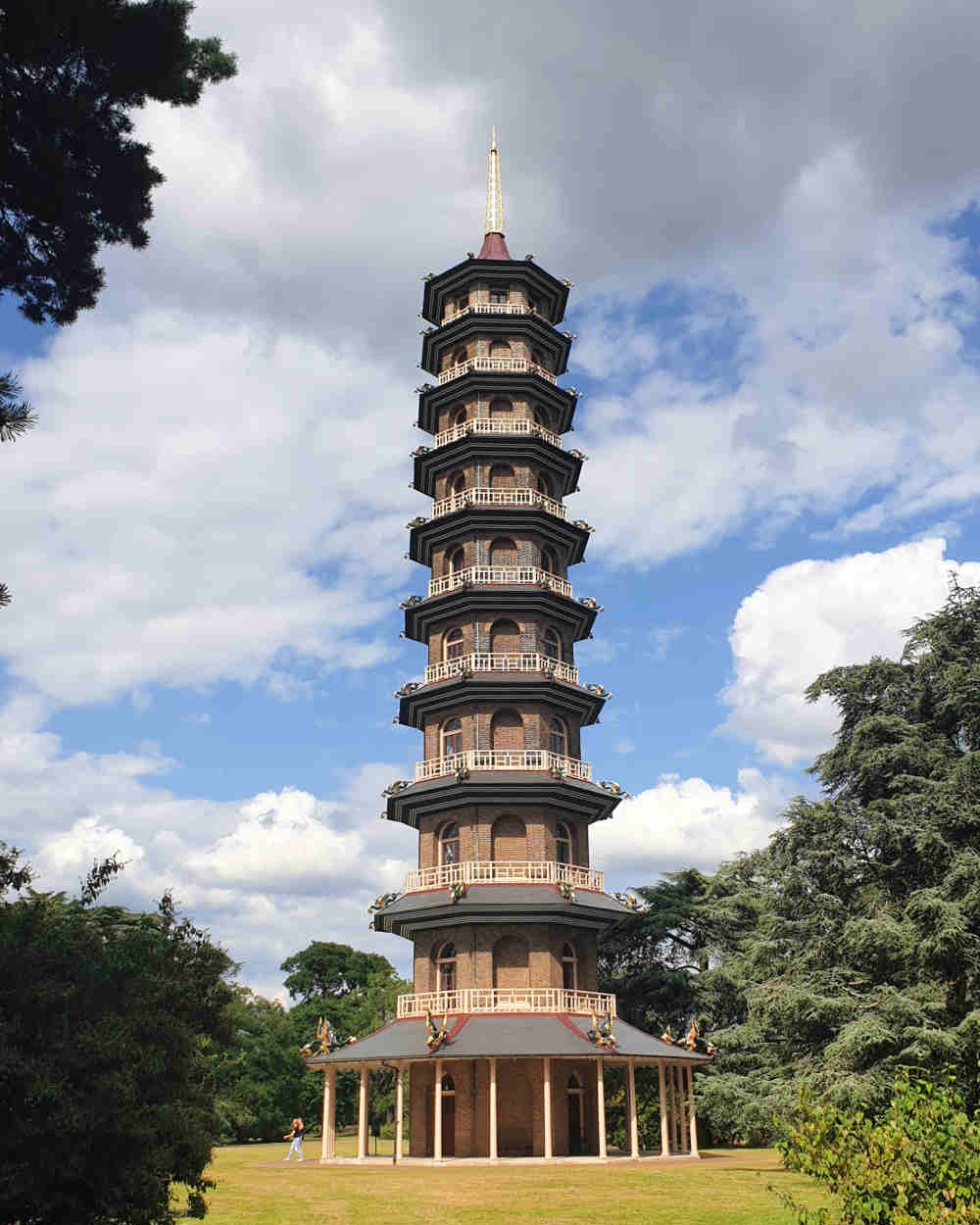
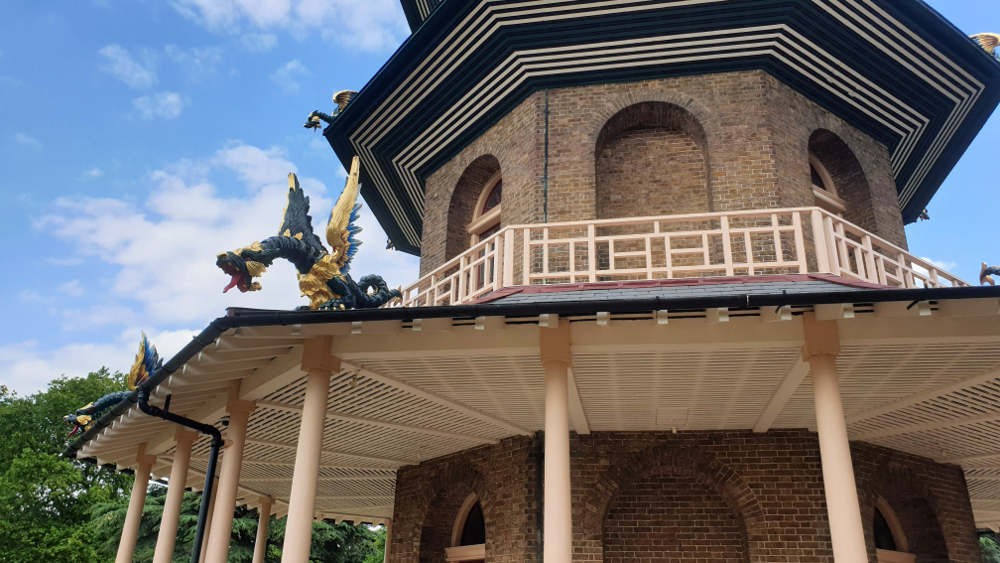
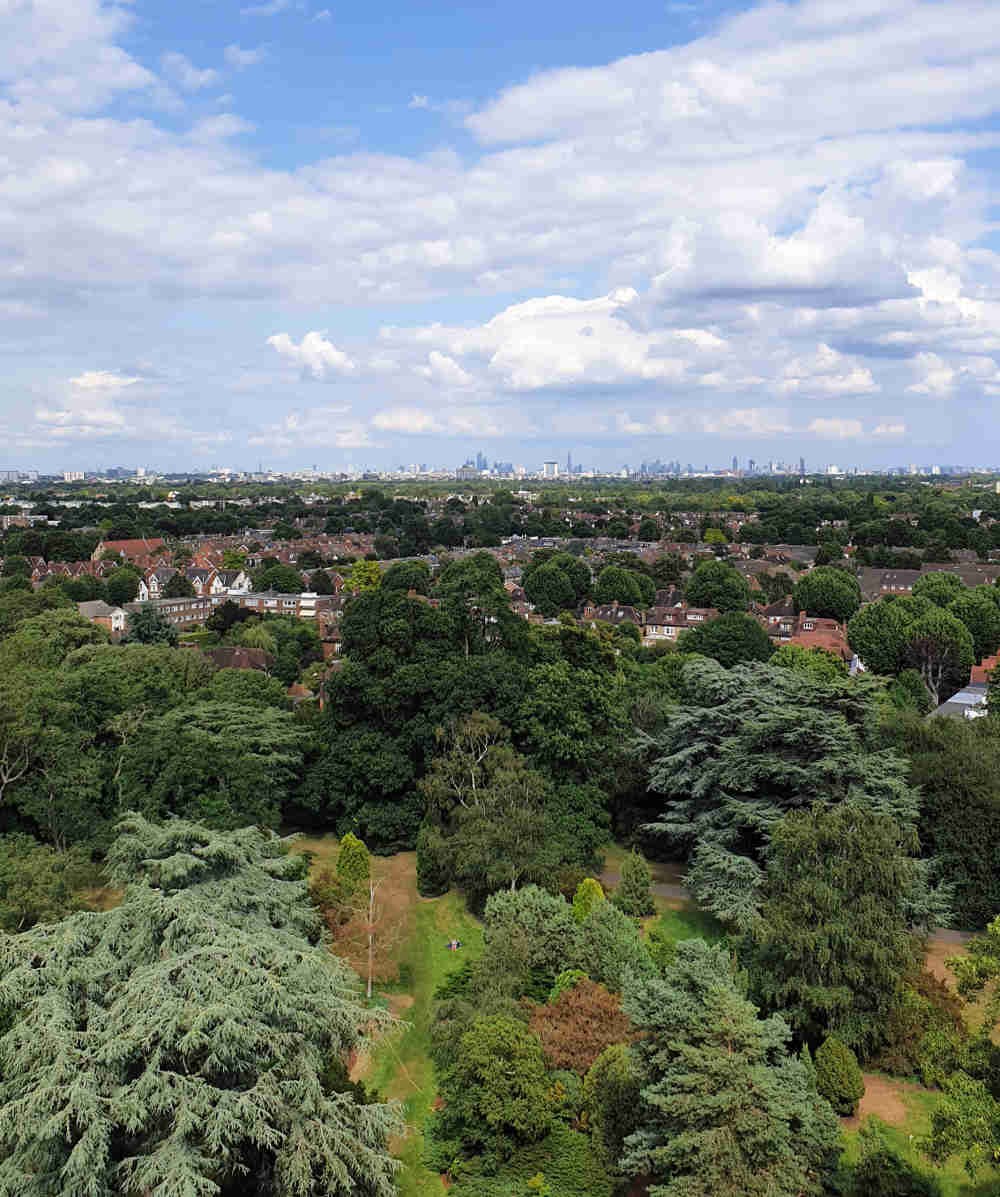
Chambers’ Great Pagoda is the most famous survivor of Princess Augusta’s Kew. Climb to the top of this Grade I listed Chinoiserie folly for some sweeping views of London. George III liked to drag his politicians up to the top, knowing they would be out of breath and easier to manipulate.
The Royal Kitchens
Visiting Kew Palace and Queen Charlotte’s Cottage
Kew Palace and Queen Charlotte’s Cottage are run by Historic Royal Palaces, so always check the official website before you go. Entry to both is seasonal and included with your ticket to Kew Gardens.
First written in 2023. Opening times and prices change, so please check the official website before you visit.