If cars, carriages and horses went to heaven, the Royal Mews is where they would want to go. Tucked away behind Buckingham Palace, this is the ultimate stable for regal steeds and stately wheels. And I’m sure Cinderella wouldn’t say neigh to trotting off in a royal carriage for her amorous rendez-vous with Prince Charming.
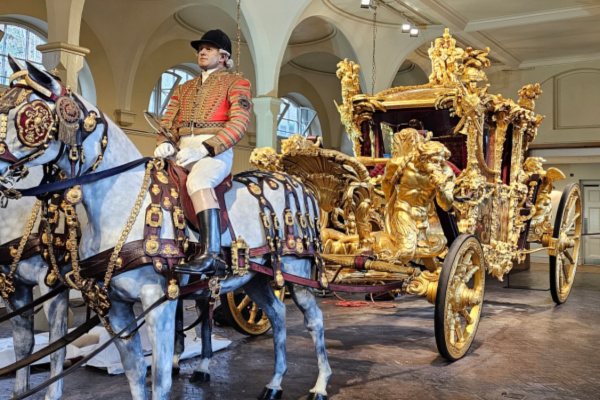
Royal Mews history: why is it called a mews?
The word “mews” comes from the French word muer, meaning to moult. The royal hawks were originally kept in the King’s Mews at Charing Cross (where the National Gallery stands today) while their feathers moulted. When the original building was destroyed by fire in the reign of Henry VIII it was rebuilt as royal stables, keeping its name. The royal stables later moved to Buckingham Palace, and the Royal Mews you see today was designed by John Nash for George IV.
Today it is home to the royal collection of coaches, carriages and cars, and it has one of the world’s finest working stables.
The Royal Mews coaches
The Gold State Coach
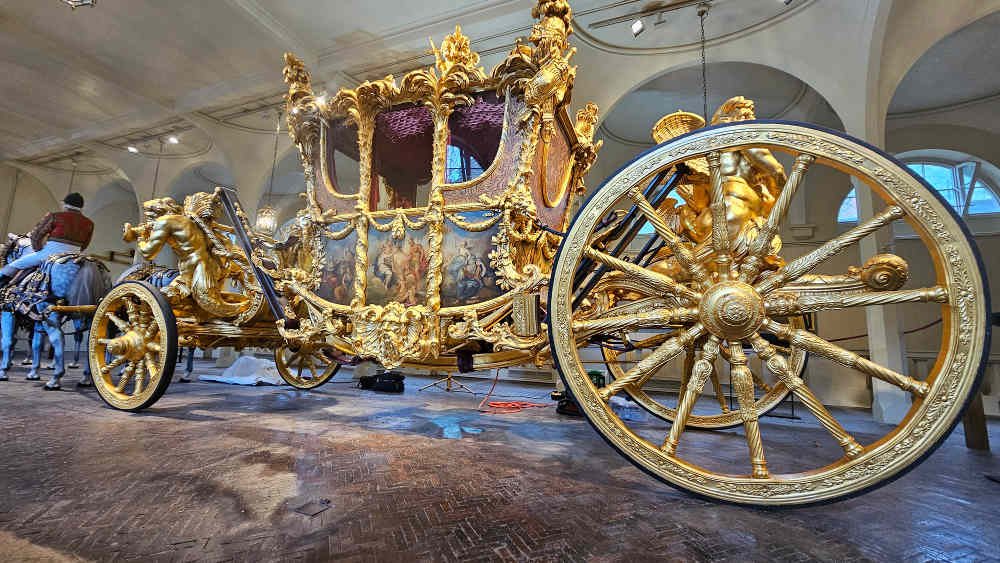
Dating from 1760, the Gold State Coach is the oldest in the collection and has been used for every coronation since George IV. Queen Victoria referred to its “distressing oscillation” while William IV said that travelling in it was like “tossing in a rough sea”. It weighs four tonnes, and we were told that a whole wall behind it has to be dislodged to move it, taking 30 people two days.
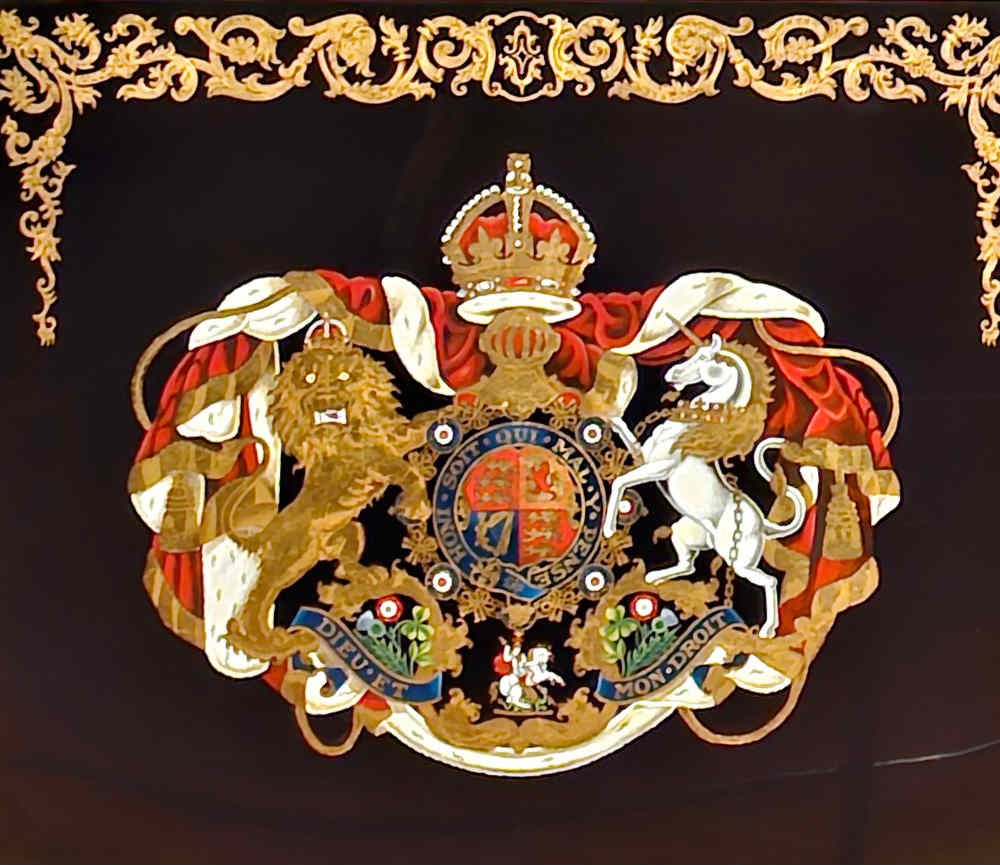
The Glass Coach: the marriage carriage
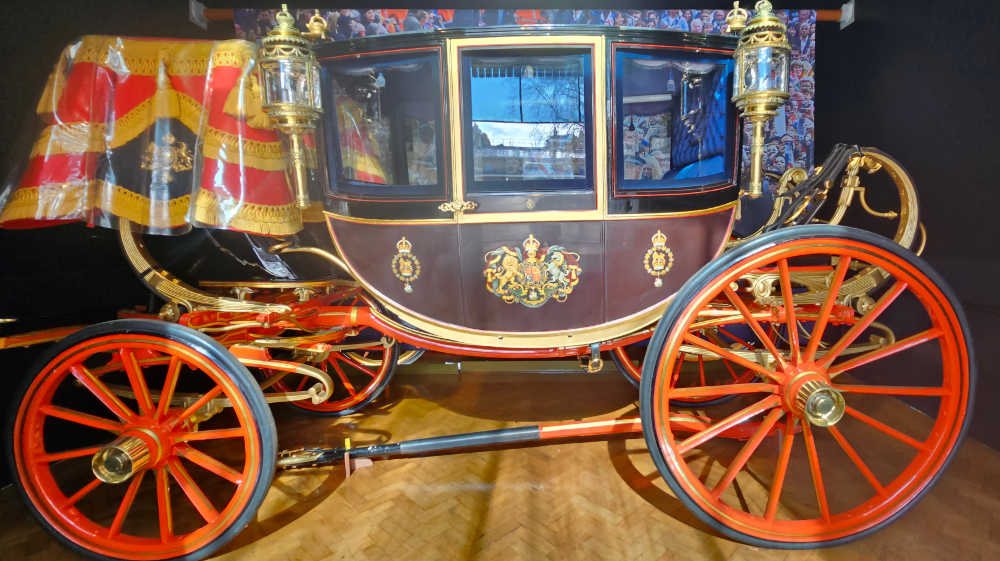
The Glass Coach was built in 1881 and bought for George V. It has been used to carry brides to church, including Lady Elizabeth Bowes-Lyon in 1923, Lady Diana Spencer in 1981 and Miss Sarah Ferguson in 1986. It has also carried newlyweds from church after the service, as with Princess Elizabeth and the Duke of Edinburgh in 1947.
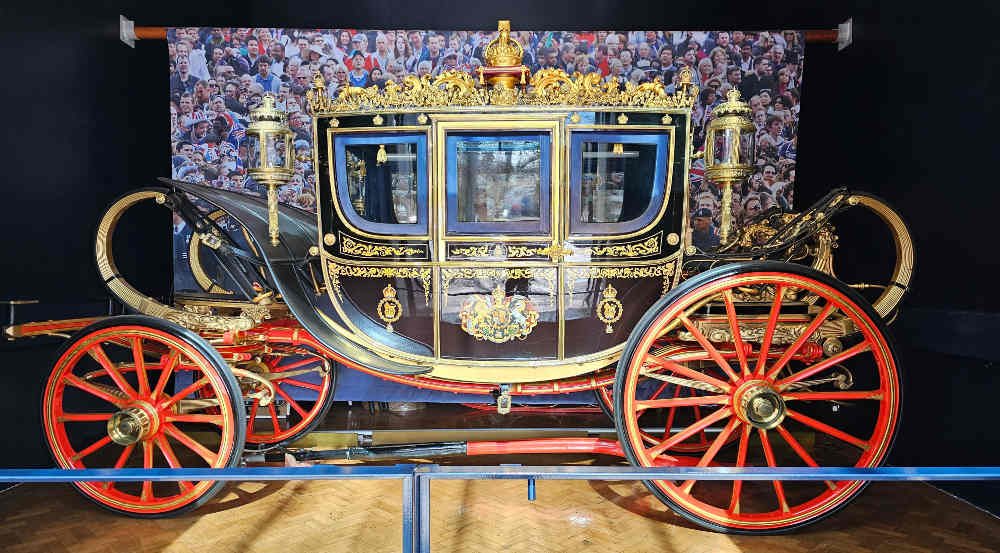
The Diamond Jubilee State Coach
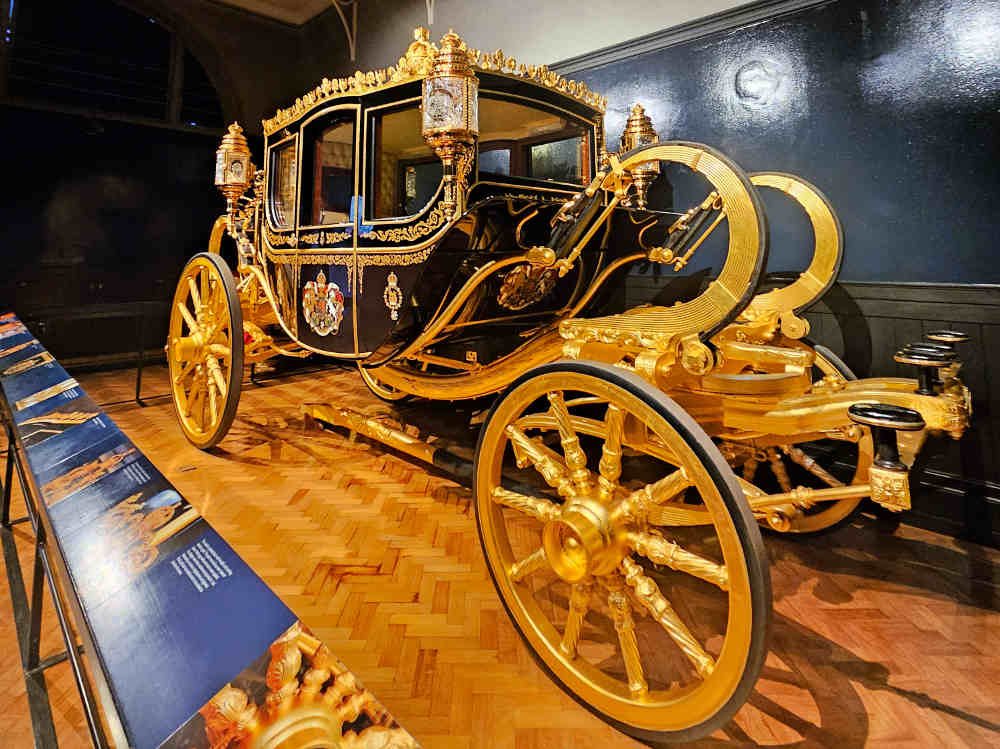
The Diamond Jubilee Coach is the Mews’s carriage with the mostest: heating, air-conditioning, hydraulic suspension and electric windows come as standard. It was designed by the Australian Jim Frecklington. The coach weighs three tons and it takes six horses to pull it.
It is also a moving museum of artefacts from historic British sites. There’s a lead musket ball from the Battle of Waterloo and fragments of a dress worn by Florence Nightingale, and the crown is made from parts of Nelson’s HMS Victory (with a concealed camera inside). Timber from the Tower of London, St Paul’s Cathedral and Hampton Court Palace, to name a few, can be found in the interior lining. In 2023 it carried King Charles III and Queen Camilla to Westminster Abbey for the coronation.
Royally appointed: the state cars
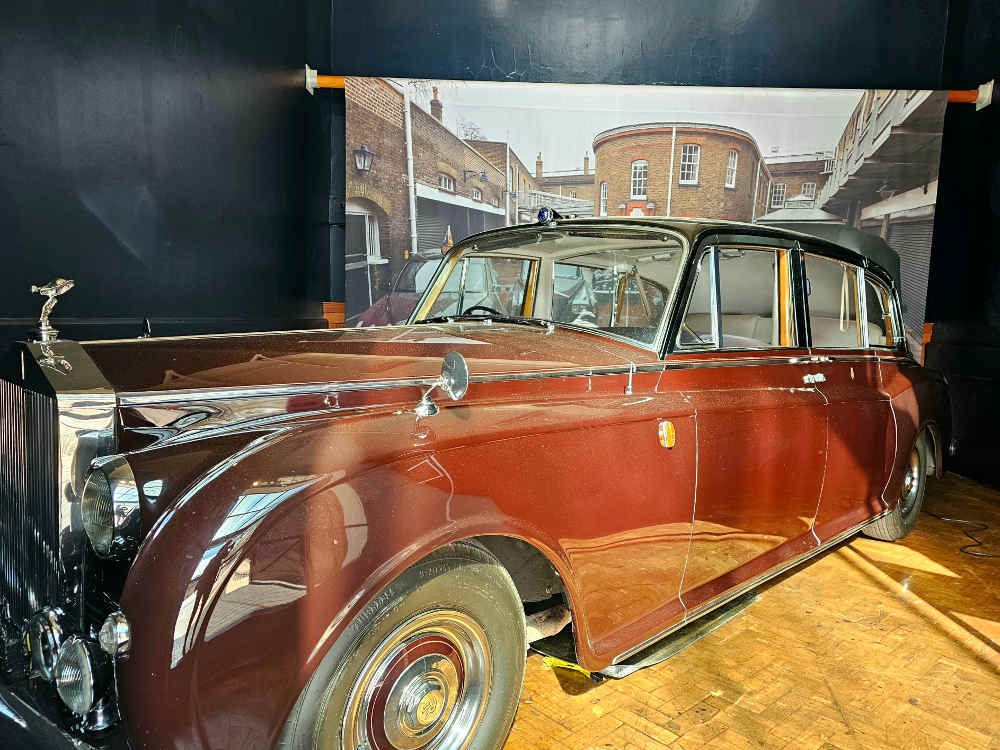
The Royal Mews also houses a mix of State and Semi-state cars. The State cars do not have licence plates and include a selection of British-made Rolls-Royces and Bentleys. The Semi-state limousines are used for less formal occasions.
The carriage horses
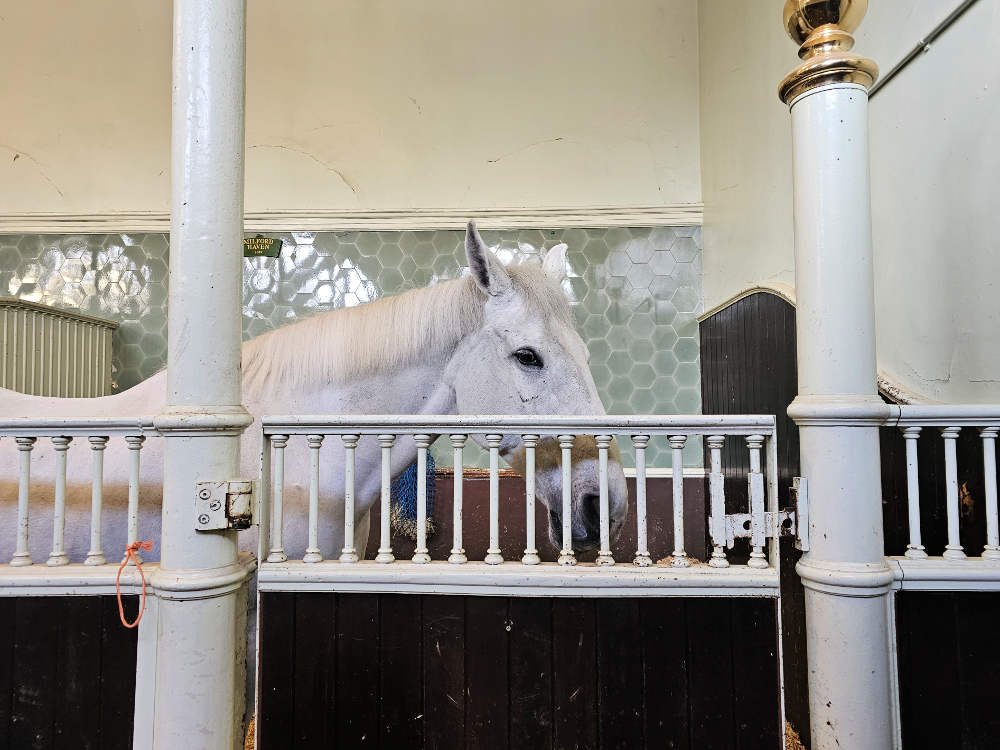
The carriage horses are either Windsor Greys or Cleveland Bays. The Windsor Greys pull the monarch’s carriage on the grandest occasions, and the horses are named by the royal household. They move to the Mews when they are four years old.
Visit the Royal Mews: practical information
Where: The Royal Mews, Buckingham Palace, London SW1W 1QH. The nearest tube is Victoria.
Tickets: admission includes a multimedia tour and under 5s go free. Opening days and prices change through the year, so check the Royal Collection Trust website before you go and book your tickets there.
For more royal London, see my guides to Kensington Palace and Queen Victoria portraits in London.