There are some royal portraits that just take your breath away. The ‘Armada Portrait’ of Elizabeth I at the Queen’s House in Greenwich is one of them. Thomas Sully’s ‘Queen Victoria’ at the Wallace Collection is another, as is Queen Elizabeth II, Lightness of Being by Chris Levine. Then another comes along which makes the pulse quicken: ‘The Rainbow Portrait’. When it came to Hampton Court Palace on loan from Hatfield House, it hung beside a piece of cloth thought to be the only surviving Elizabeth I dress: the ‘Bacton Altar Cloth’.
The Bacton Altar Cloth: a surviving Elizabeth I dress
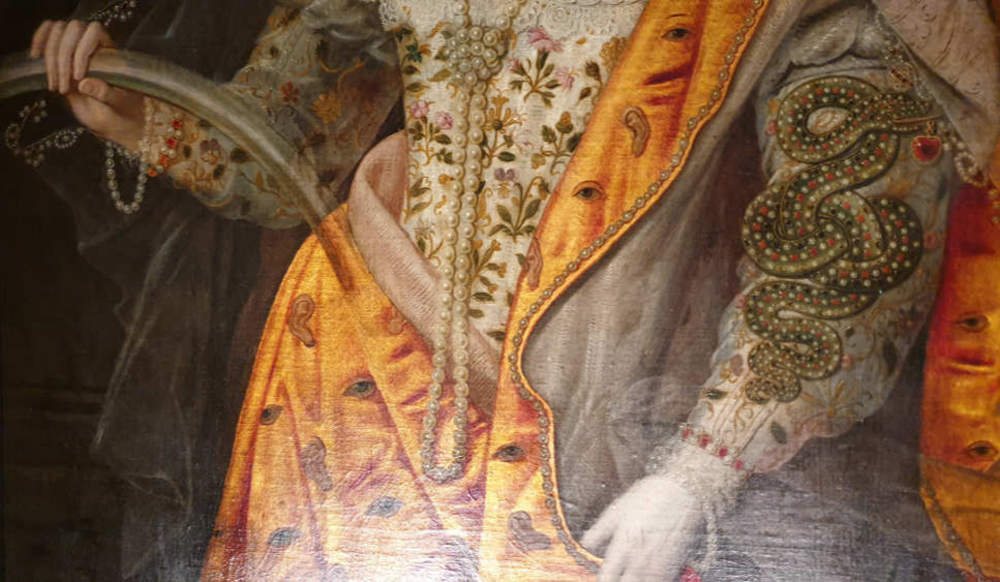
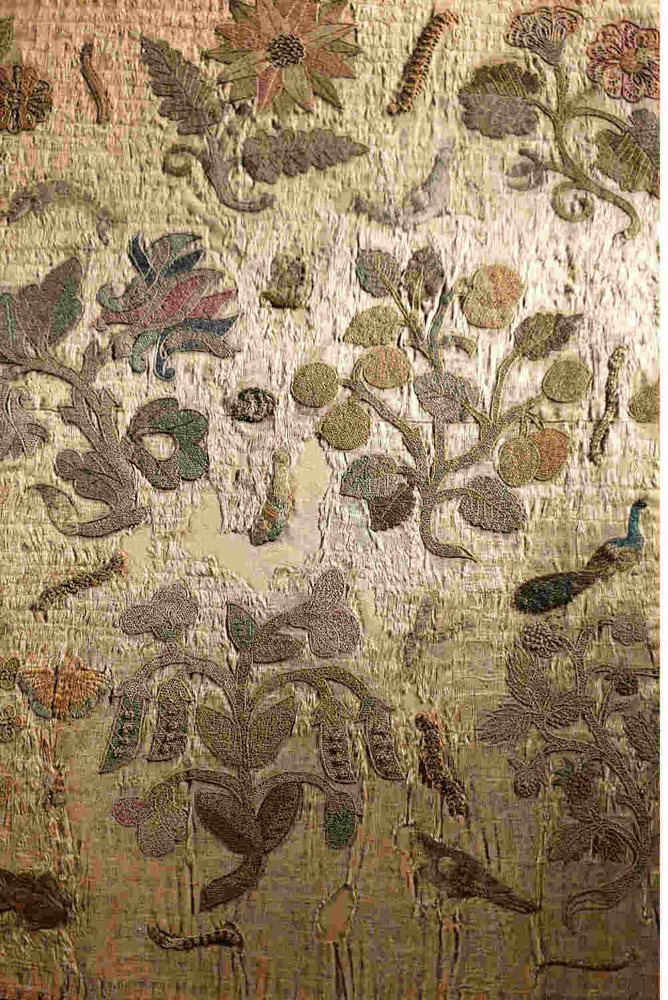
The embroidered cloth hung for centuries in a church in the Herefordshire village of Bacton, where it was preserved as an altar cloth. It was then studied and conserved by Historic Royal Palaces over a period of three years, and it is thought that this spectacular fragment belongs to the dress which Elizabeth I is wearing in the Rainbow Portrait.
How did the altar cloth end up in a Herefordshire church?
Elizabeth’s faithful servant Blanche Parry was born and raised in Bacton. She would become Chief Gentlewoman of the Privy Chamber and was in Elizabeth’s service for decades, receiving many gifts from the Queen in return. Although Elizabeth was in the habit of giving Parry her old clothes, it is thought that the embroidered panel reached Bacton after Parry’s death, in her memory. Parry is buried at St Faith’s Church in Bacton.
Why this Elizabeth I dress is so special
The Bacton Altar Cloth isn’t just any old piece of fabric. It is thought that the dress would have taken around 600 hours of embroidery. It is made of silver chamblet silk using gold and silver thread, and the dyes include indigo and a red from Mexico, both expensive colours. The pattern-cutting points to haute couture of the most regal kind. And we know Elizabeth liked to keep the best of the best for herself, ticking off her subjects if they tried to outdo her on the fashion front.
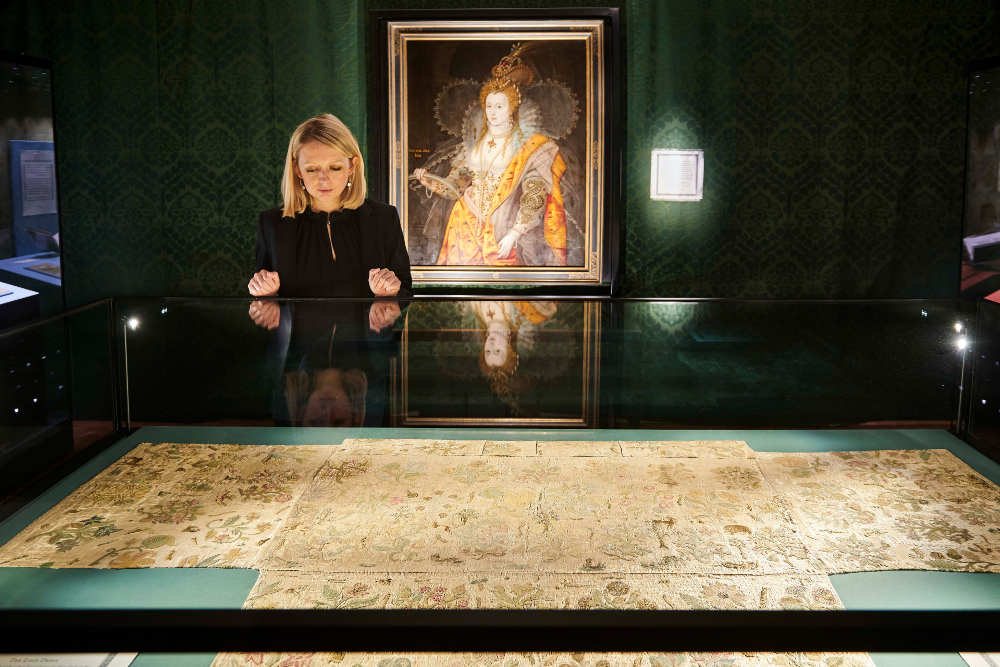
Image: Historic Royal Palaces / David Jensen
Eleri Lynn, the curator in charge, explained how very little of Elizabeth’s clothing survives. Some personal items do, including a pair of gloves and a ring containing a portrait of her mother, Anne Boleyn. This means the Bacton Altar Cloth is probably the only surviving item of clothing belonging to the Virgin Queen.
The Rainbow Portrait and its symbols
Attributed to Marcus Gheeraerts the Younger, the Rainbow Portrait shows Elizabeth in a striking dress which bears an uncanny resemblance to the lost dress. It is thought to have been commissioned around 1600 to 1602 by the Queen’s spymaster, Robert Cecil, and it lives at Hatfield House, the house where Elizabeth spent part of her youth under house arrest during the reign of her sister Mary I.
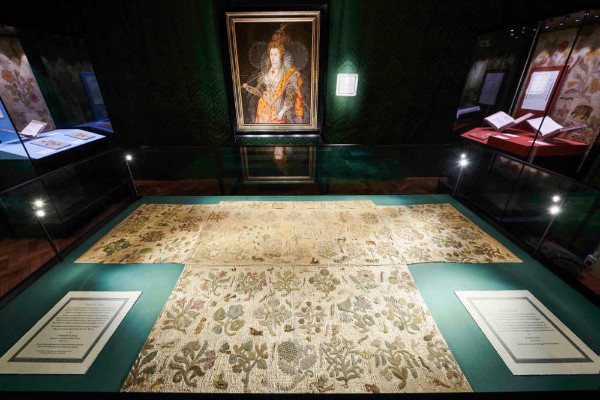
Image: Historic Royal Palaces / David Jensen
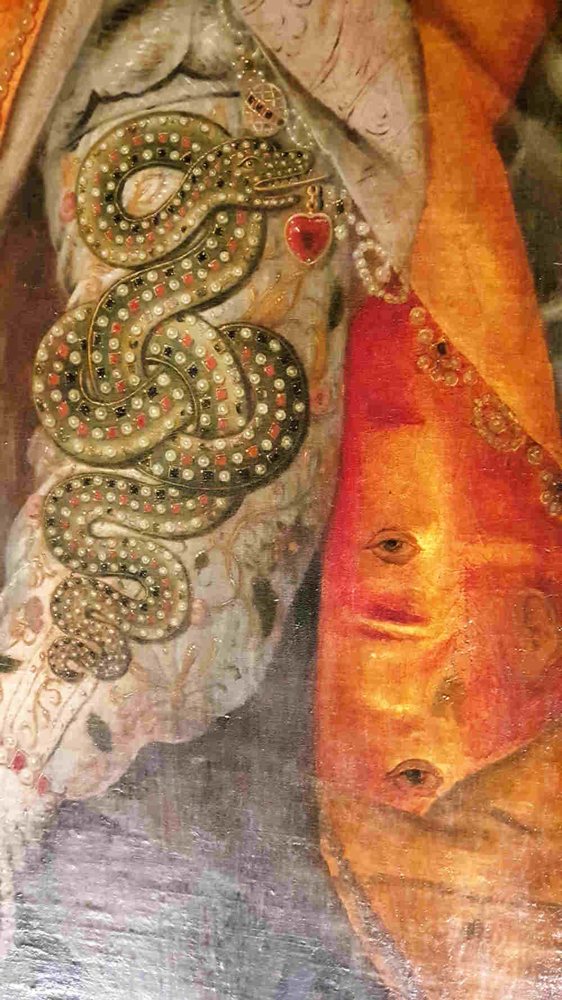
The portrait reeks of symbolism, with pearls symbolising peace, a snake for wisdom and a heart for mercy. What is particularly arresting are the sets of eyes and ears that decorate the robe, meant to convey that the monarch (and Cecil by default) was all-seeing and all-knowing. A now grey object in her hand would once have been in the colours of the rainbow, complemented by a quote: ‘Non sine sole iris’ (no rainbow without sun).
See the Elizabeth I dress
The Bacton Altar Cloth went on show at Hampton Court Palace in a landmark exhibition, The Lost Dress of Elizabeth I, with the Rainbow Portrait on loan from Hatfield House. Check the Hampton Court Palace website for the latest news. If you happen to be in Bacton, pop into St Faith’s Church, where you can see a photographic replica of the Bacton Altar Cloth.
For more Tudor history, see my guide to Hever Castle, Anne Boleyn’s childhood home.