Turner in London is the story of a Londoner through and through: J.M.W. Turner was born, bred and died in the capital. During his lifetime he was one of the most celebrated figures in the country, with the art critic John Ruskin calling him the “father of modern art”. Let’s follow in Turner’s footsteps across London, meet some friends and foes and see where he lived, worked and died.
Turner in London: where he was born and baptised
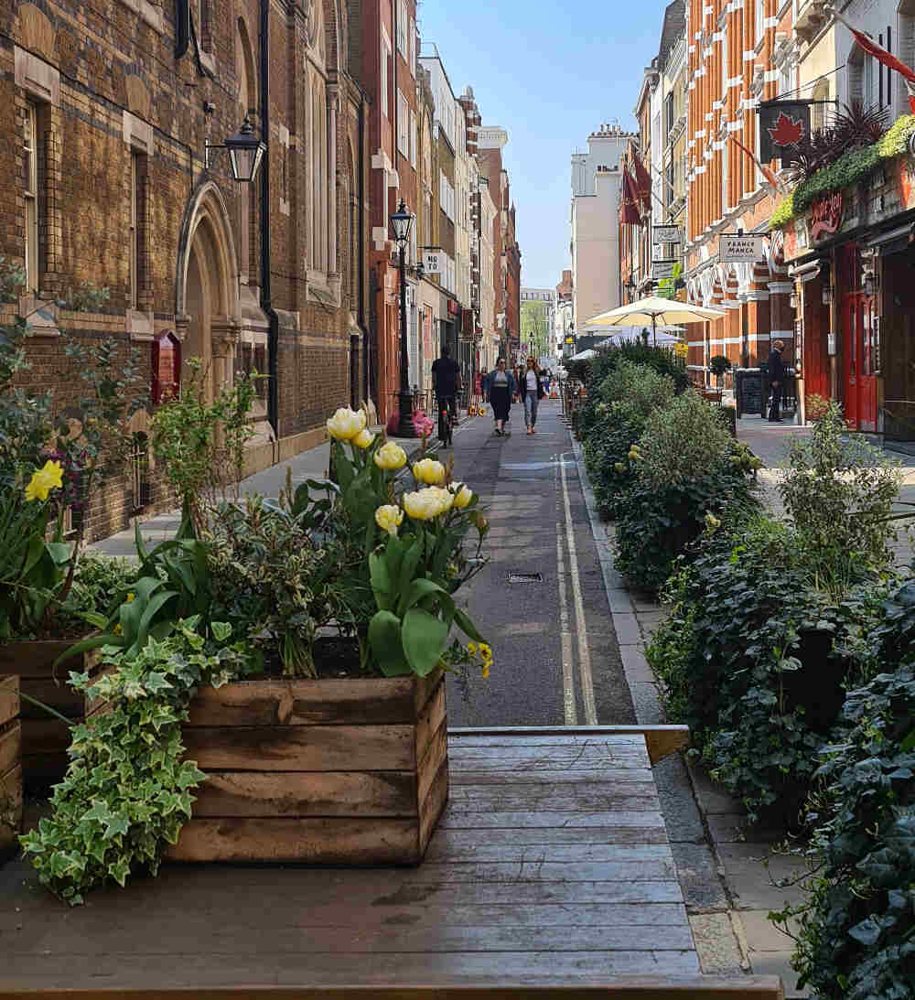
Maiden Lane, Covent Garden
Turner was born in 1775 (he gave the date as 23 April) at 21 Maiden Lane in Covent Garden. His father was a wig maker and barber. His mother, who suffered from mental illness, was later admitted to an asylum. In the 1790s the artist returned to Maiden Lane, taking up residence at No 26.
St Paul’s Church, Covent Garden
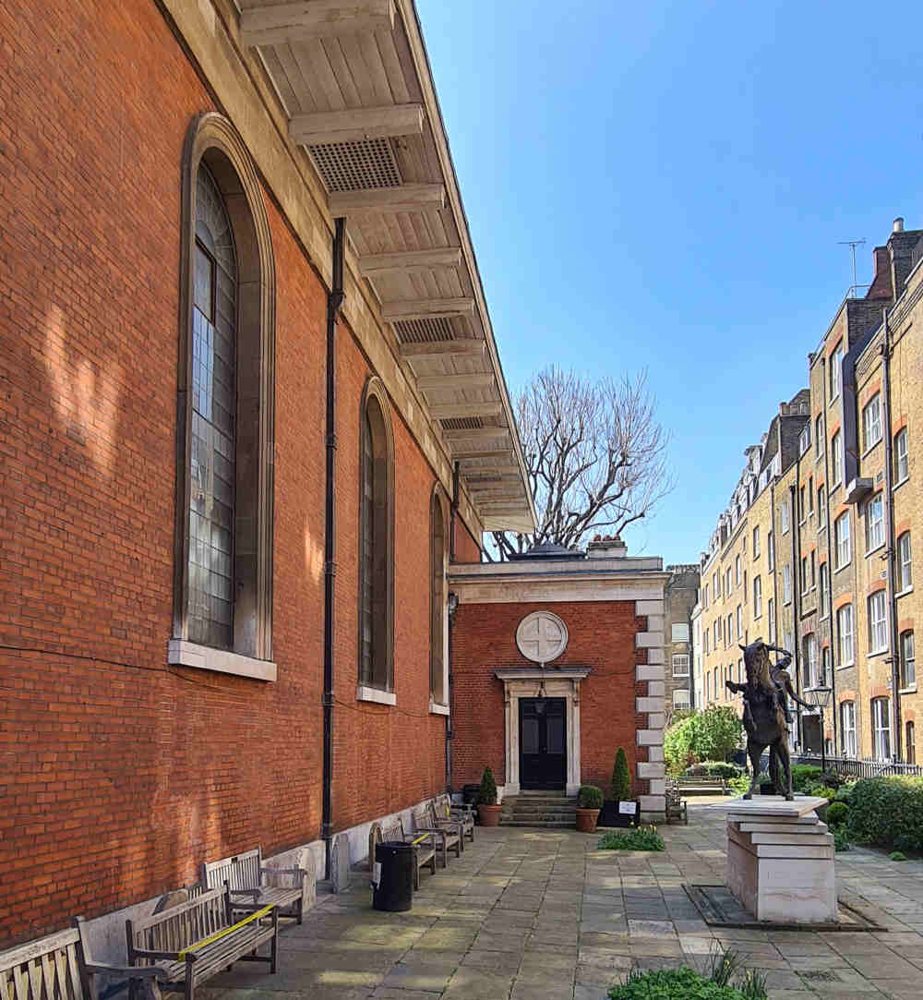
Turner was baptised in St Paul’s Church, also known as the Actors’ Church, in Covent Garden. His parents were married here too.
Turner in London: where he worked
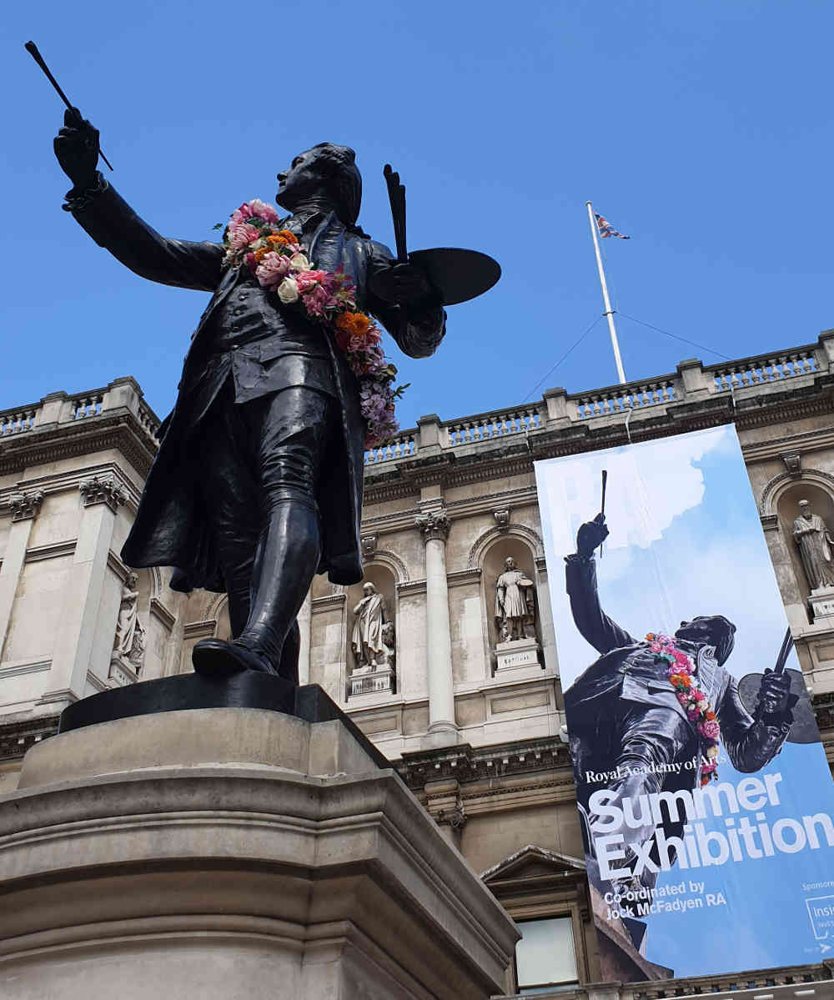
Turner exhibited his first watercolour at the Royal Academy when he was only 15. He was elected an Associate at 24 and a full Royal Academician at 27, and he later became Professor of Perspective and, in 1845, Acting President. Sir Joshua Reynolds, the Academy’s first President, was one of the panel that admitted Turner to the Royal Academy Schools. Turner and Reynolds are also buried near each other in St Paul’s Cathedral.
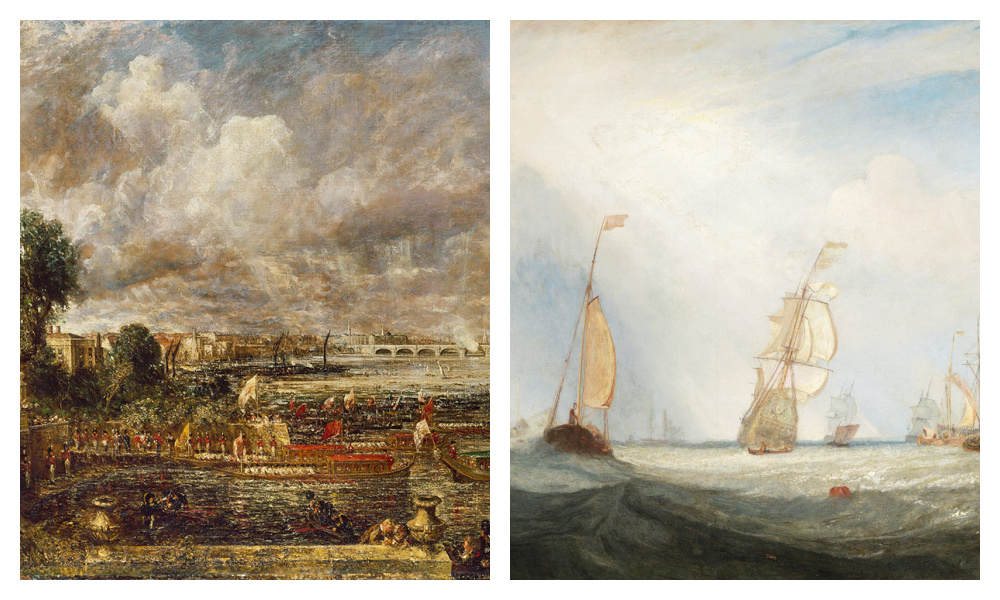
Left: John Constable, The Opening of Waterloo Bridge, 1832 (Tate). Right: J.M.W. Turner, Helvoetsluys, 1832 (Fuji Art Museum, Tokyo).
A famous incident between Turner and his rival, the landscape artist John Constable, happened on the eve of the Summer Exhibition in 1832, and it was reproduced in the film Mr Turner. Constable’s colourful The Opening of Waterloo Bridge hung next to Turner’s muted seascape Helvoetsluys, and Turner feared it would be overshadowed. At the last minute he added a red buoy to his painting, whereupon a fuming Constable declared: “he has been here and fired a gun.”
47 Queen Anne Street
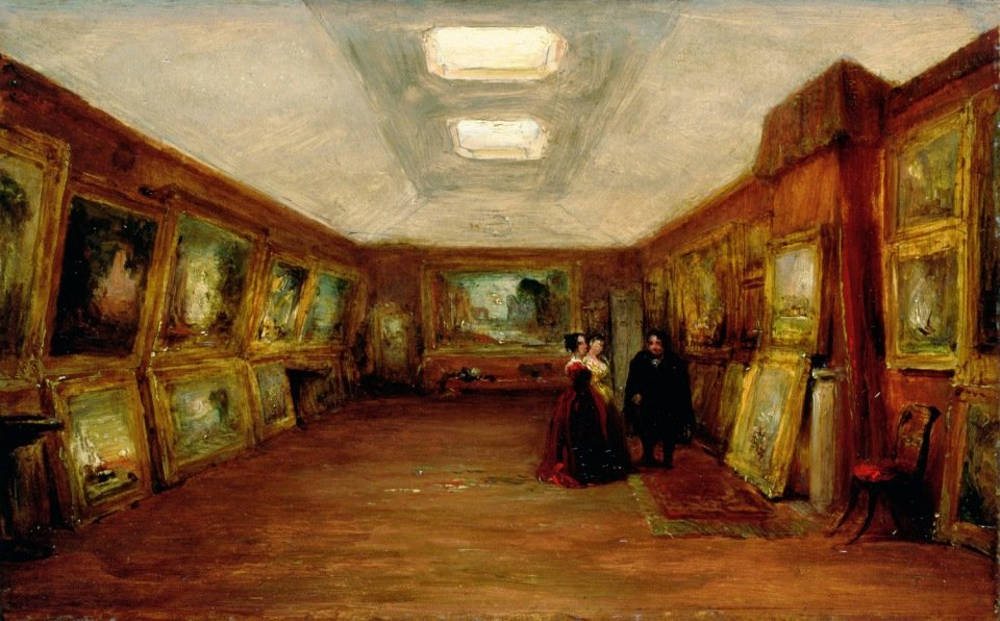
George Jones, Interior of Turner’s Gallery, c.1852 (Ashmolean Museum, Oxford).
This chic Marylebone address was once home to Turner’s Gallery, a space he kept to exhibit works he could sell to his wealthy clients.
Where Turner lived, and where he died
Turner’s House in Twickenham
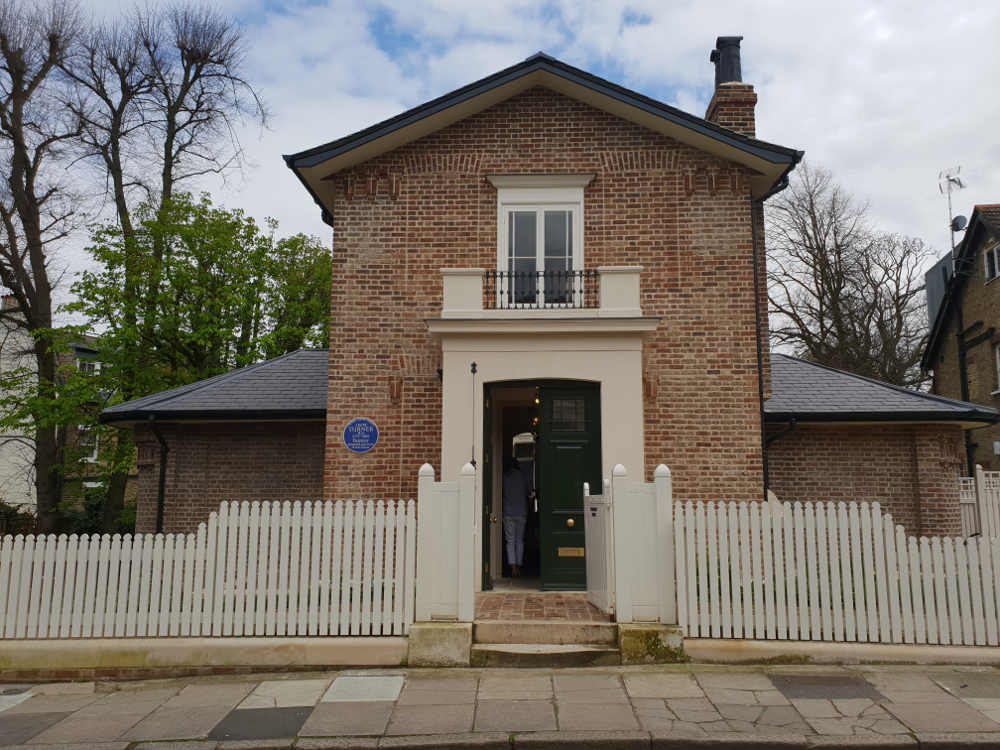
Turner built his own house in Twickenham, Sandycombe Lodge, as a country haven, and he spent time here for around thirteen years. It is now a house museum (see the Turner’s House website) and the only three-dimensional work of art he left behind. Read more in my guide to Sandycombe Lodge, Turner’s House in Twickenham.
Turner’s View in Richmond
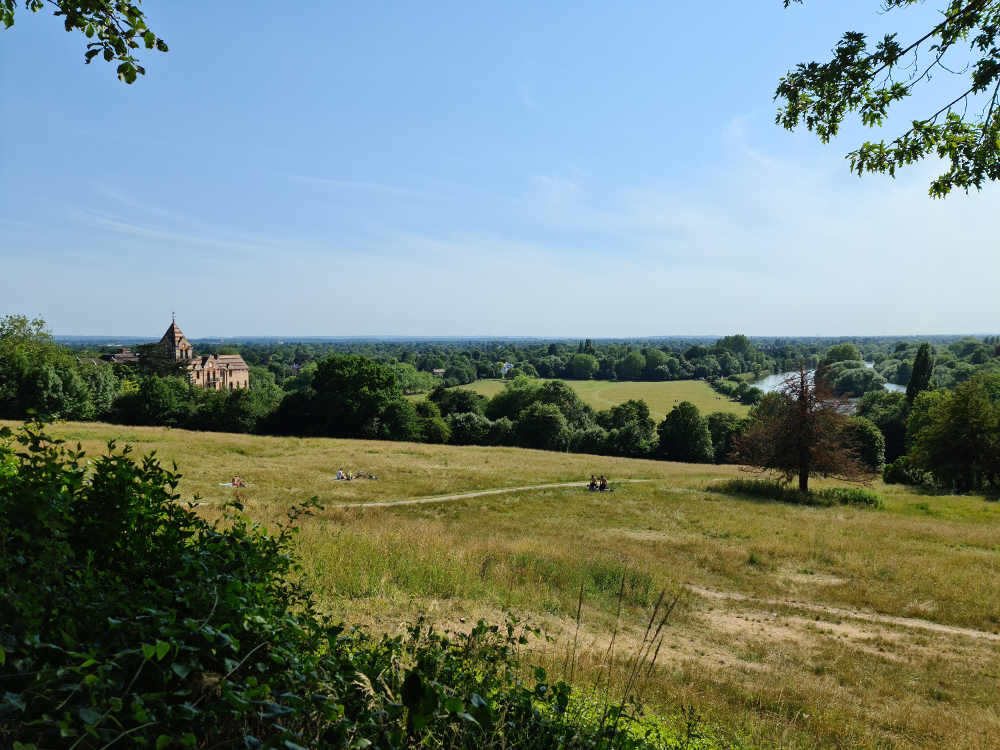
Dubbed Turner’s View, the outlook across the Thames from Richmond Hill was protected by an Act of Parliament in 1902. Turner painted this breathtaking view, which is now enjoyed by locals and tourists alike.
118 and 119 Cheyne Walk
Turner died of cholera on 19 December 1851 at the age of 76. He was living here in Chelsea with his mistress, Sophia Caroline Booth. His final words are reported to have been “the sun is God”.
St Paul’s Cathedral
Turner is buried in the crypt of St Paul’s Cathedral, near Sir Joshua Reynolds, an artist he admired.
Where to see Turner’s paintings in London

Joseph Mallord William Turner, Self-Portrait, c.1799 (Tate Britain, Clore Gallery).
Tate Britain is home to the largest collection of J.M.W. Turner works in the world. Head for the Clore Gallery, which holds some of his greatest masterpieces, as well as unfinished canvases found in his studio after his death. The annual Turner Prize is named after him.
The V&A has oil paintings by Turner as well as his rival Constable.
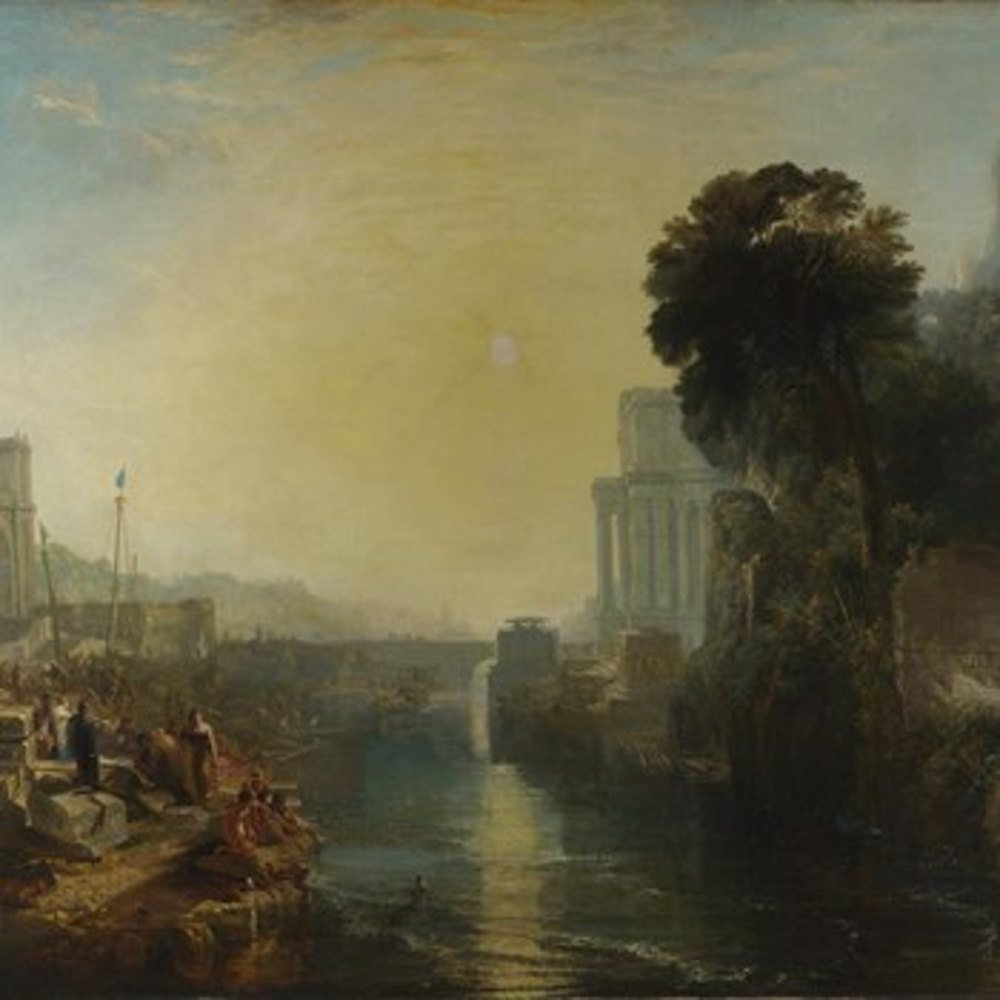
Turner’s Bequest was one of the largest gifts ever made to the nation. He bequeathed his collection on condition that it be kept together in a purpose-built space, and his will was contested by relatives. The bulk of the Turner Bequest, around 300 oil paintings, 300 sketchbooks and some 30,000 works on paper, now resides at Tate Britain, although some of his works are scattered across museums in London. At the National Gallery, Dido Building Carthage hangs as he wished, alongside paintings by Claude Lorrain.
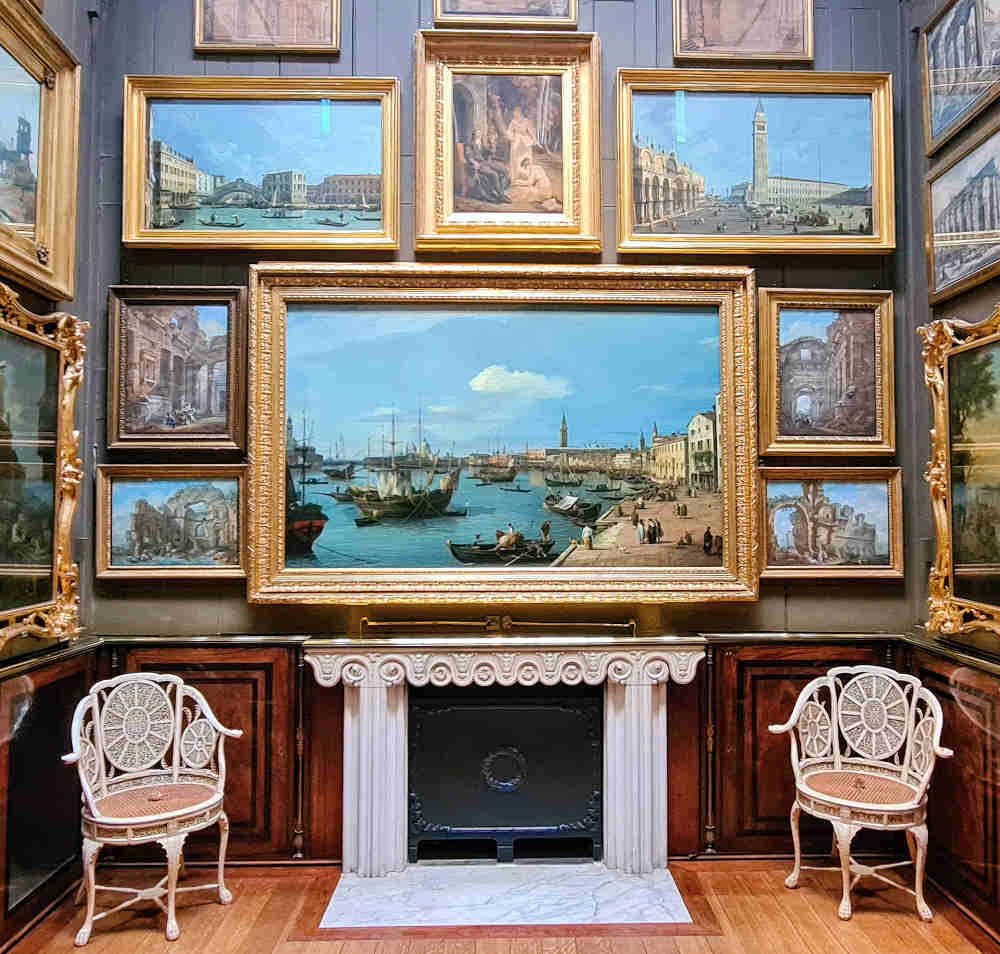
The Picture Room at Sir John Soane’s Museum in Holborn is one of London’s most jaw-dropping rooms, with works by Hogarth and Canaletto, among others. Soane was a good friend of Turner’s, and Turner helped him track down a lost pencil sketch of Soane’s beloved wife Eliza by John Flaxman, which Soane treasured. For more of Soane’s architecture, read my guide to Pitzhanger Manor.
And finally, take a look at the twenty pound note in your wallet. See anyone you recognise?
Map of Turner in London locations
You might also like
- Sandycombe Lodge: Turner’s House in Twickenham
- Pitzhanger Manor & Gallery: A Grand Tour
- Strawberry Hill House Café: Cake at the Museum
- London’s Best House Museums
Sources: Art UK, Wikipedia, British History, william-turner.org.