We tend to picture Queen Victoria as the dowdy widow in black, but some of the best Queen Victoria portraits in London show a very different young woman: a lively, pretty girl who, dare I say it, looks a little like Jenna Coleman, who played her in the TV drama Victoria. Here are some of my favourite Queen Victoria portraits in London, and why they are worth seeking out.
Queen Victoria portraits of the young princess and new queen
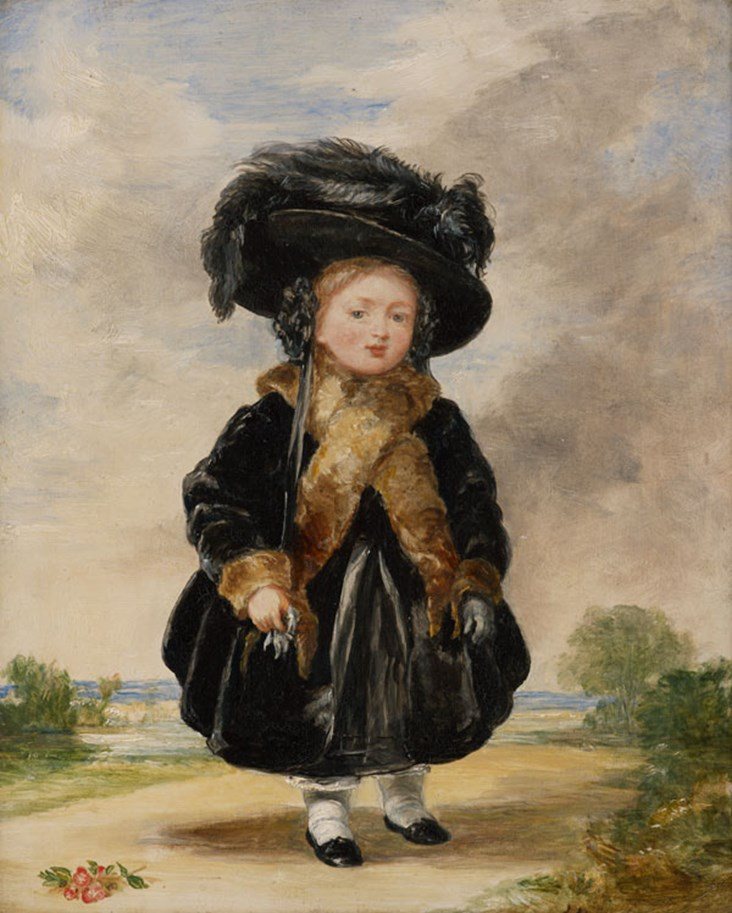
Princess Victoria aged four, by Stephen Poyntz Denning
This small, melancholy portrait shows Princess Victoria at the age of four, in black mourning dress with a fur tippet, a huge feathered hat, white stockings and grey gloves. Victoria was a fatherless child: Prince Edward, Duke of Kent, died of pneumonia less than a year after her birth, and a fallen rose lies on the path at her feet. Denning, who was Keeper of Dulwich Picture Gallery for decades, kept the painting in his private collection, and the gallery bought it in 1891. It has been one of its most popular paintings ever since, and was even reproduced on biscuit tins. Dulwich notes that the sitter might possibly be her eldest daughter, also named Victoria, although the child’s fair hair and blue eyes favour the Queen.
Image: Dulwich Picture Gallery
Victoria with her mother, the Duchess of Kent
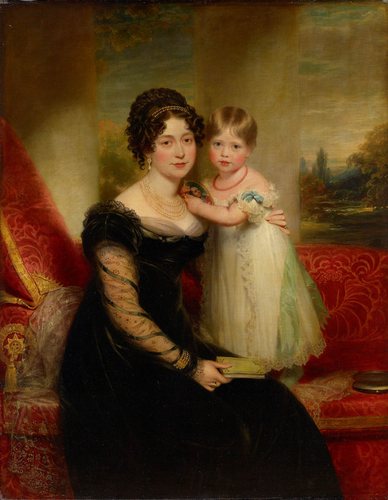
Image: Royal Collection Trust
Another early portrait shows the future Queen as a toddler, held close by her mother, Victoria, Duchess of Kent. It is a gentle reminder of the close, and later difficult, bond between mother and daughter.
Queen Victoria at Drury Lane Theatre, by Edmund Parris
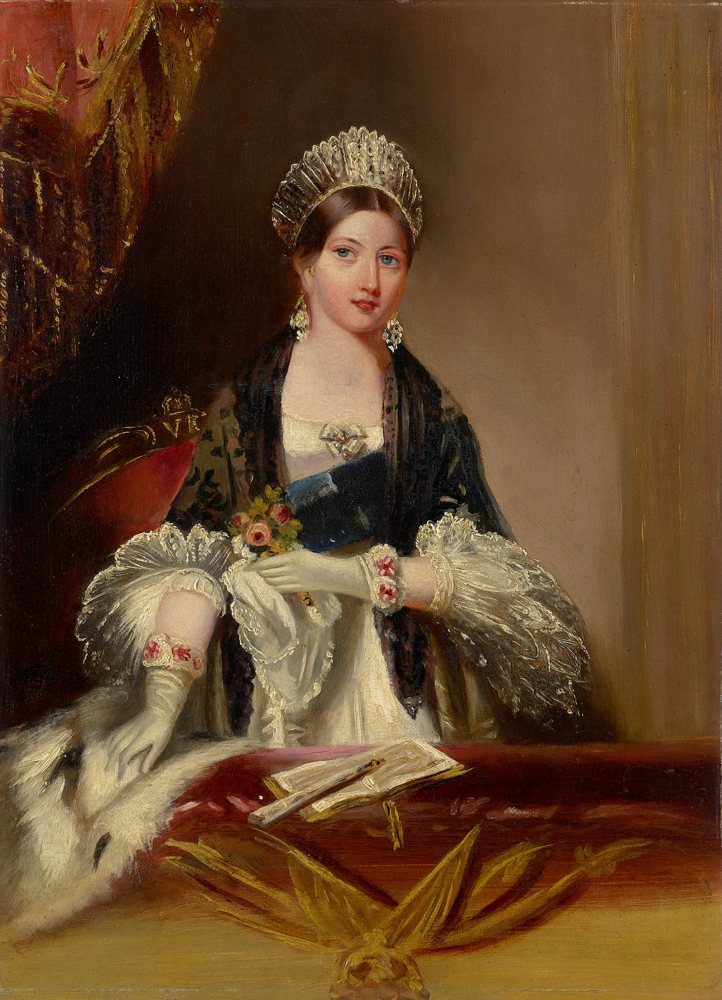
Image: Royal Collection Trust
On 15 November 1837, Victoria went to Drury Lane Theatre to see an opera and what she called a “somewhat vulgar farce”. She sat alone in her box with her attendants behind her, and wrote in her journal that she was “splendidly received, with the greatest enthusiasm and deafening cheering”. Edmund Parris painted the Queen at the theatre, and the portrait is said to be the first made of her after her coronation. It was so popular that it was engraved for widespread publication in 1838. Parris was trained as an enamellist and later restored the paintings in the dome of St Paul’s Cathedral.
Thomas Sully’s young Queen Victoria
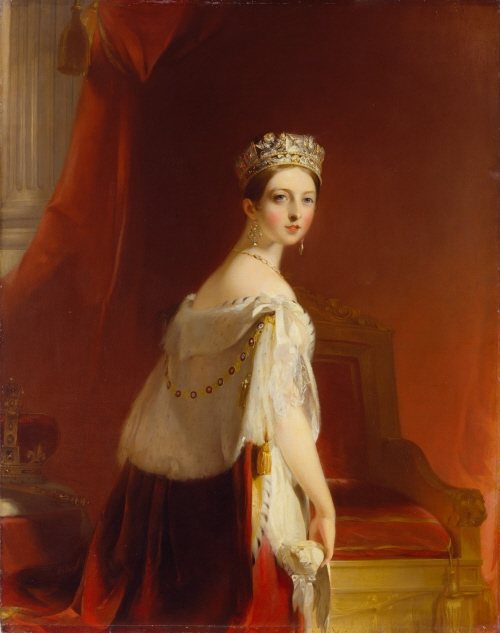
Image: Wallace Collection
In 1838 the American painter Thomas Sully travelled to London for five sittings with the young Queen, for a portrait commissioned by a Philadelphia society. A version of it is in the Wallace Collection, where it hangs among the museum’s French furniture and Old Masters.
Victoria in jewels: the scarf pin
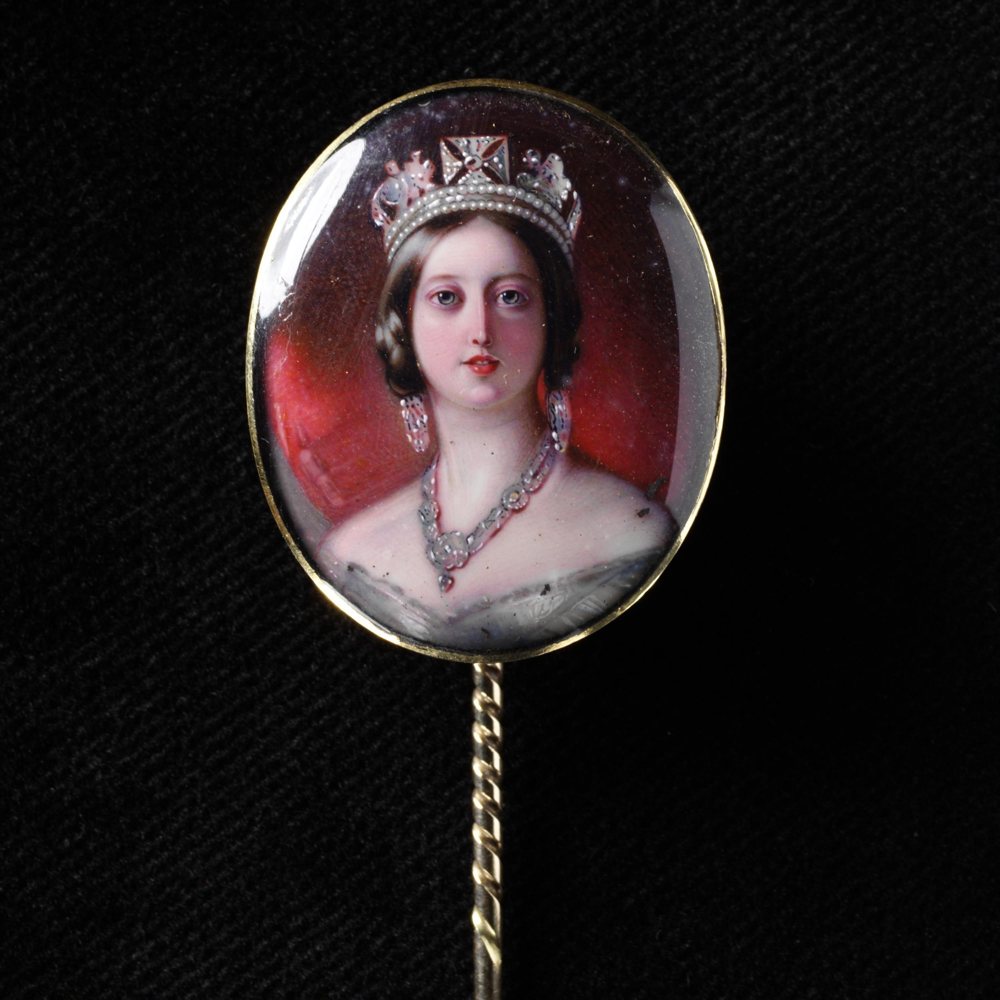
Image: V&A
Portraits of the young Queen were so popular that they were mounted in jewellery. This enamel miniature scarf pin, now in the V&A collection, is a tiny example. In 1841 Victoria herself gave a bracelet containing her portrait to Princess Marie of Orléans on her marriage to the Queen’s cousin, Prince Alexander of Württemberg.
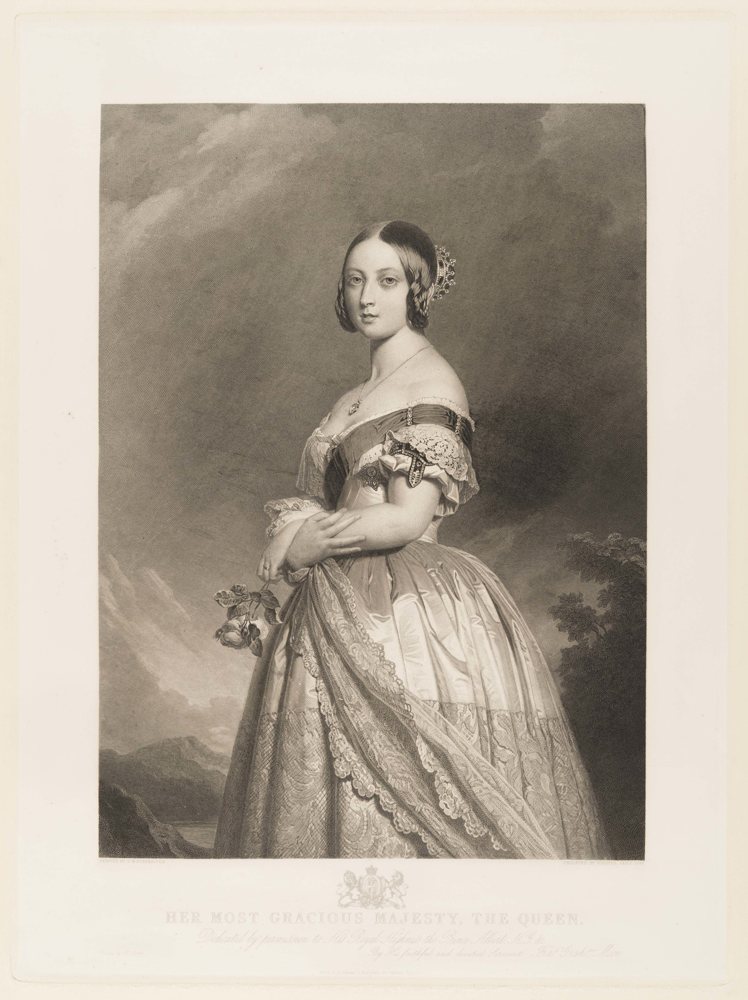
Engravings after portraits by Winterhalter did the same job on paper, carrying the face of the young Queen into homes across the country and beyond.
The Queen as wife, mother and head of a family
The Royal Family in 1846, by Franz Xaver Winterhalter
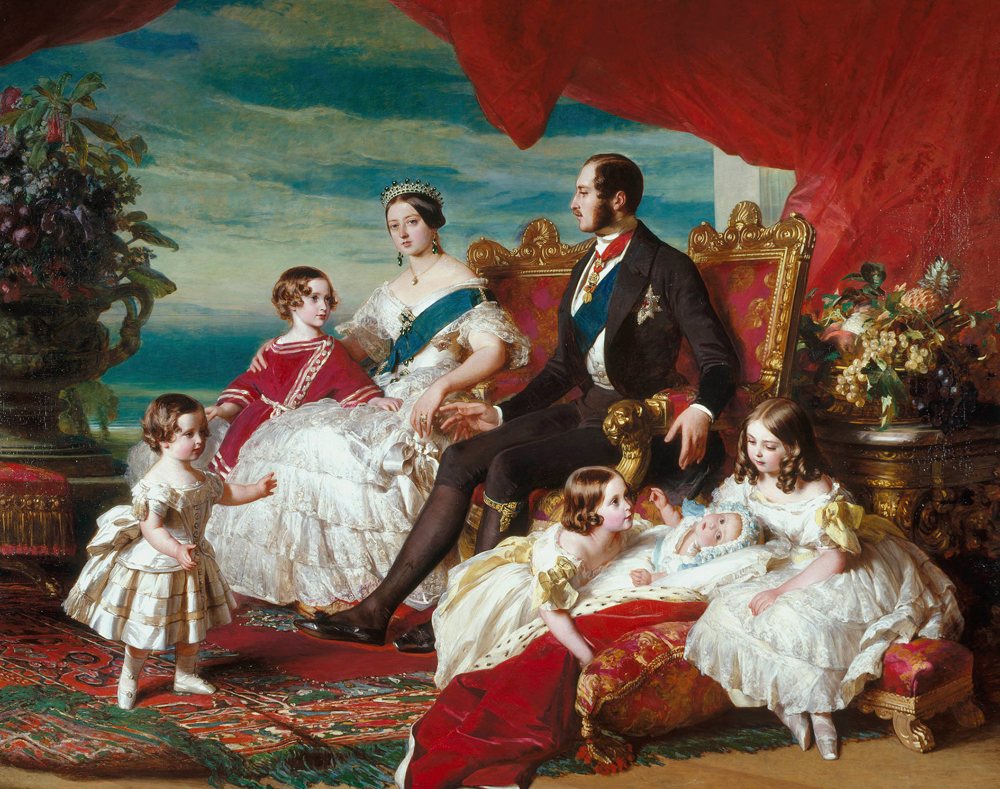
Image: Royal Collection Trust
Victoria and Albert sat for this portrait with their five eldest children between October 1846 and January 1847. The Queen had asked the French king Louis Philippe to release his court painter, Winterhalter, so that he could paint the family. It hung first at Osborne House and is now in the East Gallery at Buckingham Palace.
Queen Victoria’s sapphire coronet
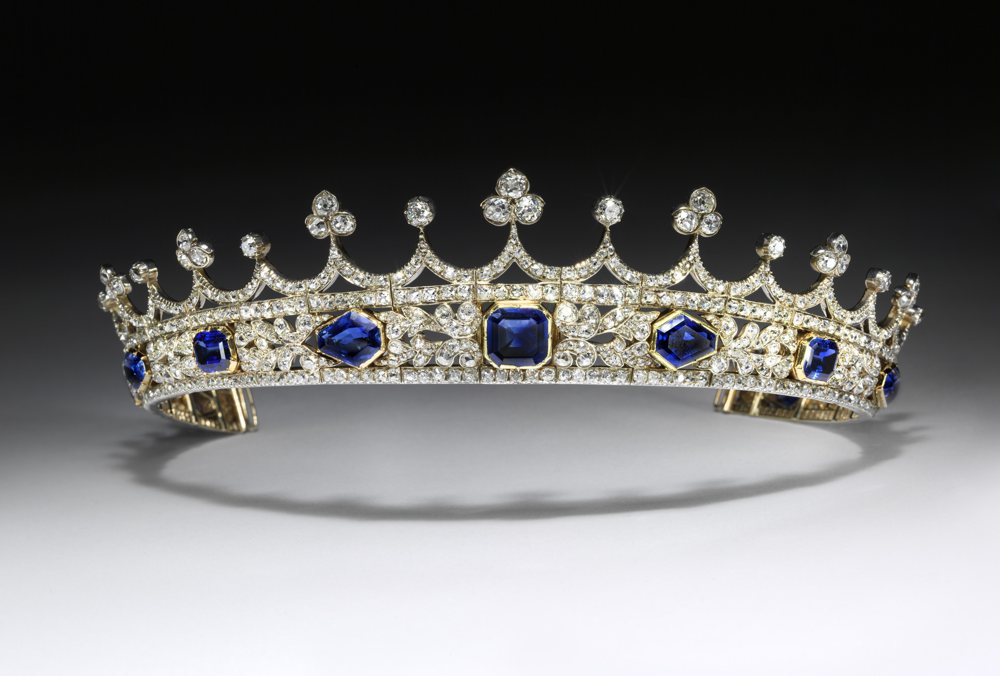
Image: V&A
One of Victoria’s most important jewels was designed for her by Prince Albert in 1840, the year of their wedding, and made by Joseph Kitching of Kitching and Abud. She wore it in a famous portrait by Winterhalter in 1842. Over twenty years later she chose the coronet instead of her crown when she opened Parliament in 1866 for the first time since Albert’s death in 1861, with her crown carried in on a cushion. You can see it today in the V&A Jewellery Galleries.
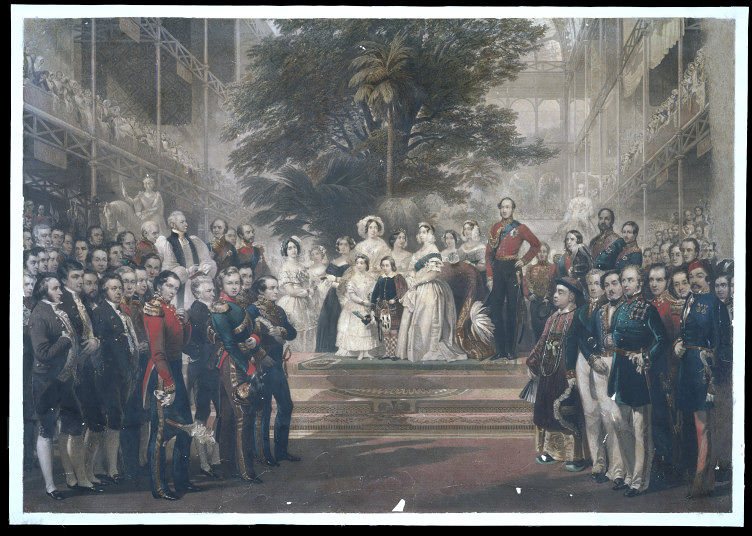
The royal couple also stood at the heart of the Great Exhibition of 1851, which this engraving of the opening ceremony shows in all its glass and palm-tree splendour.
The reigning Queen: state portraits and soldiers
Queen Victoria in robes of state, by Franz Xaver Winterhalter
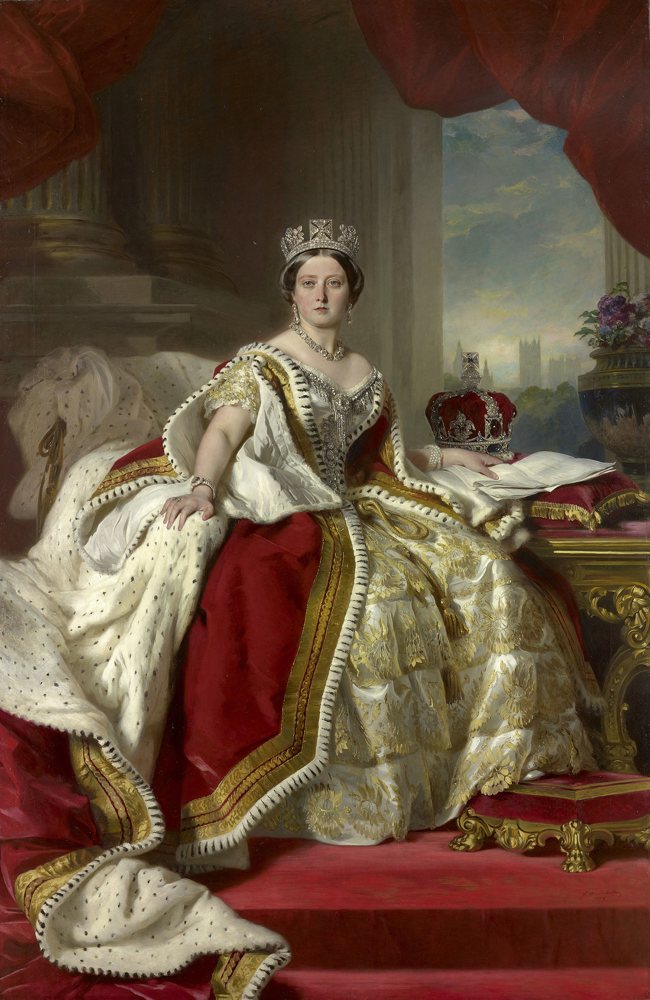
Image: Royal Collection Trust
Painted in 1859 as a companion to a portrait of Prince Albert, this full-length state portrait shows the Queen in her robes of state, with the Imperial State Crown beside her and Westminster in the distance. The pair became the official likenesses of the royal couple, and many copies were made. The original hangs in the Grand Entrance and Marble Hall at Buckingham Palace.
Queen Victoria’s first visit to her wounded soldiers, by Jerry Barrett
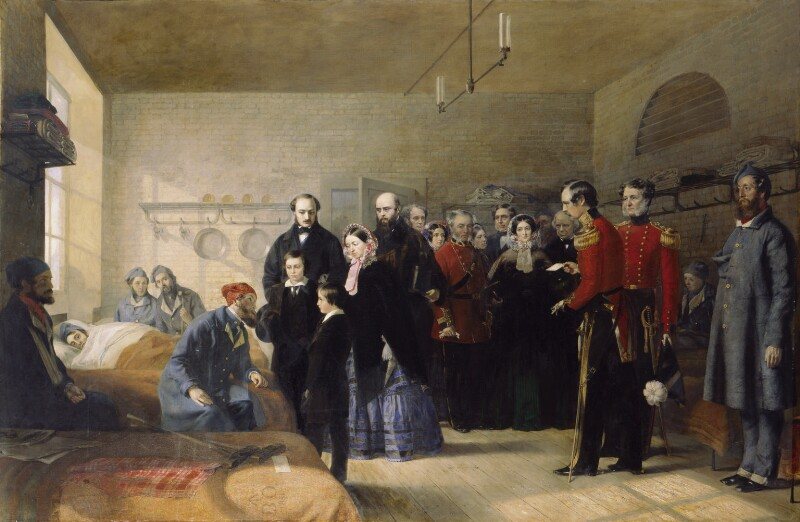
Image: National Portrait Gallery, London
Victoria was deeply affected by the suffering of her troops in the Crimean War. Jerry Barrett’s painting, dated 1856, shows her visiting wounded and invalided soldiers at the military hospitals in Chatham on 3 March 1855, with Prince Albert and their two eldest sons. The painting is in the National Portrait Gallery and is full of identifiable figures, from courtiers to the soldiers themselves.
The young Victoria in bronze
For a different kind of Queen Victoria portrait, look out for the bronze statue of the young Queen by Catherine Anne Laugel in Victoria Square, off Lower Grosvenor Place, near the back of the Royal Mews.
Where to see Queen Victoria portraits in London
- Dulwich Picture Gallery: Princess Victoria aged four
- Wallace Collection: Thomas Sully’s young Queen
- V&A Jewellery Galleries: the sapphire coronet
- National Portrait Gallery: Jerry Barrett’s wounded soldiers
- Buckingham Palace, Royal Collection Trust: Winterhalter portraits
Displays change, so check each museum’s website before you go.