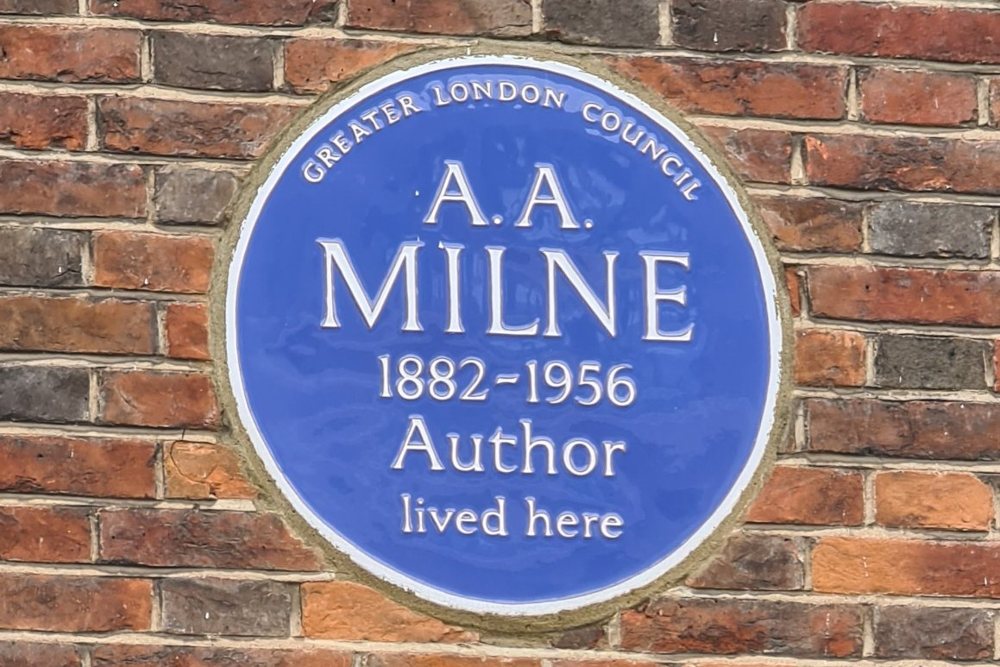
Alan Alexander Milne, or A. A. Milne as he is known, is a household name today, thanks to a silly old humming bear and his furry friends, but he was also a successful novelist, screenwriter, humourist and playwright. This is a guide to AA Milne London: he was born and bred in the capital, Milne spent the bulk of his creative years in Chelsea, and used his country home in Ashdown Forest as the inspiration for the enchanted place where Winnie-the-Pooh and his playmates would buzz and bounce in search of sticks and hunny.
AA Milne London: from Kilburn to Chelsea
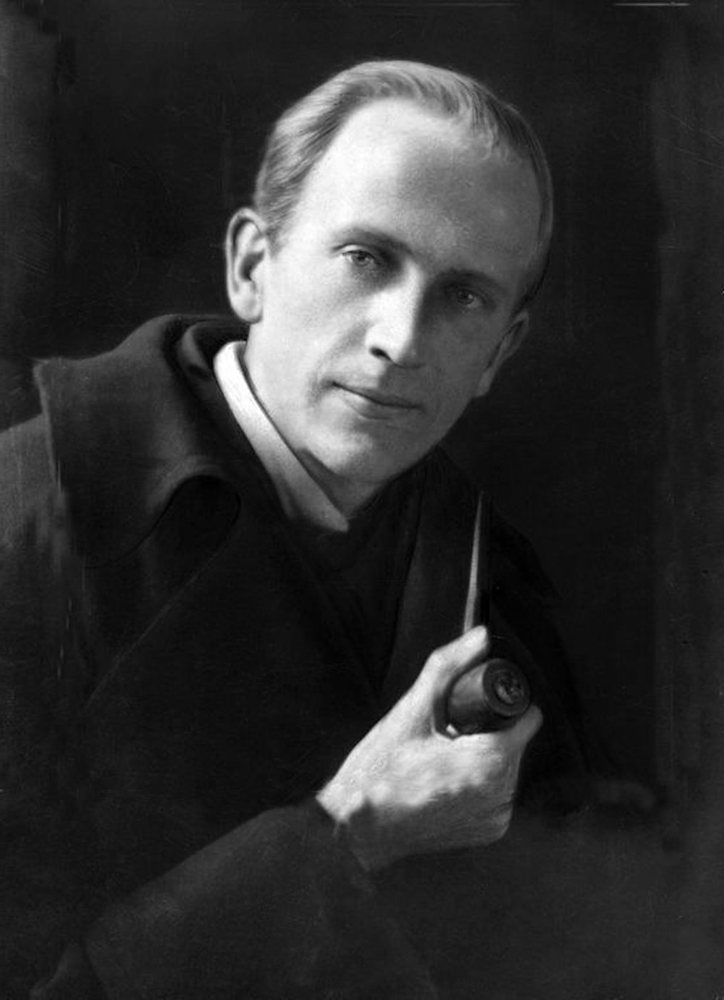
The AA Milne London story begins in Kilburn, where Milne was born on 18 January 1882. He grew up at 67 Mortimer Road (now Mortimer Crescent), where his father ran a school which Milne attended as a boy. H. G. Wells was one of the teachers. Milne went on to study at Westminster School before heading off to Cambridge, where he read Mathematics and edited the student magazine.
AA Milne London home: 13 Mallord Street in Chelsea
He became Assistant Editor of Punch by 1906. In 1913 he married Daphne de Sélincourt, and in 1919 they moved into 13 Mallord Street. This pretty Chelsea street is home to several blue plaques. Christopher Robin was born in 1920.
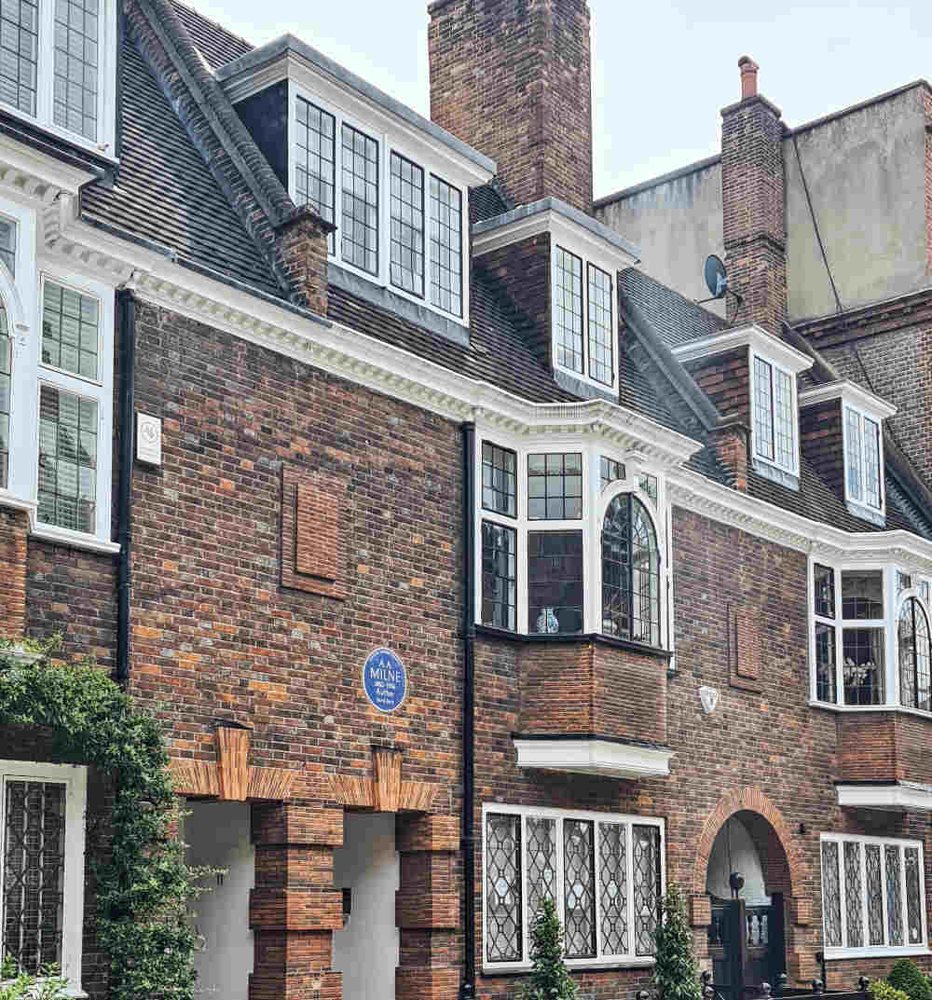
Milne spent many creatively productive years at Mallord Street, and the house would become the family’s base until 1940. He fought at the Battle of the Somme in 1916 and, like so many others on the front, returned to London deeply affected by his experiences.
Milne retired to Cotchford Farm in East Sussex in 1952 after suffering a stroke. He died on 31 January 1956, aged 74.
Fun fact: Milne was a cricket lover, playing with the likes of P. G. Wodehouse, Arthur Conan Doyle and J. M. Barrie.
Winnie-the-Pooh: the bear from Harrods
The inspiration for the tubby little cubby all stuffed with fluff came from a Farnell toy bear bought from the toy department at Harrods in 1921. Pooh would be joined by the famous five: Tigger, Kanga, Roo, Piglet and Eeyore.
Milne wrote When We Were Very Young at Mallord Street, and Winnie-the-Pooh, Now We Are Six and The House at Pooh Corner followed. The family spent weekends and summers at their farm in Ashdown Forest from 1925, and this bucolic setting would become the inspiration for the Hundred Acre Wood.
Milne collaborated with the talented Ernest H. Shepard, an artist whose drawings were regularly featured in Punch. The Pooh books have never been out of print, have sold in the millions and been translated into dozens of languages. Winnie ille Pu became the only Latin book ever to feature on The New York Times bestseller list.
The rights to the Pooh books were left to family, the Royal Literary Fund, Westminster School and the Garrick Club, of which Milne was a member.
The real Winnie of London Zoo
Winnie-the-Pooh was inspired by a real bear called Winnie, who had become a London Zoo celebrity. A Canadian lieutenant called Colebourn, from Winnipeg, rescued a bear cub in 1914. He travelled to London with her before departing for the Western Front, but not before handing her over to London Zoo, where Winnie quickly became a big hit.
A London Zoo regular, Christopher Robin was enchanted by Winnie, who was tame enough to feed and even ride. He renamed his Harrods bear Winnie-the-Pooh, a combination of the Canadian cub’s name and the nickname he gave to a swan he used to feed. Winnie died in 1934, aged 20, and you can see her statue at London Zoo.
Visit AA Milne London
You can follow the AA Milne London trail by walking down Mallord Street in Chelsea to see the blue plaque at No 13, and by visiting the real Winnie’s home at London Zoo. For more writers’ homes, see my guide to London’s best house museums.