Hola, I’m Venus at Her Mirror, but some people call me the Rokeby Venus or the Toilet of Venus. You can just call me Venus. The little fellow holding my mirror and helping me with my toilette is my son, Cupid. Maestro Diego Velázquez’s bold brushstrokes poured life into this, my divine facsimile, in the seventeenth century. My would-be destroyer in 1914 was the suffragette Mary Richardson, but more on her later.
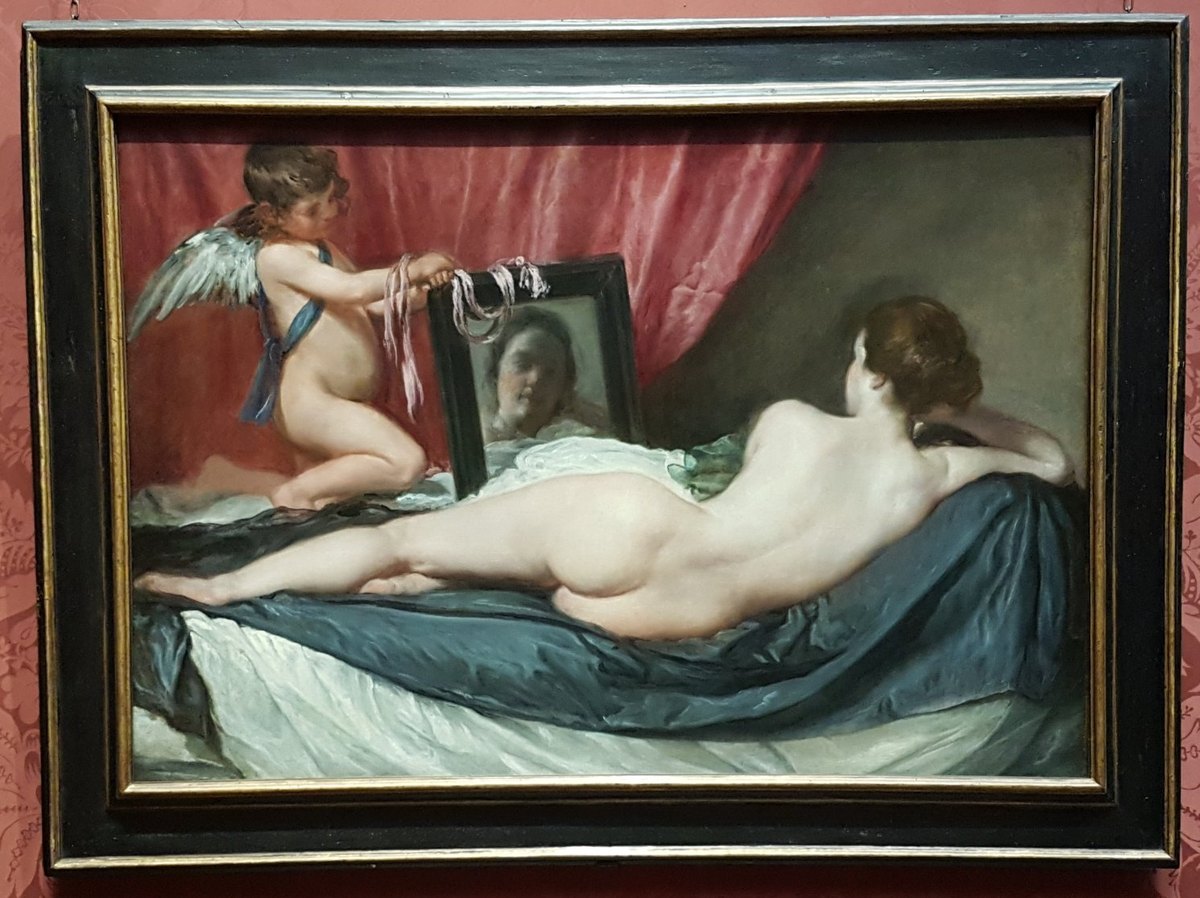
Photo: Scarlett Roitman, Diary of a Londoness.
Who is the Rokeby Venus?
I was painted sometime between 1647 and 1651, possibly on Diego Velázquez’s visit to Rome. I am his only surviving nude.
My earthly maker was originally from Seville, but he was invited to work under the patronage of Philip IV in Madrid in the early 1620s. He would become the leading artist of the Spanish Golden Age.
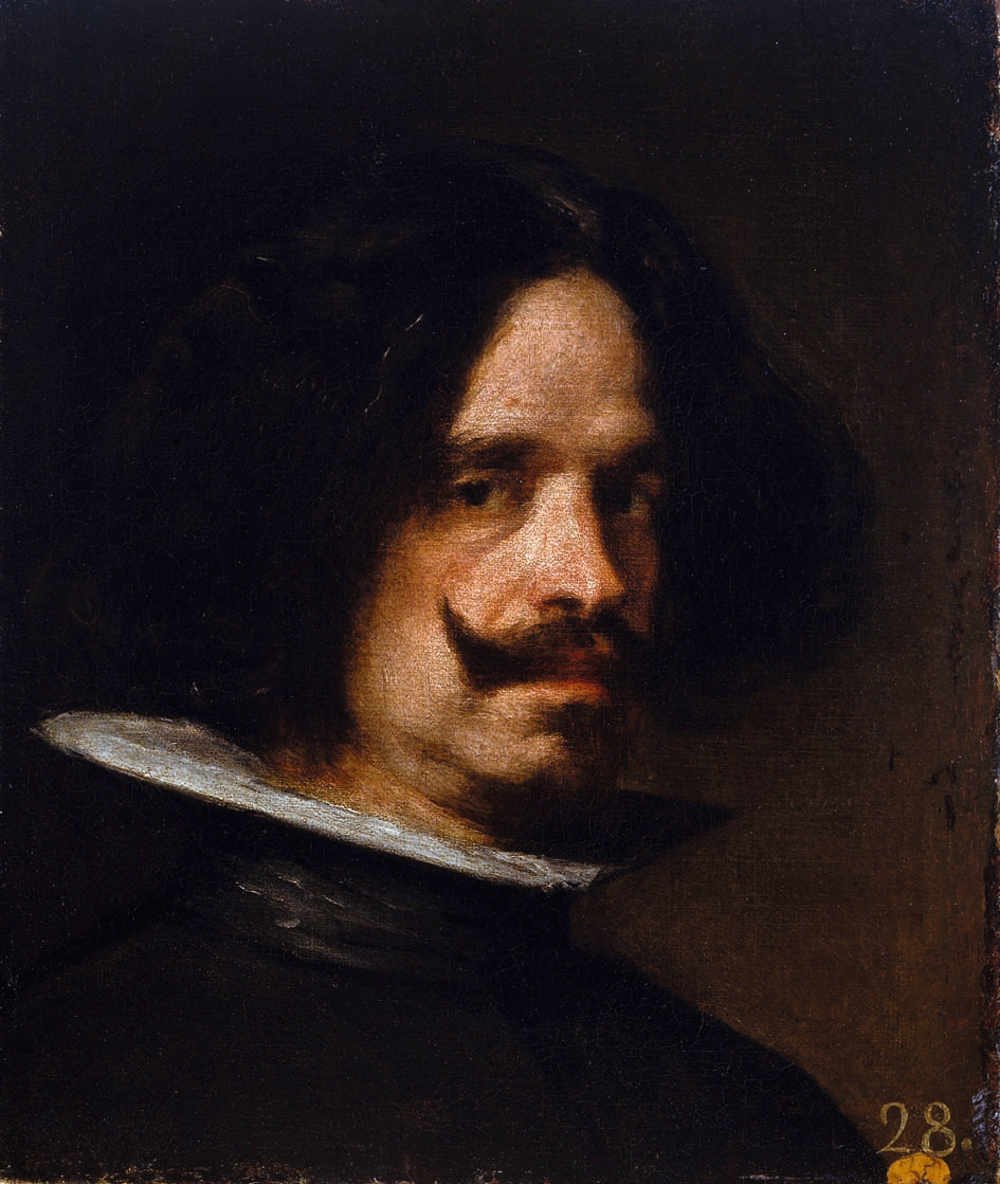
Diego Velázquez, self-portrait. Photo: Wikimedia Commons.
I’m a popular gal. Rubens, Titian and Veronese also captured my fleshy likeness but, unlike them, Velázquez doesn’t actually show my face. I like it that way, as my immortal self never ages. And you know as well as I do that my fairness is nigh impossible to convey.
The Venus effect: is she looking at you?
Clever Velázquez used the Venus effect, creating the optical illusion that I am looking at myself. This is technically impossible given the angle of the mirror. Perhaps Velázquez simply wanted my rapturous beauty to be in your mind’s eye rather than in his. Am I looking at you, or am I looking at my maker?
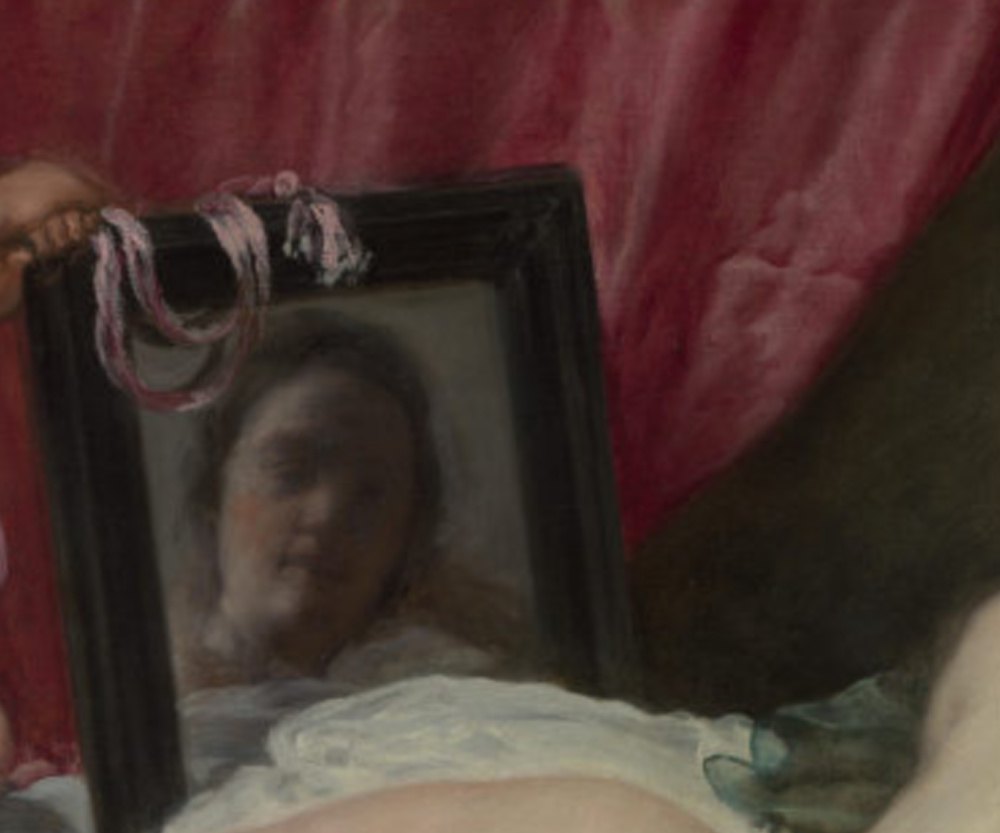
The mirror: am I looking at you, or at my maker?
People say I am sumptuous, mysterious, powerful, enigmatic and sexy. Do you like what you see? I fancy my tush is the best one in town, but some people don’t approve of my saucy self being at the mercy of the world’s gaze. It’s a miracle I even exist, as the Spanish Inquisition forbade such a flagrant show of flesh. But Velázquez painted me for a private collector, and I never saw the light of day in court. And besides, Philip IV was a secret hoarder of nudes, so he probably would have been OK with my dishevelled self.
How the Rokeby Venus reached London
In the seventeenth century, I lived with the art collector and Casanova Gaspar Méndez de Haro, who also owned a Titian and a Tintoretto, no less. I then resided with Charles IV of Spain’s bestie, Manuel de Godoy, who hung me next to two Goyas. Well, we all know who the star of that show was.
By the early nineteenth century, I was hanging out at Rokeby Park in County Durham. Then in 1906, the Art Fund raised the money so that my splendiferous curves could be relocated to the National Gallery. I was sold for a whopping £45,000, and King Edward VII is thought to have helped complete the sum (well, we know how much he liked his ladies!). I was the most expensive acquisition to date for the National Gallery.
The day the Rokeby Venus was slashed
I was shaken and a little stirred by what happened to me on 10 March 1914. It was just after 10am when Mary Richardson, or “Slasher Mary” as she would come to be known, entered the National Gallery with a meat chopper concealed in her clothes. One of the attendants heard the smashing of glass and believed that a skylight above had shattered. Instead, it was my protective glass that was smashed. She then went on to slash my neck, my back and the curve of my celestial hip.
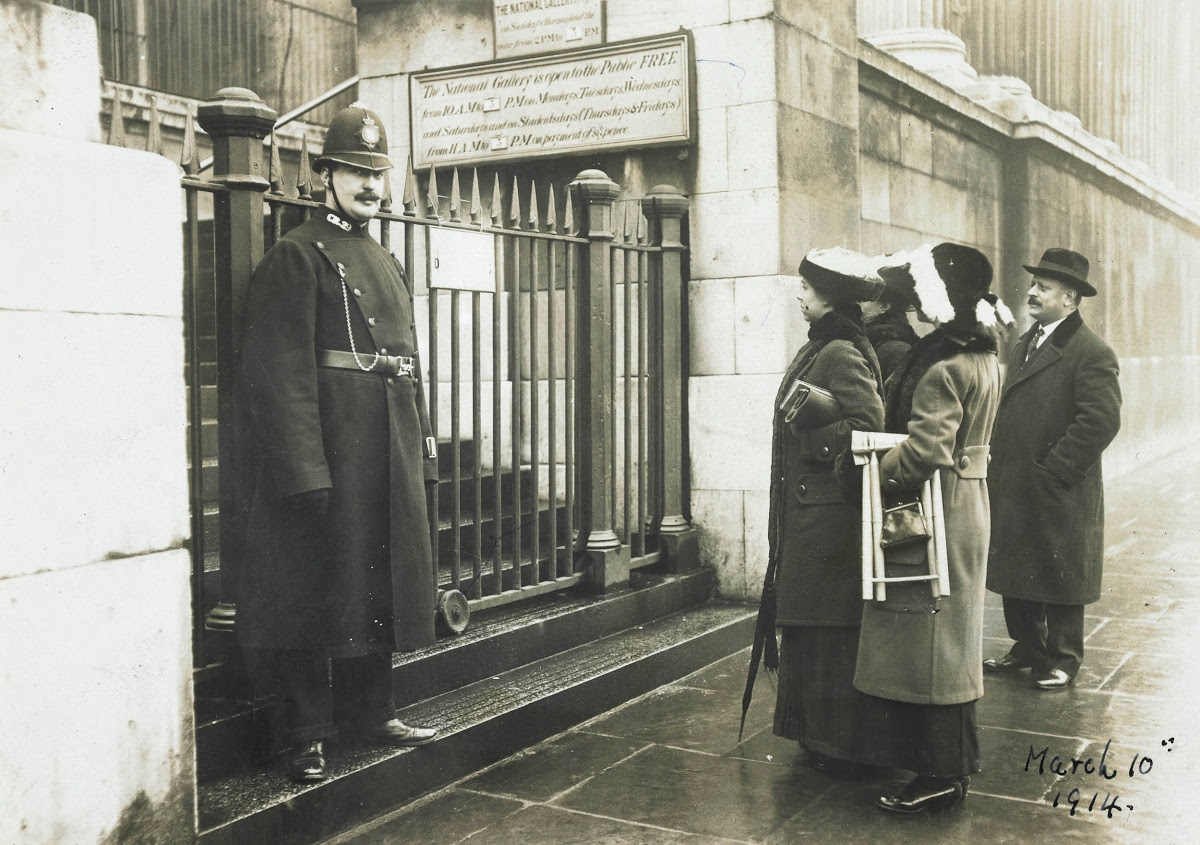
Suffragettes at the National Gallery on 10 March 1914. Photo: Wikimedia Commons.
Mary Richardson was restrained and arrested, and sentenced to six months in prison for attempting to destroy me. Fellow suffragette Emmeline Pankhurst had been arrested the day before, and Richardson claimed this to be a retaliation. She later confessed that she didn’t like the way male visitors looked at me all day.
“I have tried to destroy the picture of the most beautiful woman in mythological history as a protest against the government for destroying Mrs Pankhurst, who is the most beautiful character in modern history.” (Mary Richardson)
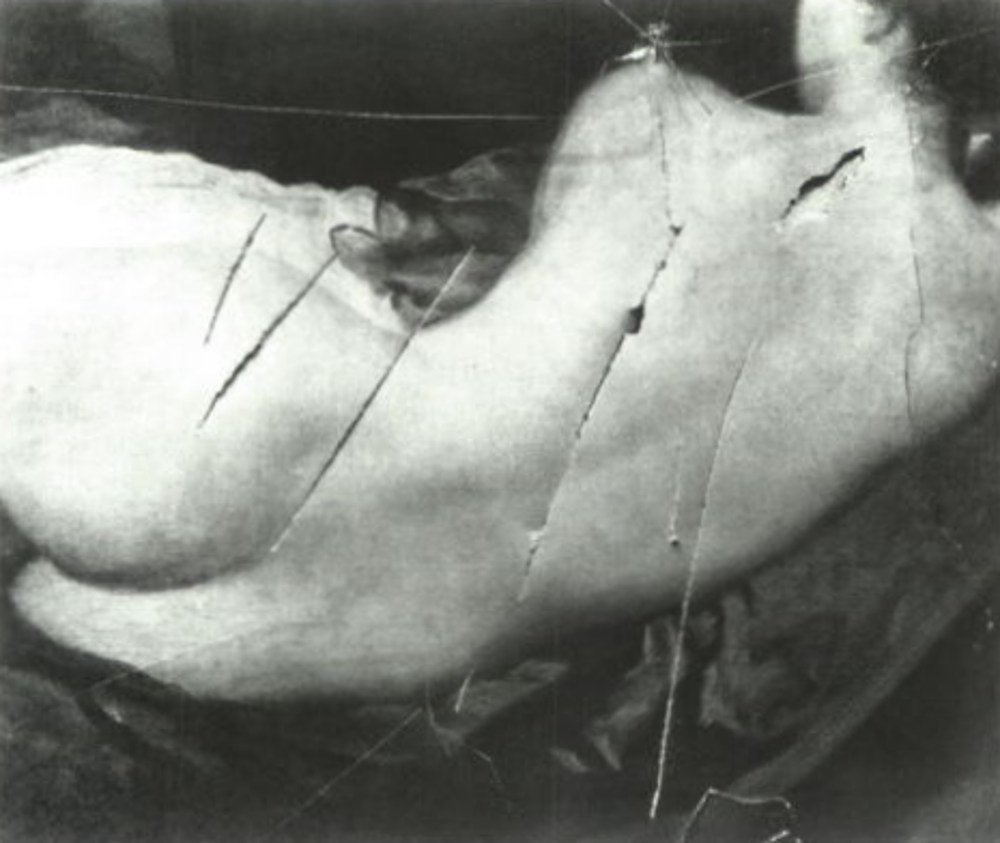
The damage after the 1914 attack. Photo: Wikimedia Commons.
The suffragettes would carry on their campaign with further attacks on works at the Royal Academy, the British Museum, the National Portrait Gallery and Manchester Art Gallery.
“I have been a student, and perhaps care as much for art as anyone who was in the Gallery on Tuesday morning, but I care more for justice than I do for art.” (Mary Richardson)
Restored and still admired
I rather like the attention, if I am honest. I wish Richardson hadn’t lacerated me so, but I do sympathise with her cause. Great women have to stick together. And in any event, I was brilliantly restored by Helmut Ruhemann (thank you, Helmut). You would be hard pressed to see any of my old wounds.
I have been targeted since, too. In November 2023, climate activists smashed my glass with hammers, and I was back on show a few weeks later with brand new glazing. I’m a tough old girl.
Visit the Rokeby Venus
Come and check me out. Look, but don’t even think about touching. I might have to set my Cupid on you if you get any fresh ideas. You can find Venus and her sidekick, Cupid, at the National Gallery, Trafalgar Square, London WC2N 5DN, and entry is free (check the National Gallery website for the room she is hanging in today). Fans of a good painting with a story will also enjoy my friend, the Laughing Cavalier, at the Wallace Collection.
Hasta pronto, muchachos y muchachas.
Sources: the National Gallery, the Art Fund and the British Newspaper Archive.